Fuses and fuse boxes
Fuses are safety devices, present since the early days of electricity, with the purpose of protecting a circuit or appliance against short-circuits or overcurrent events by disconnecting the electric supply. They are disposable items, requiring replacement after having operated (or "blown").
Within the context of regular mains supplies, fuses have largely been replaced by circuit breakers, which serve the same function but are resettable and thus more user-friendly. However, fuses are still commonly used in industrial applications, especially for high current circuits, and in residential applications in certain countries for protecting the incoming supply wires before the power meter. In this case they are known as supplier's cutouts (UK) or meter fuses.
Domestic fuse boxes can differ greatly between countries, and thus it's hard to give a sufficiently
accurate generalisation of their characteristics: they may or may not contain a main isolation switch,
they may be built as a single unit or formed of separate components, they may have just one or multiple
fuses per circuit.
Thus rather than trying - and failing - to portray an inaccurate or too country-specific general idea of
fuse boxes, this page will instead describe individual features followed by a brief description of
examples from select countries.
Links to sub-pages available below
Fuses: how they work
At the most basic level fuses are just thin pieces of wire with specific characteristics meant to melt before the wires they are attached to. Electrical wiring is inherently limited in how much current it can safely carry, as it will heat up the more current (amperage) flows through it, and will therefore pose a fire risk after a certain point. An overheating wire may melt the plastic insulation it is covered with - which can emit toxic fumes - or set fire to objects it may be in contact with.
A fuse of the right rating, then, will prevent this limit from being reached by acting as a weak link and melting before any damage to the installation and its surroundings can occur. However, it is crucial that the correct fuse is used and correctly installed; bypassing these safety features was quite common and is the main reason why fuses have mostly been replaced by breakers.
Rewireable vs cartridge fuses
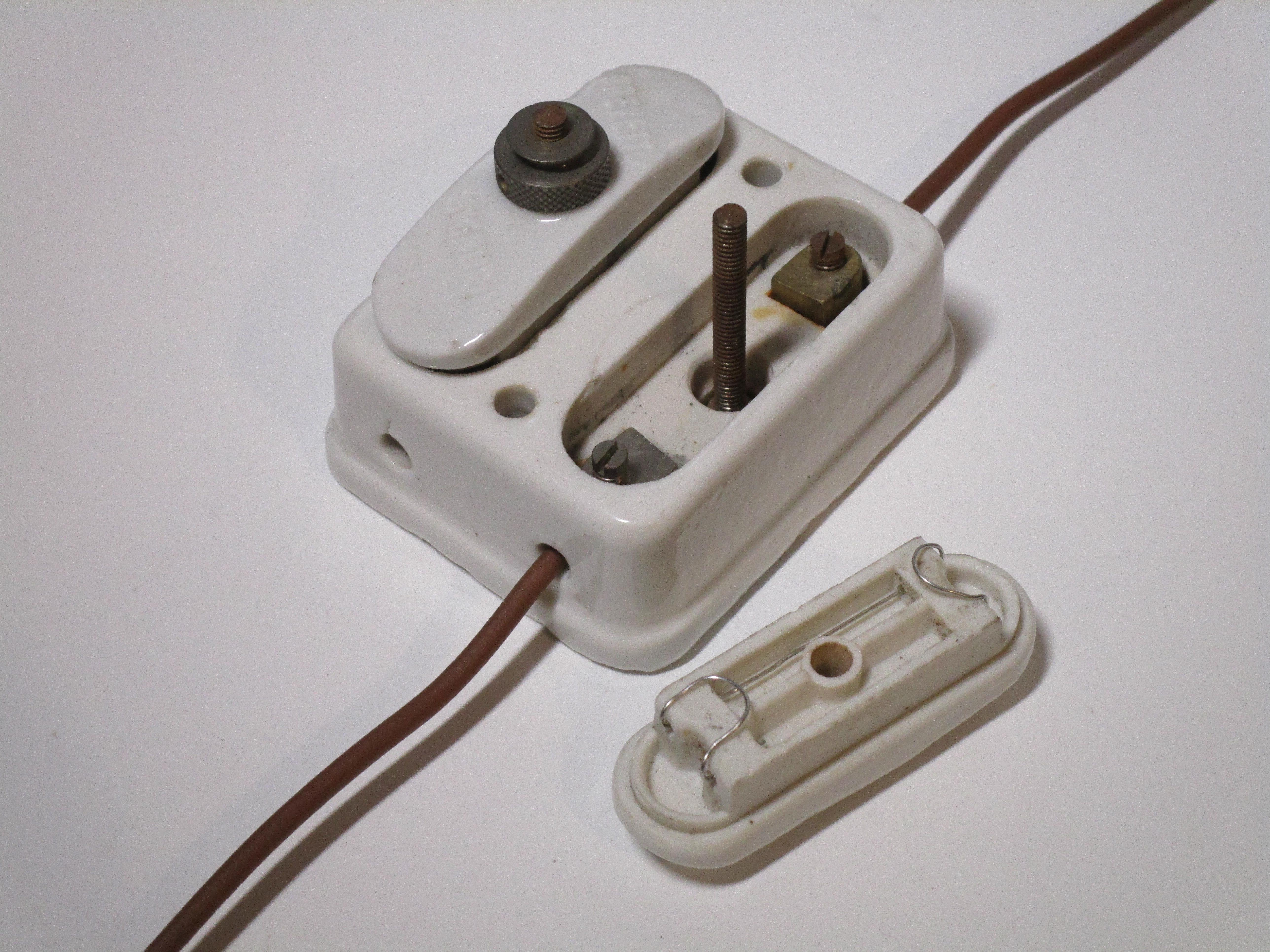
Domestic fuse boxes may accept either rewireable or cartridge fuses, depending on the design practices
of the country in question and the specific installation. The difference between these two types
primarily concerns how the end user was expected to purchase and replace fuses.
With the former, the user was tasked with removing the carrier board of the circuit in question, cleaning
up the remains of the old wire, cutting the fuse wire to length and installing it correctly in the
carrier. Cartridge fuses, instead, are entirely self-contained and thus easier to install; there might
still be a carrier of sorts (for example a cap in the Diazed and Italian systems) to remove, but the
procedure is much simpler and harder to screw up.
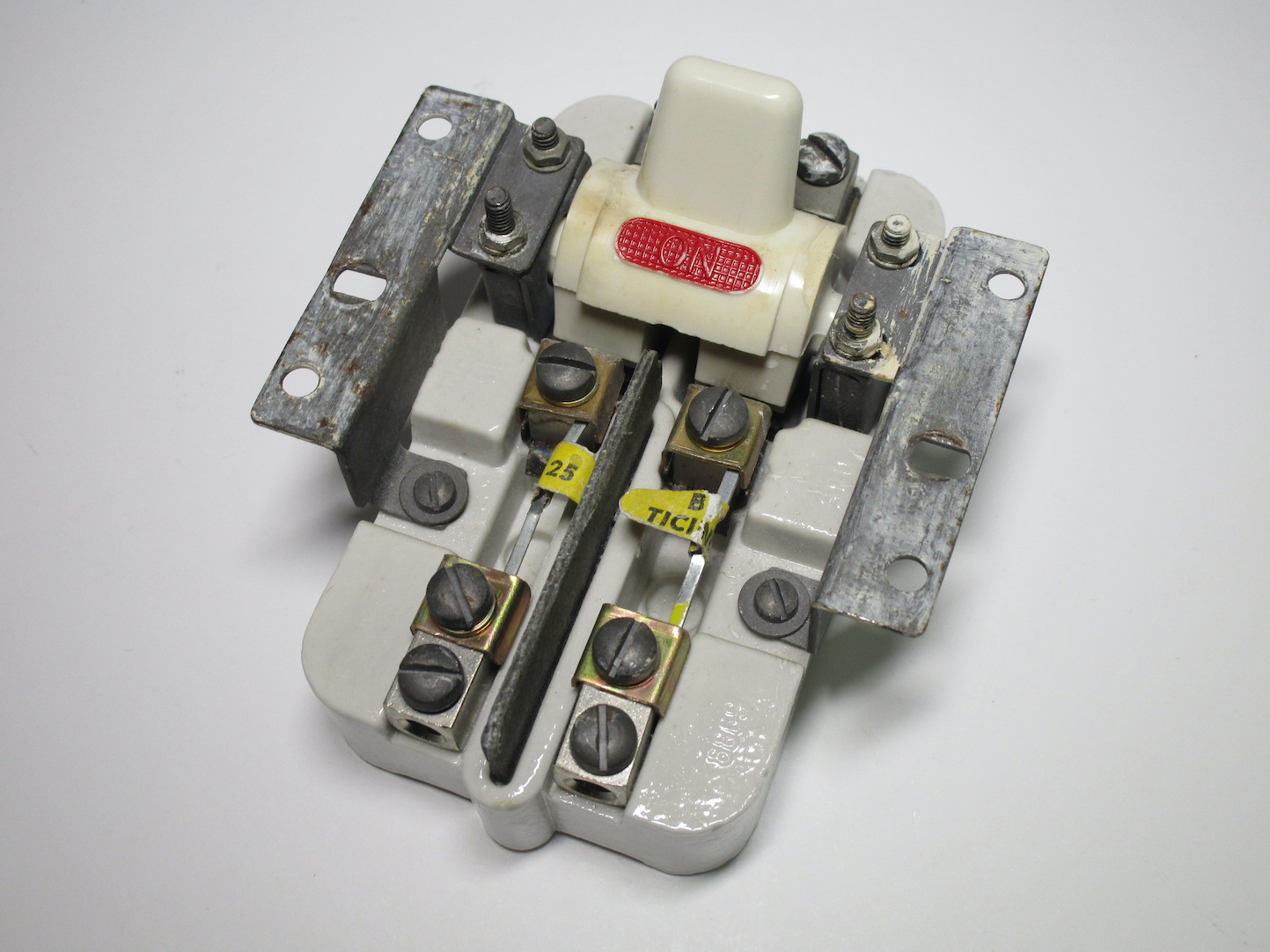
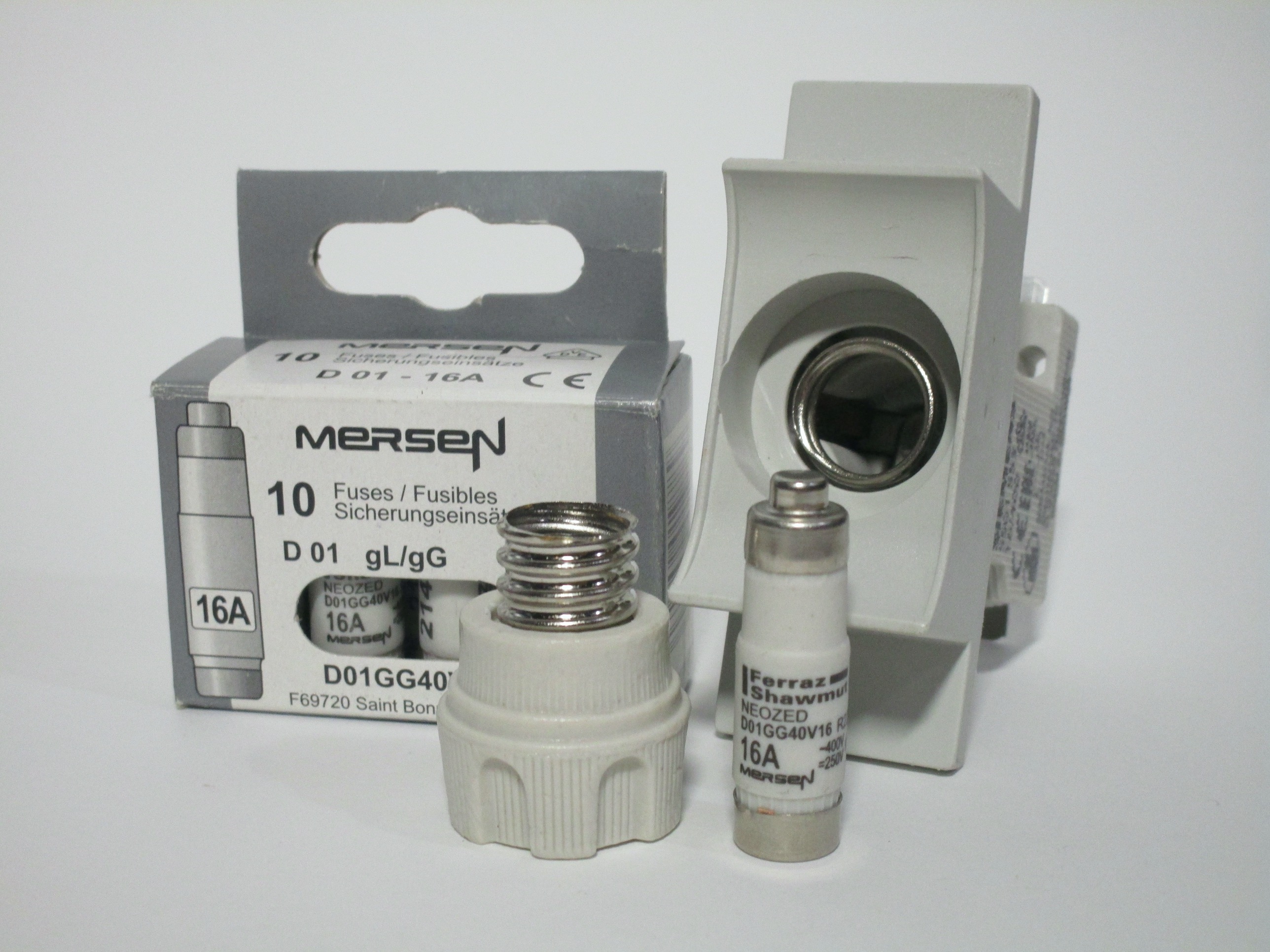
Cartridge systems are thus easier to use and safer, as they're harder to install incorrectly. They are also better at quenching the arc formed when they trip as they're usually filled with sand on the inside and thus especially ideal in areas with high fault currents. In short, they clearly excel rewireable fuses on technical merits. However, the reason why rewireable fuse boxes existed in the first place was due to economics: buying cards of fuse wire was much cheaper than a packet of cartridges, which are considerably more complex to build by comparison.
Dangers of fuses
Fuse boxes by themselves aren't necessarily all that dangerous. Due to their age, it's certainly possible for them to be in poor shape by now or be indicative of other unrelated problems (for example, a lack of earthing), and they're almost certainly missing modern safety features such as RCDs. They may even be built out of questionable materials such as wood or asbestos. But, at least theoretically, a properly installed and mantained fuse box will perform the function of overload and short circuit protection just as well as it did when it was new.
The practical reality of electrical installations, however, is quite different. Many fuse boxes were installed with an insufficient number of circuits, at a time when electrical appliances were rapidly growing in number. This inevitably lead to repeated blown fuses and thus it was unfortunately common for people to bypass the fuse with a coin or thicker piece of wire, thus exposing themselves to the fire risks mentioned previously.
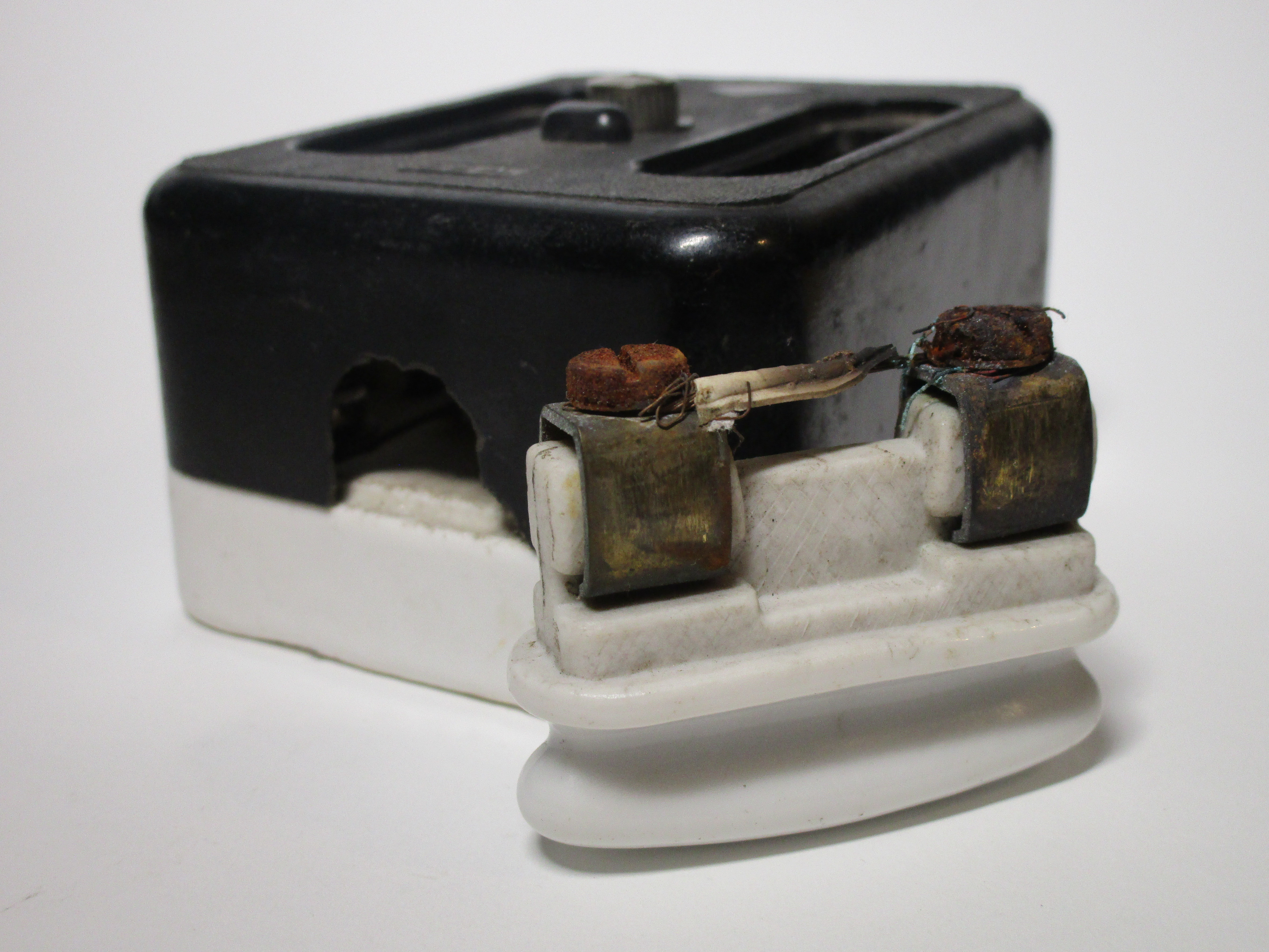
While it is tempting to blame these incidents on the end user, or perhaps on insufficient education on electrical and fire safety, the importance of designing an electrical system where such a situation is unlikely to happen - accounting for the possibility of human error - cannot be understated. An installation needs to be safe not just when it is used properly, but also to some extent when it's used improperly, and thus steps must be taken to reduce the possibility of such improper usage in the first place.
Main switches
While modern breaker boxes have a main switch to easily cut off power, this wasn't always the case with fuse boxes. With the cartridge designs typical of the US and Europe the assumption was that to disconnect the power supply it was sufficient to remove the main fuse(s), if present, or a limited number of fuses in any case. However, this varied greatly by country: for example, UK fuse boxes from the mid-50s onwards always had a double-pole main isolation switch.
Residual Current Devices (RCDs / RCCBs / GFCIs) were rarely ever present in the era of fuse boxes; when they did exist, they were typically separate devices protecting the entire installation in areas with TT earthing rather than for the protection of people. However, while rare, there were fuse boxes made with built-in RCDs, and these were especially common in the Netherlands due to their use of TT earthing (and, presumably, late adoption of breakers).
Neutral fusing
In many countries it was, at least at some point, permitted to fuse not just the line conductor(s) but also the neutral, though the year in which this was outlawed can vary substantially. However, neutral fusing presents the possibility of having only the neutral fuse blow but not the line one, which would still leave the circuit energised even if it appears to be off. For this reason, most electrical codes were amended to forbid placing a fuse on the neutral.
Note that in some places with 220-240V power, L-L distribution may still be in place which thus requires two fuses (or breakers, nowadays) even on ordinary circuits as both wires are live. While this is different than fused neutrals - since there are legitimately two line wires that require protection - it still presents safety issues and is thus only found in legacy distribution networks.
Examples of fuse boxes
Continental Europe
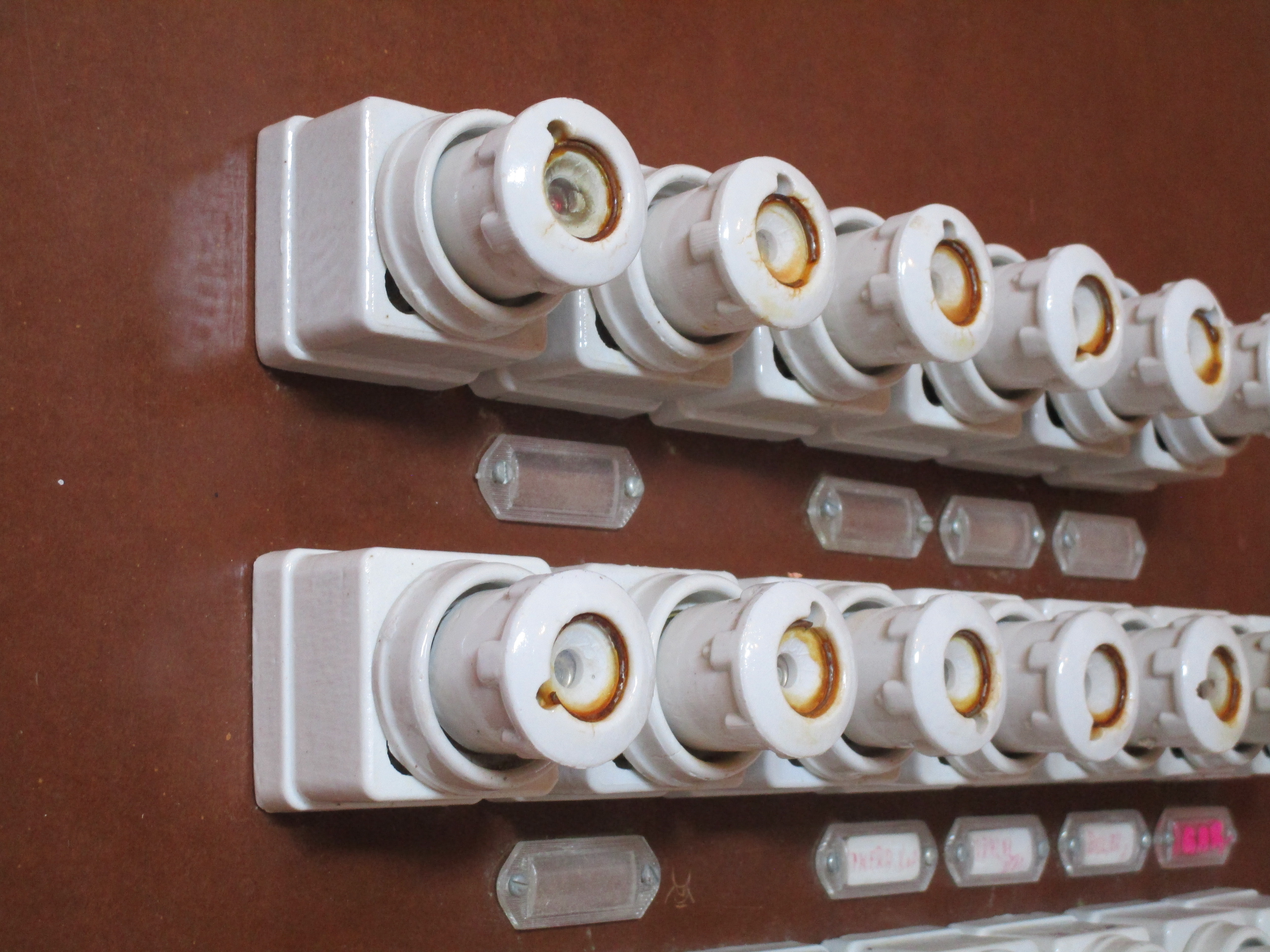
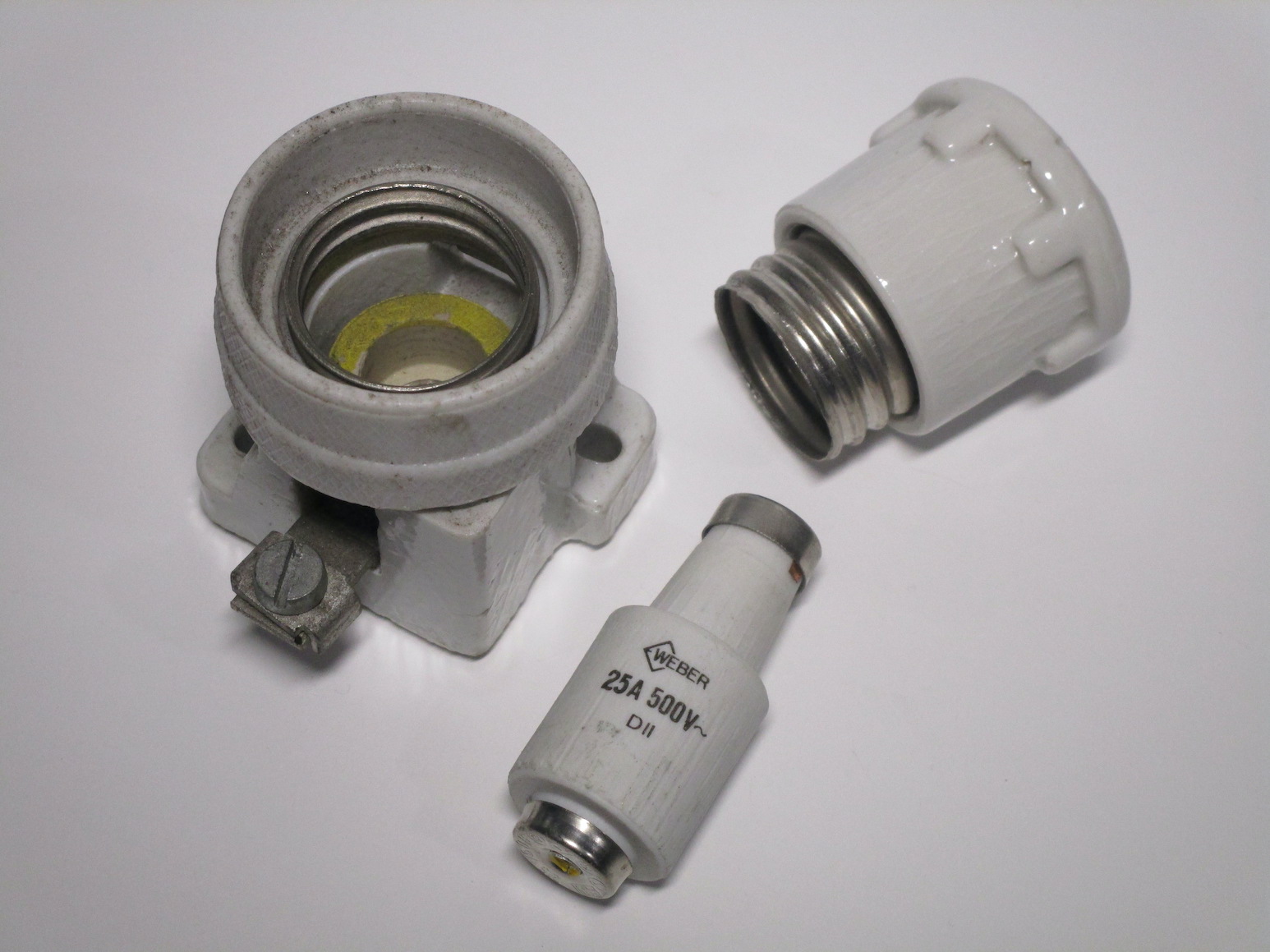
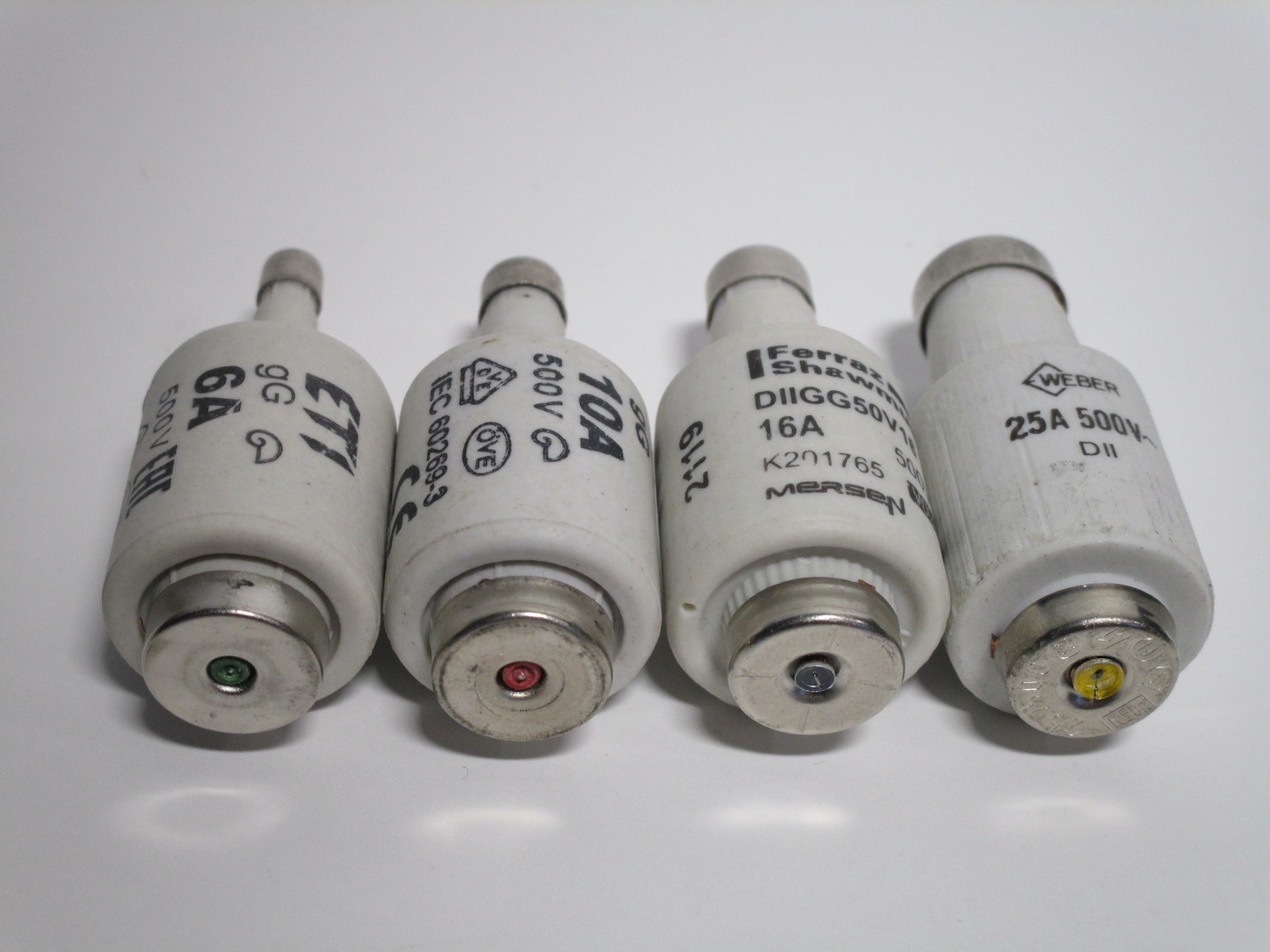
Many countries in Europe, especially those following German-derived electrical systems, adopted the Diazed system. Diazed fuses are bottle-shaped, with a thicker neck depending on their rated current, and are placed in a cap which screws into an Edison socket just like a lightbulb. The fuse holder itself has a matching gauge ring, removable only with a special tool, which prevents an incorrect fuse from being inserted.
The cap has a small window to see an indicator, which pops out when the fuse has blown, to enable quicker identification of the circuit. Both the indicator and gauge ring are colour-coded to indicate their rated amperage.
Fuse boxes were often constructed with individual Diazed fuse holders screwed onto a board or the wall and wired separately. While this did provide a high degree of flexibility, it was also quite time consuming during the installation phase. Later on DIN rail-mounted fuse holders were also produced. Some countries, especially the Netherlands, preferred ready-made fuse boxes similarly to the UK but this was by far the exception.
United Kingdom
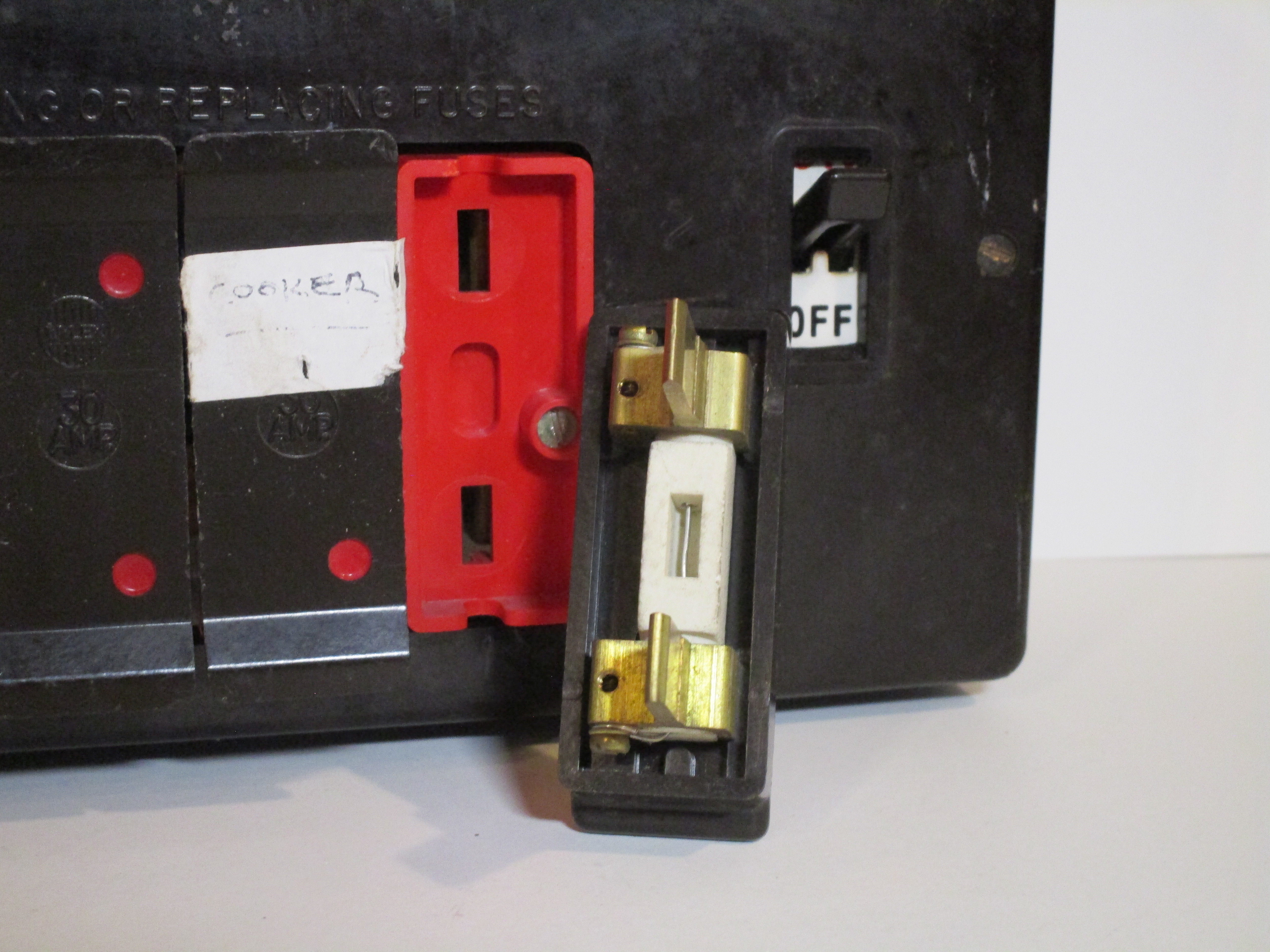
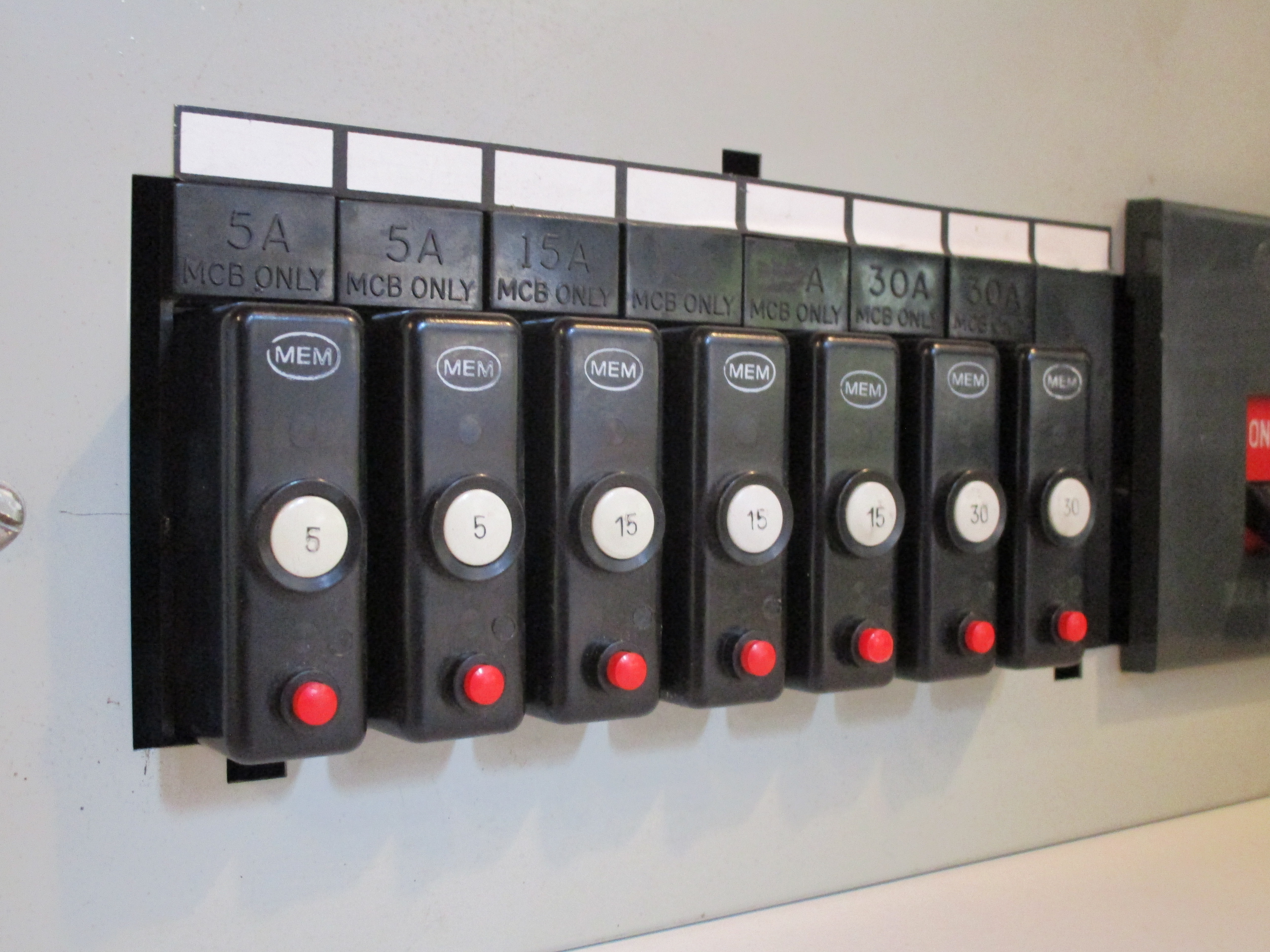
Since the early days of electricity the UK went with pre-assembled fuse boxes, also known as consumer units; a wide selection of models was available, mostly from Wylex and MEM. Rewireable fuses were by far the most common, though cartridges were also an option, especially in later years. Early fuse boxes tended to be built out of wood or metal (in the case of the "splitters" from the 50s) and fused the neutral until 1955, when the practice was prohibited.
Wylex fuse boxes were especially popular between the 60s and 80s and may still be found nowadays. Their design consists of a busbar with several contacts, one for each circuit, plus a double-pole main switch. Fuse carriers (and later, breakers) plugged into these contacts and could be removed for replacing the fuse. Protective "shields", coloured to indicate the rating of the circuit, covered the busbar and interfaced with the blades of the carriers - which were wider depending on their rated current - to prevent the insertion of one with a higher amperage.

North America
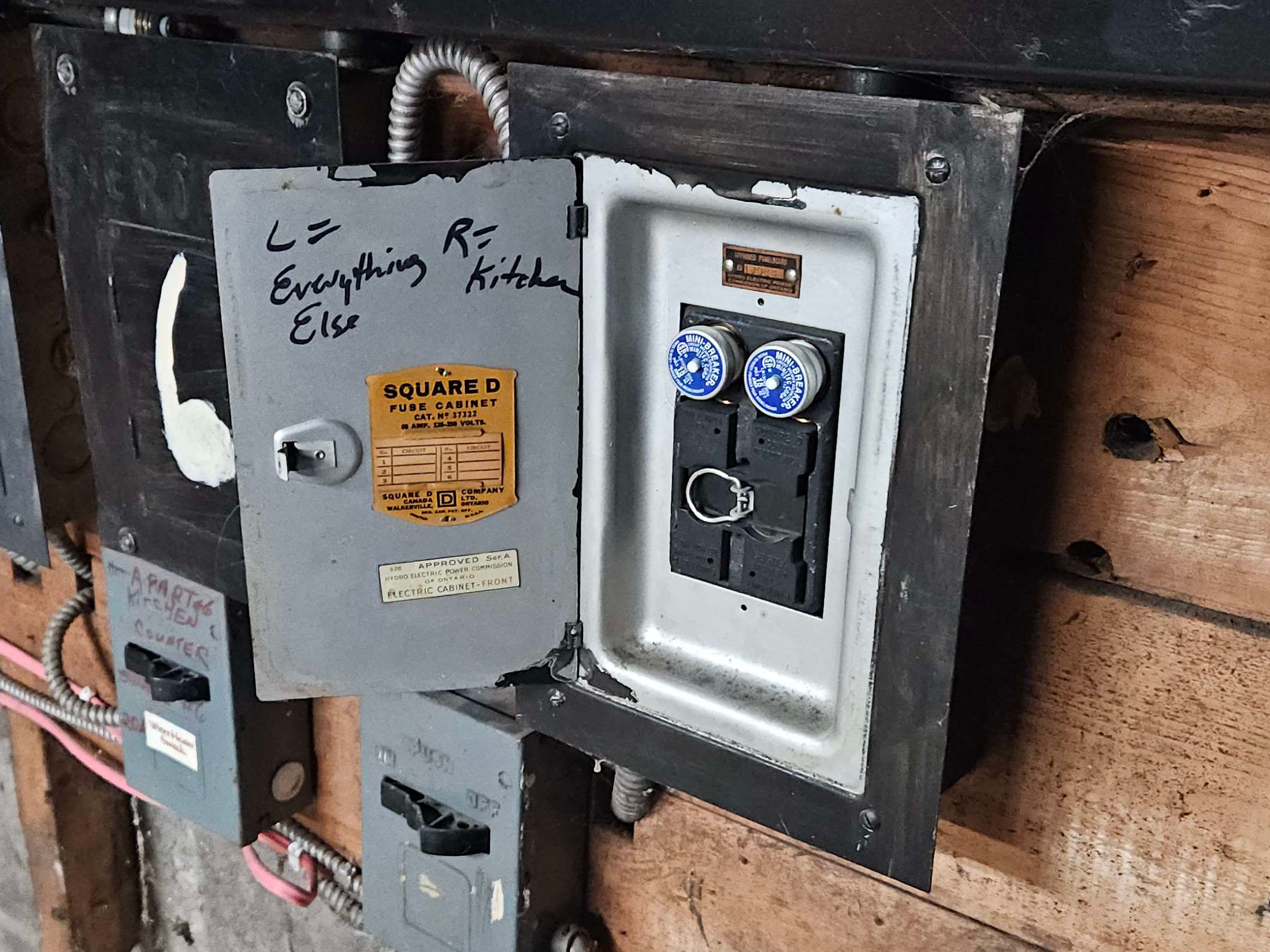
American fuse panels were almost entirely ready-made units housed in metal enclosures. They were replaced by circuit breakers around the 60s, considerably earlier than most other countries. Fuses were entirely in the cartridge format; ordinary circuits, typically rated at 15 or 20A, used Type T or Type S fuses, while 240V circuits used tubular fuses.
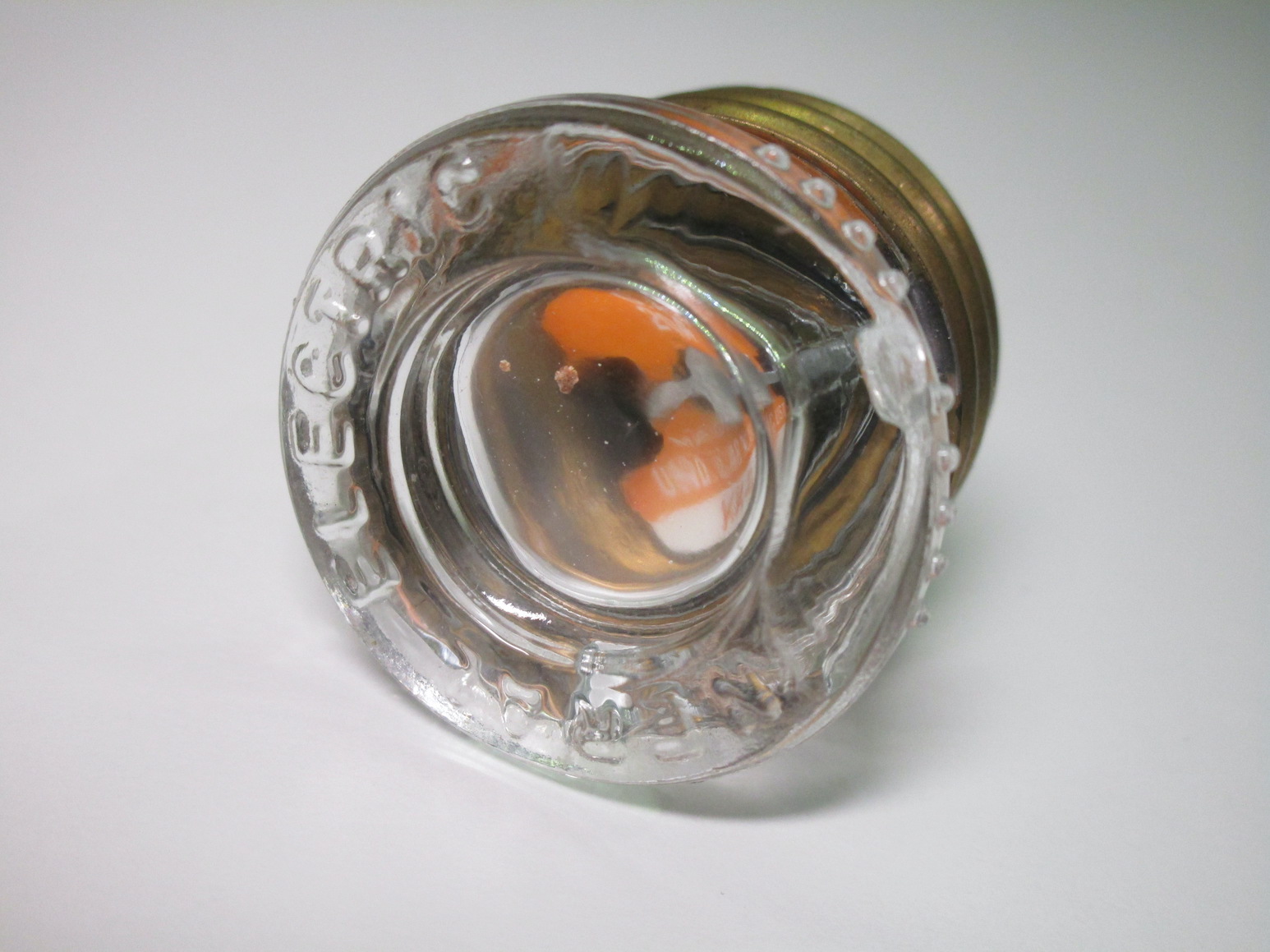
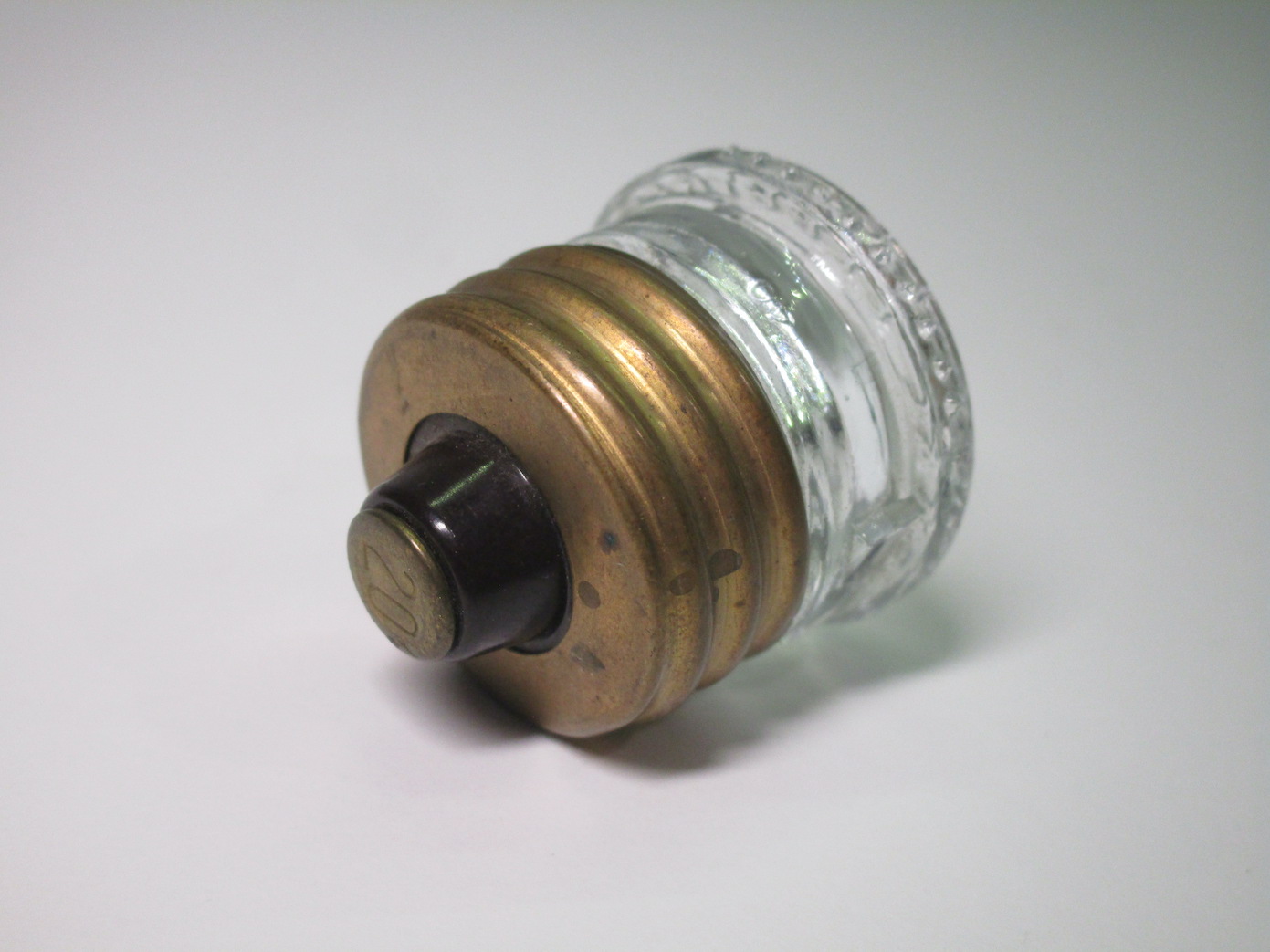
Edison base (Type T) fuses were the original system and natively accepted by most panels. Just like lightbulbs, they had an E26 thread on the outside which screwed into a matching socket. Older fuses were made of glass, while newer ones tend to be built out of plastic. These fuses lacked a mechanism to prevent one of a higher rating from being inserted; this was solved with the newer Type S standard, which had bases of varying widths according to the fuse rating. Panels could be converted to this format through non-removable adaptors.
High-amperage circuits, providing 240V from a split-phase supply, used tubular fuses housed in a large carrier board removed by pulling on a handle. Fuse panels tended to have one of these for the main supply and one for a range, though larger panels with with additional 240V circuits existed.
Italy
Excluding special cases like commercial installations or mansions, an average Italian fuse box tended to have very few circuits - a practice which continued well into the era of breakers. The vast majority of houses only had two circuits, one for lighting and one for power sockets.
The reason for specifically having two circuits mainly resides in the fact that lighting and appliances were, for many decades, supplied at different power rates (using separate power meters) and often ran at different voltages (such as 125V vs 220V). As 220V circuits were derived from two phases of a 220/125V transformer, dual fuses were necessary. Even after conversion to a modern L-N supply, neutral fusing persisted.
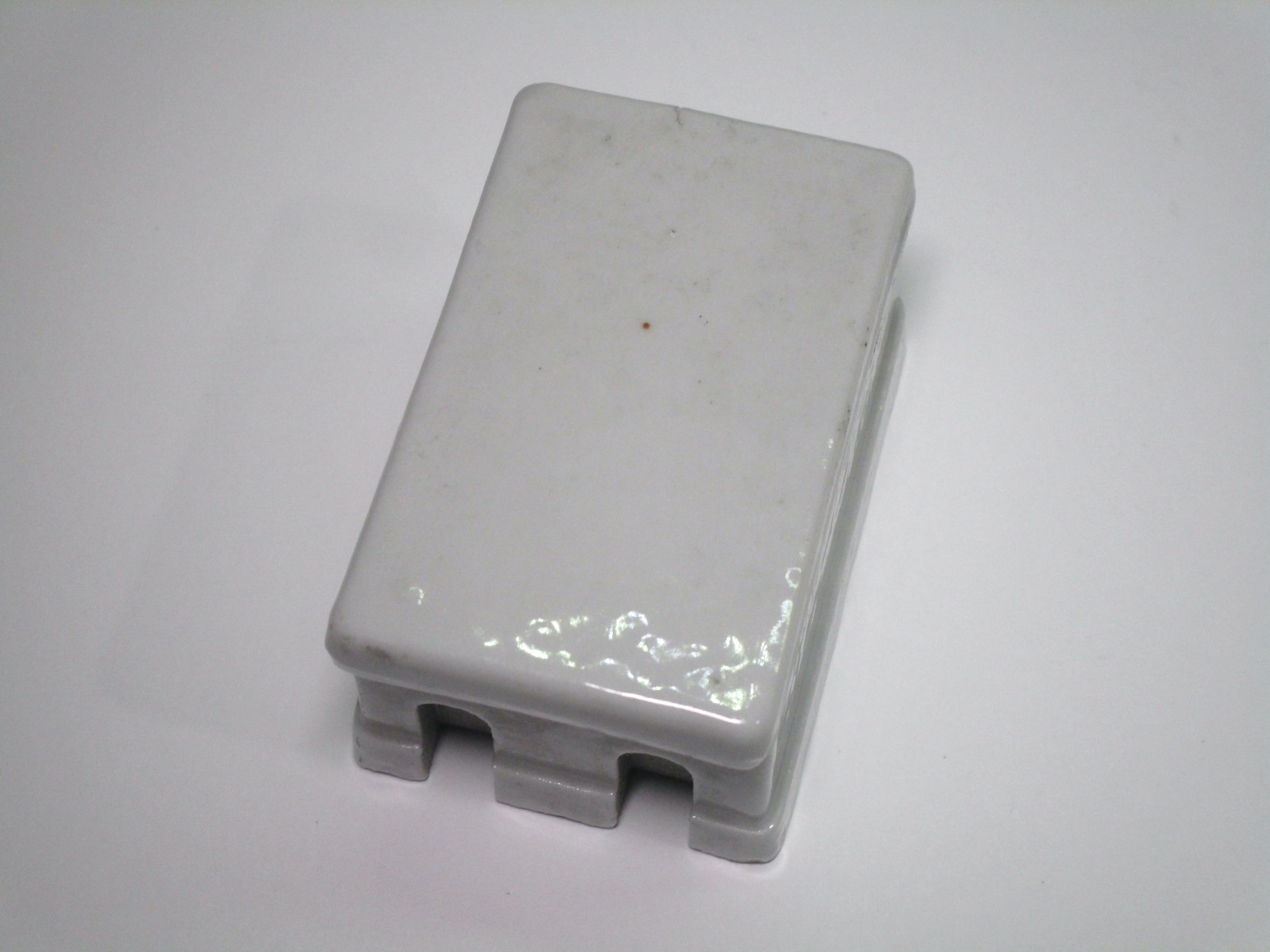
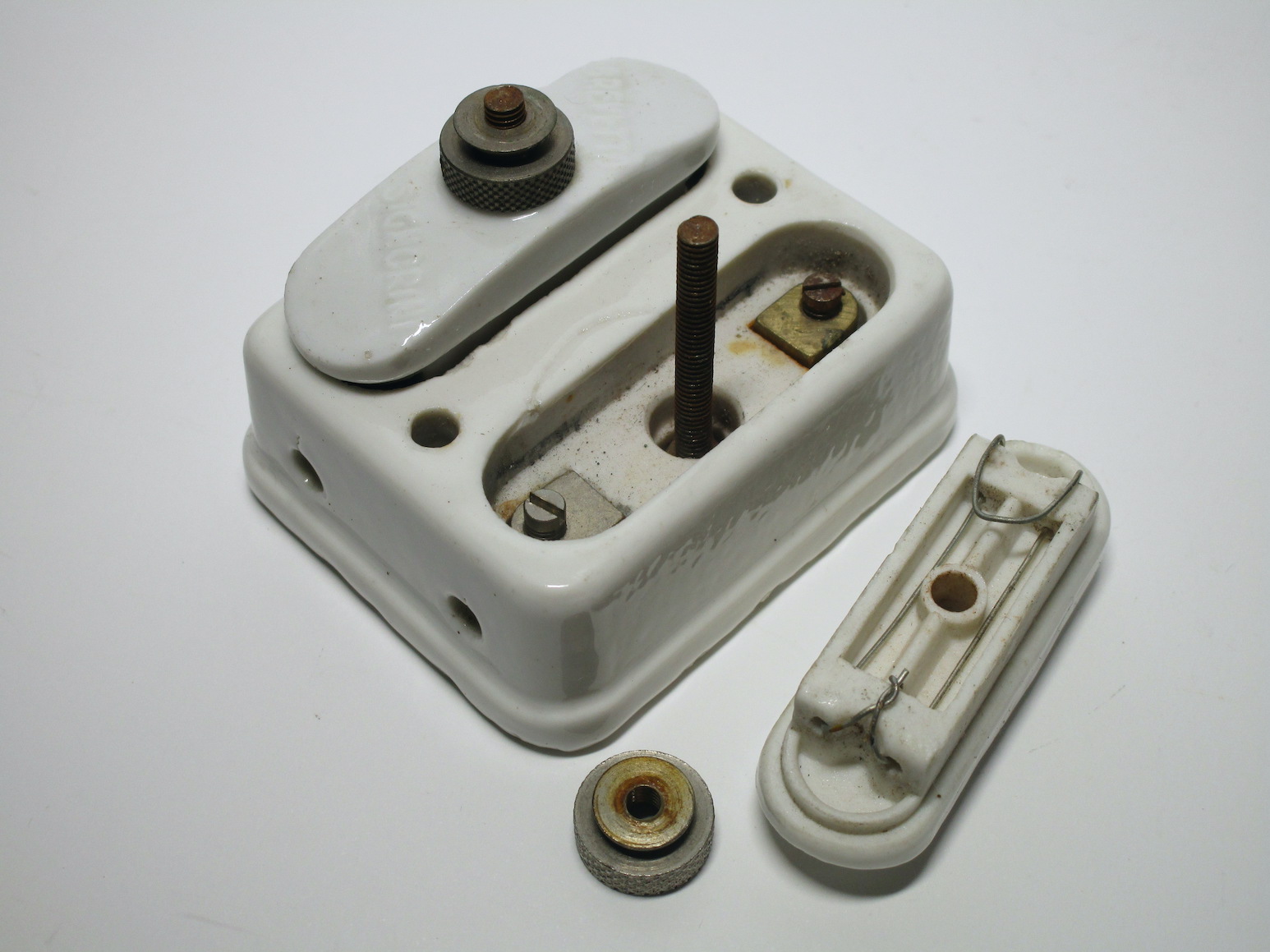
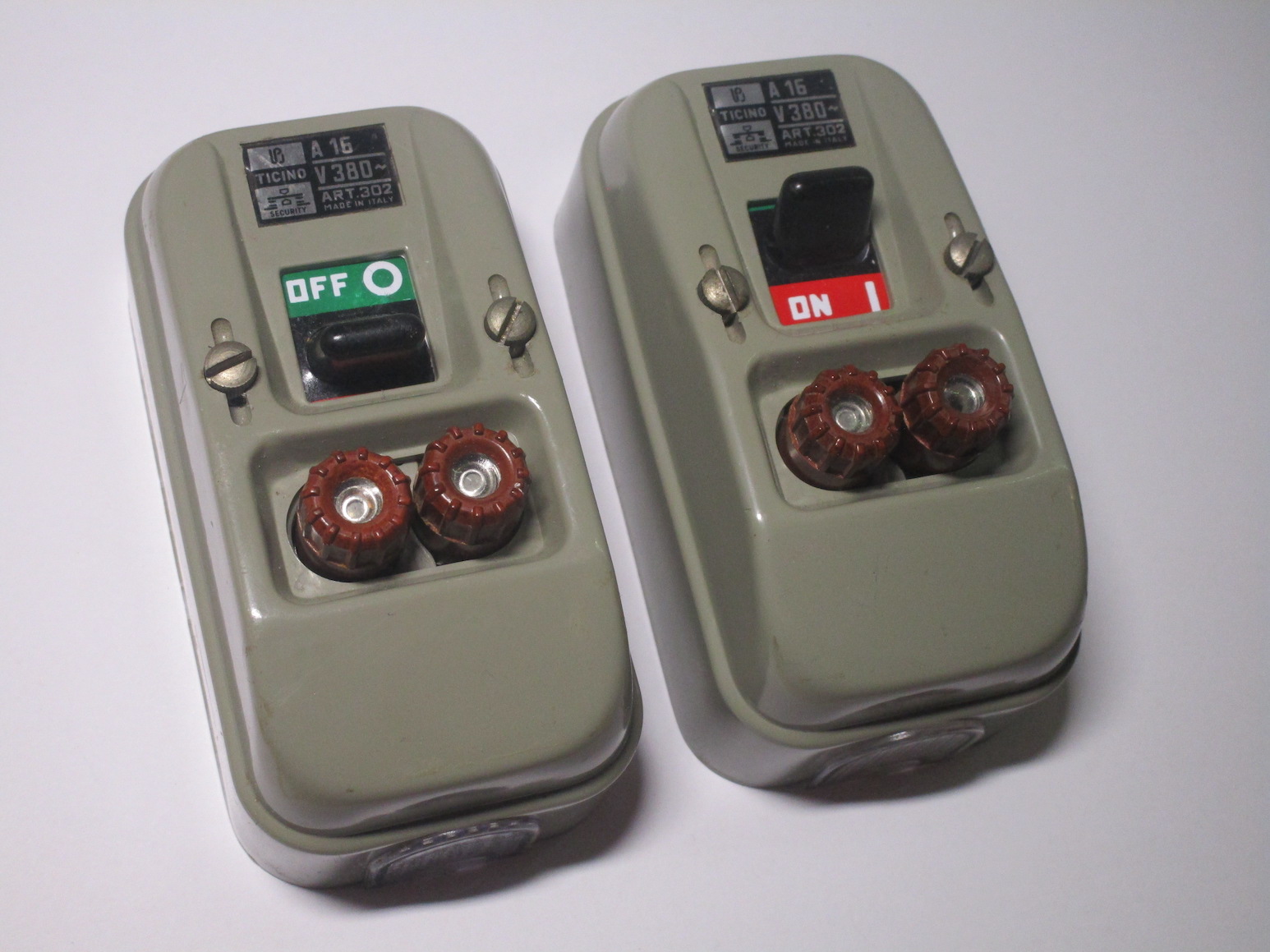
Rewireable fuses were common and installed well into the 60s. These ceramic fuse holders, typically installed directly below the power meter(s), didn't have any sort of main power switch and relied on the removal of a carrier piece to cut off the power supply. Later on, fuse holders by BTicino gained in popularity. These considerably safer designs were available both in rewireable and cartridge formats and featured a power switch.