Schneider Electric Unica modular system
This page covers the Unica modular system by Schneider Electric. Just like other similar modular designs for electrical fittings, the device is made up of different modules mounted on a support frame. The modules may be of several different types - sockets, switches, etc. - according to the needs of the installation. While this does allow for additional flexibility compared to non-modular fittings, normally used in most European countries, it also leads to higher prices. Therefore Unica products are placed in the premium side of the electrical fittings market.
Introduction
The Unica series by Schneider Electric follows a design typical of modern modular electrical fittings. Several different types of module are available, from power sockets to switches and USB chargers, and can be one or two modules wide depending on the specific item.
After choosing the desired modules, they are clipped onto a metal support frame. Each frame holds two modules and multiple frames can be combined depending on the size of the wall box. After screwing the frame(s) into the wall, a decorative cover plate is added. Naturally, the cover plate may be of different colours or patterns, but an additional feature of the Unica series is the presence, on some cover plate models, of a customisable coloured surround around the modules which allows for additional choice in the desired look.
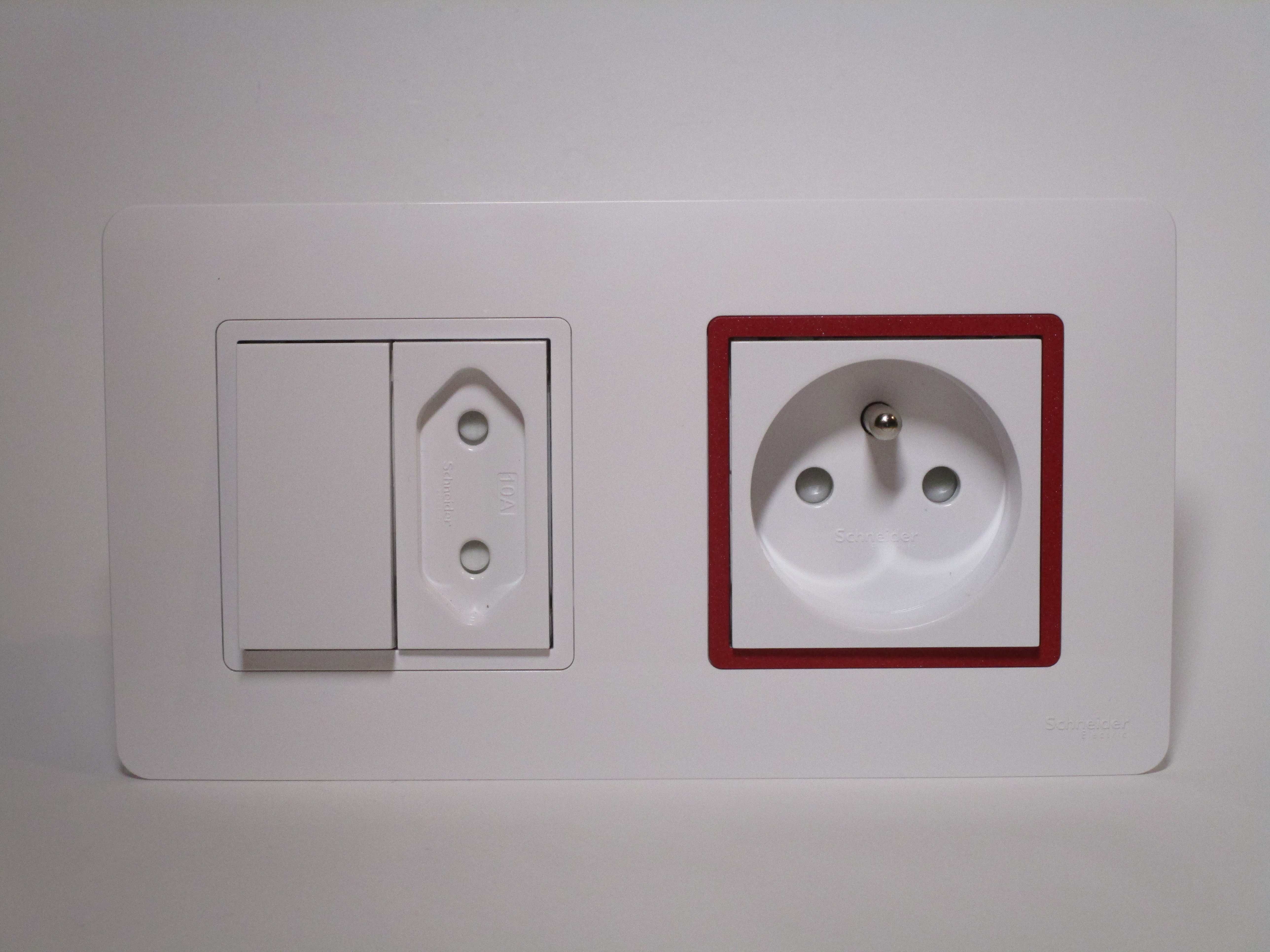
The advantage of modularity is clear enough: compared to non-modular electrical fittings, used in the vast majority of European countries, it allows for a great degree of flexibility in an electrical installation. Items of different functions can be combined, swapped and placed exactly as desired. However, this comes at a cost: the additional complexity leads to the entire fitting being more expensive; as such, the Unica series is positioned very much into the premium end of the market, and this is clear enough from the build quality and construction details.
Construction
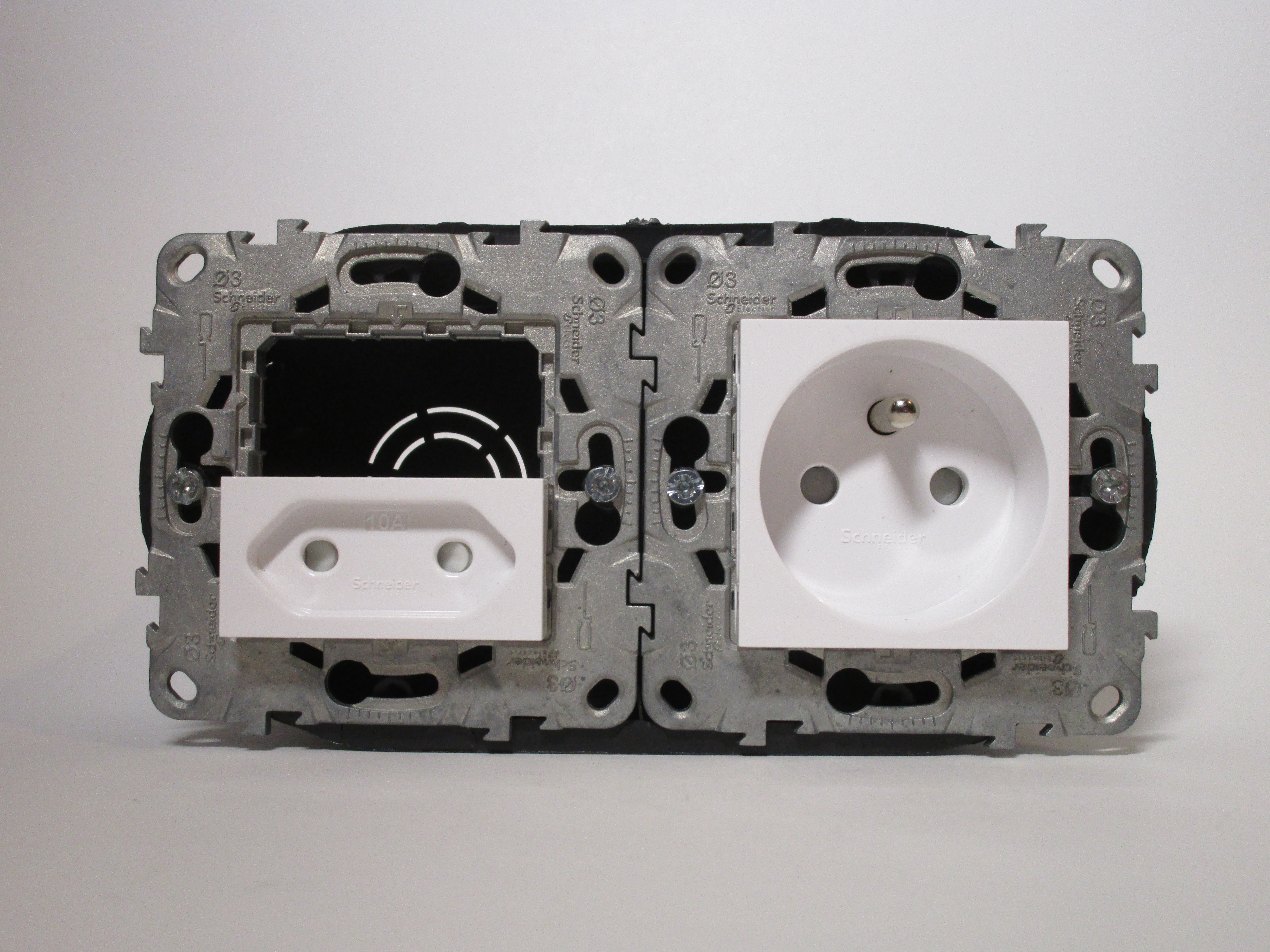
As mentioned, one or more metal support frames are used to hold the modules together and allow the fitting as a whole to be screwed into the wall. These frames are designed for the round "German"-style wall boxes adopted in most European countries. The size of these wall boxes means that only two modules, or one double-wide module, can be held on a singular frame; naturally, just like with non-modular fittings, it's possible to combine multiple frames together depending on the size of box in use.
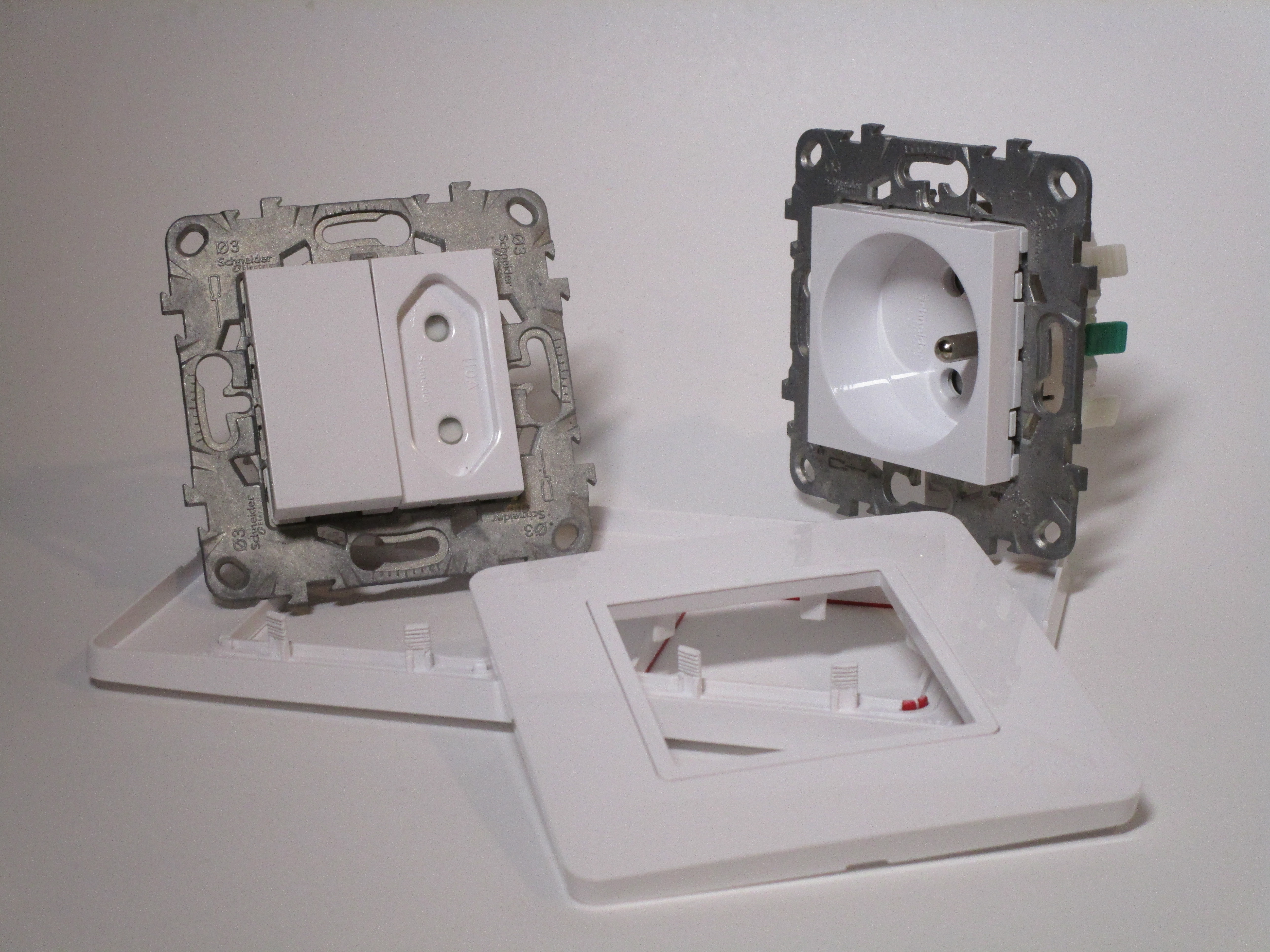
If a larger wall box is used a suitable number of frames corresponding to the size of the box are required; the larger boxes are effectively akin to (and may even outright be) multiple single ones. Each frame is screwed in individually and has small tabs and indents to align to the adjacent ones. Just like conventional non-modular fittings designed for round boxes, there are screw holes on all four sides in order to keep the fitting oriented correctly regardless of whether the box is mounted horizontally or vertically. However, the Unica system also allows the modules themselves to be installed in either direction, if needed.
Modules attach to the frame toollessly using clips; to remove one, a flat-blade screwdriver is necessary to push in the small clips on each side of the module. The frame has indents to interface with the clips. Notably, aside from one indent per module space there is also a central one to allow single modules to be mounted centrally.
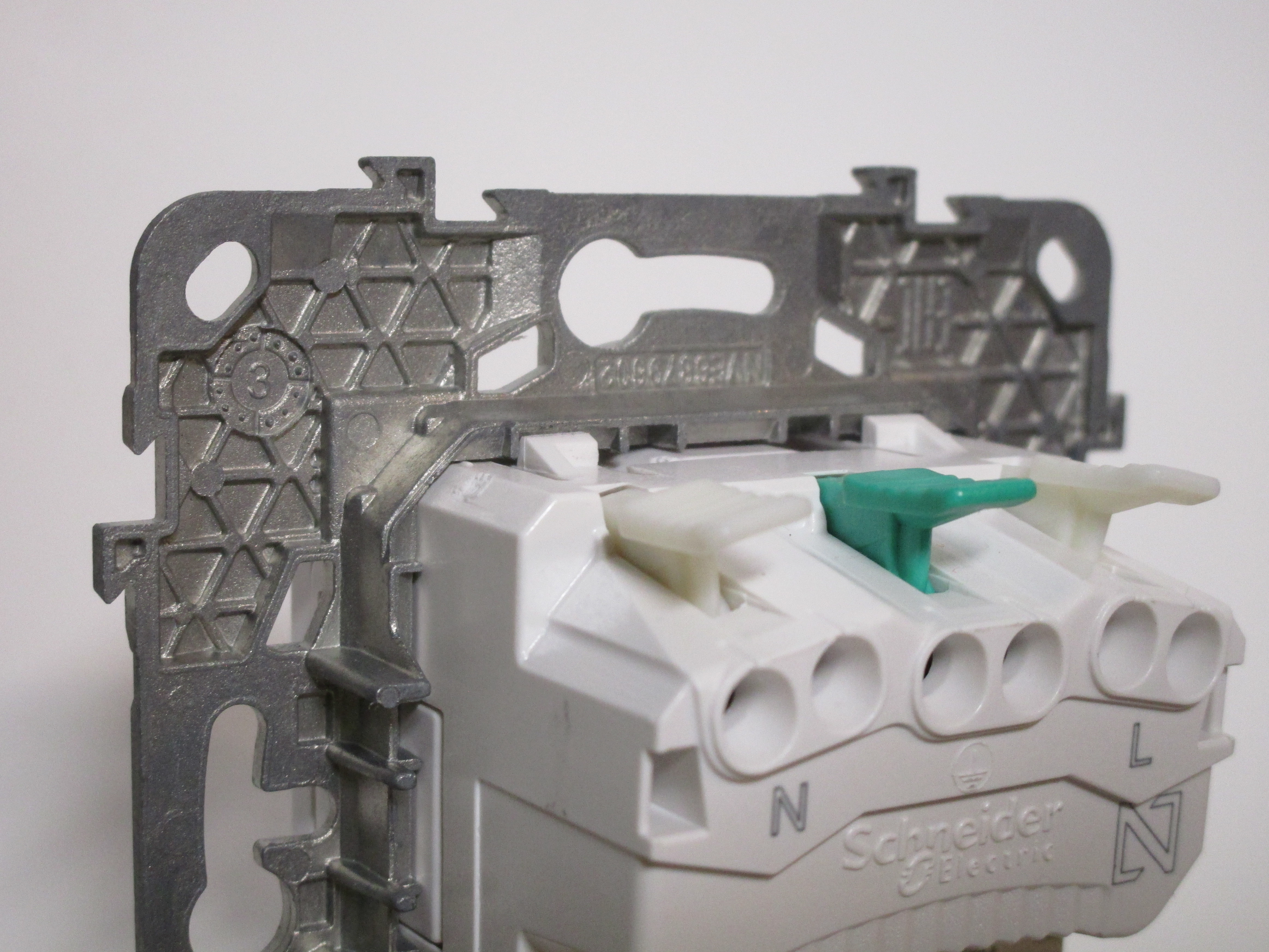
Modules
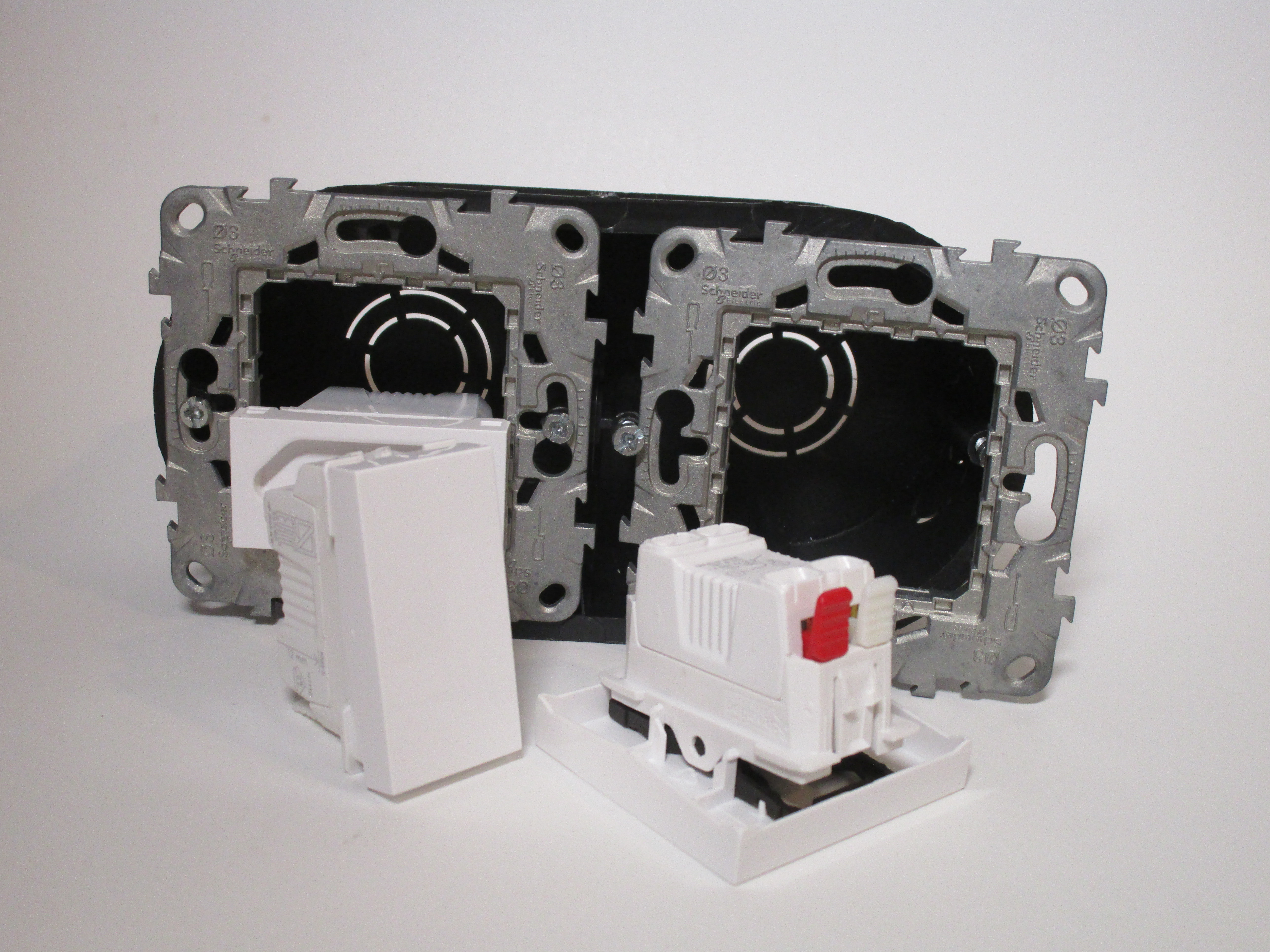
Thanks to the flexibility modularity provides, several types of modules are available, from switches to power sockets to indicator lights and USB chargers. The big advantage of this system comes into play with single-space modules in particular, allowing the combination of items or connectors that would otherwise be impossible to find in a single device.
While the limitations of the European round box system mean that typical modules can only be up to two module-spaces wide, markets with larger boxes such as the popular American-derived rectangular three-module format don't suffer from such a limitation as much.
Power socket module
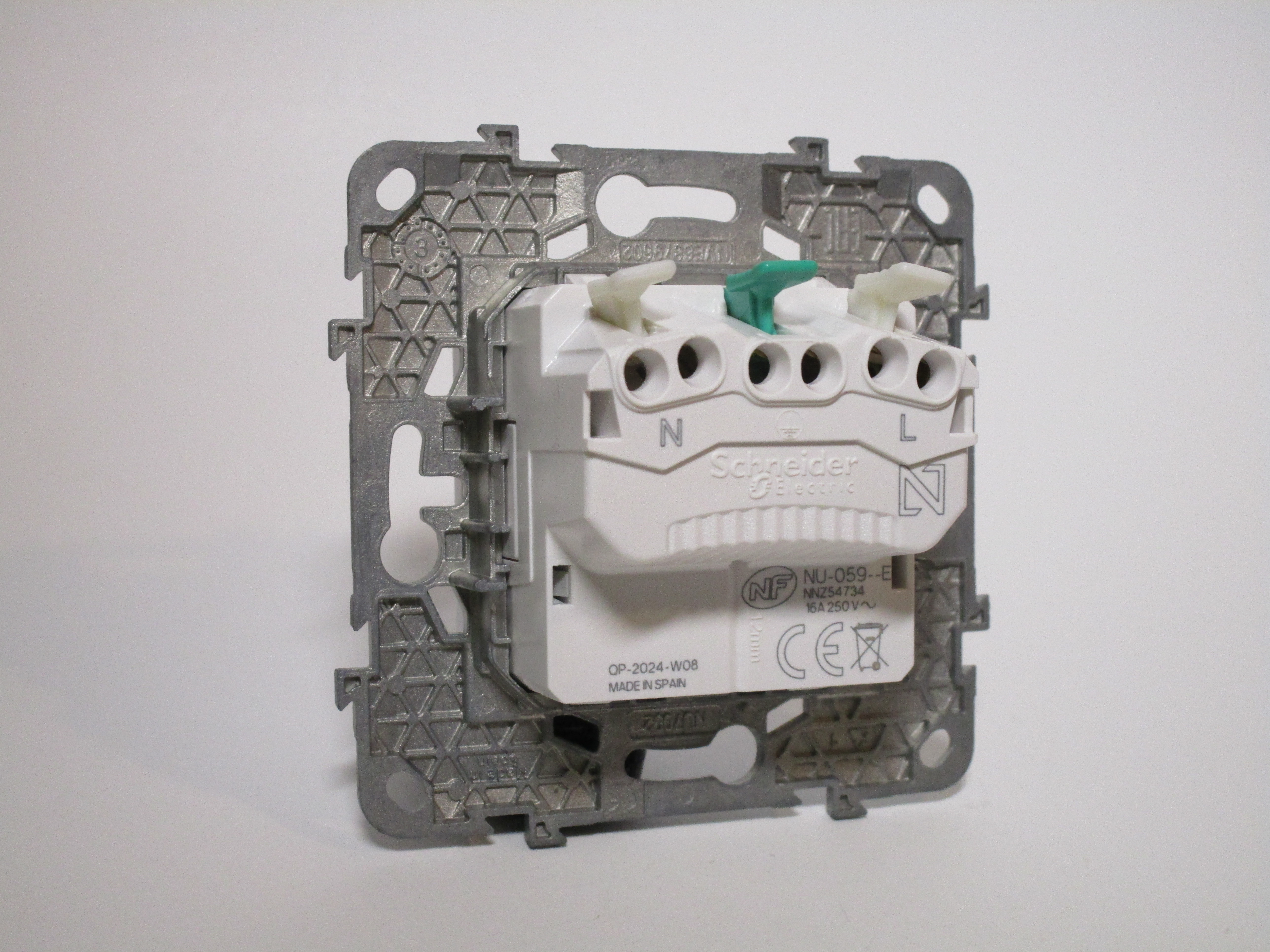
Rating: 16A 250V
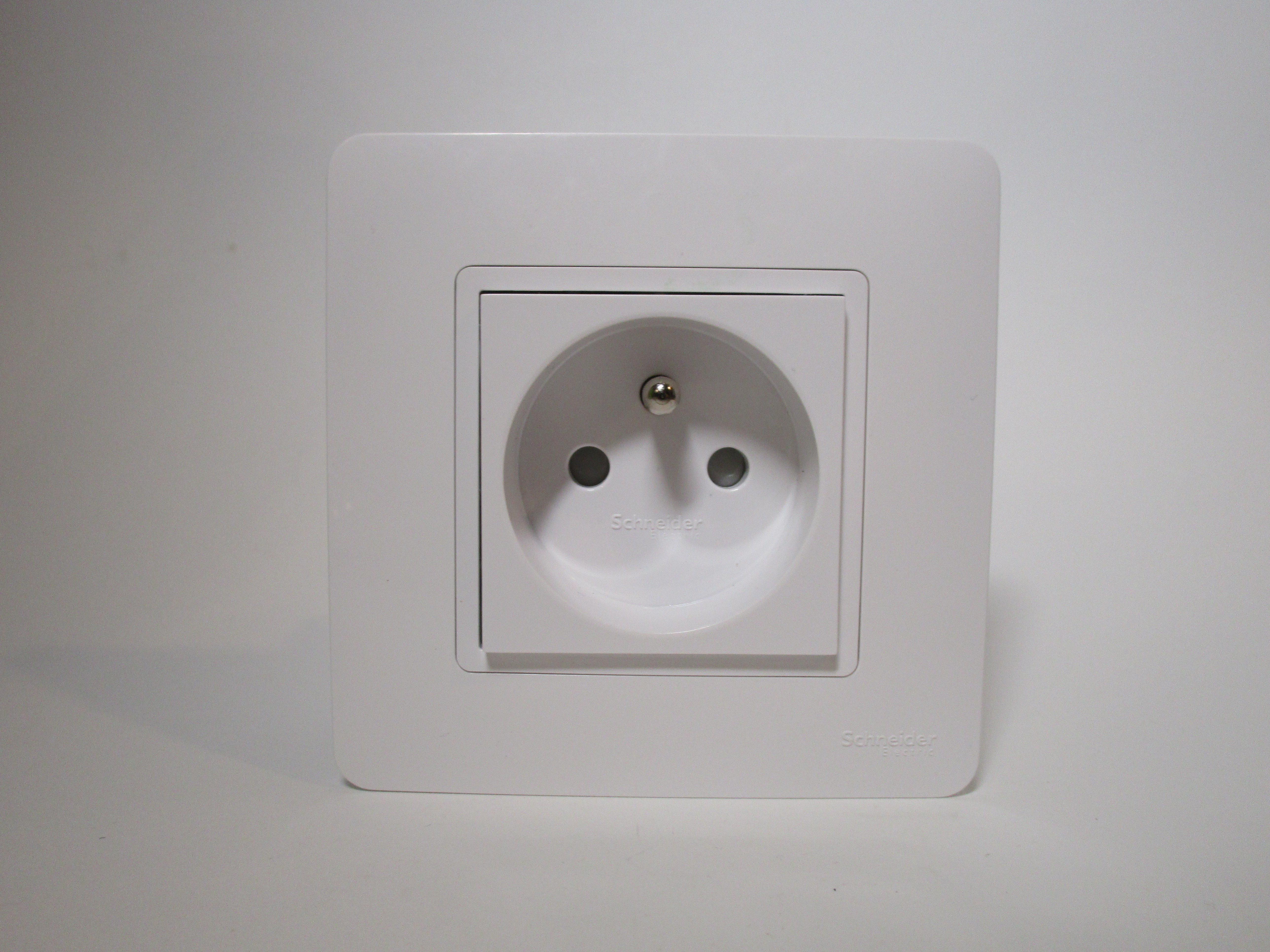
As these items were purchased in Slovakia, the socket is of the CEE 7/5 standard adopted there as well as in nearby Poland and the Czech Republic. Equivalent Schuko sockets are also available for countries using the Schuko system. Wire connections happen through screwless terminals, where the wire (solid core only) is pushed in and held securely, while a lever allows it to be removed. Safety shutters are present, which aren't a requirement in any of the three countries mentioned but are a welcome addition, and are presumably implied by the French "NF" certification marking printed on the module, as France mandates shutters.
The presence of this marking may seem obvious at first - France has also adopted the same type of socket as Slovakia - but is actually somewhat peculiar. Aside from requiring shutters, French sockets also have inverted polarity (L and N) compared to Czech-Slovak-Polish devices. Indeed, despite the NF symbol, the polarity on this socket is of the correct one for Slovakia; however, this implies that, were this module sold in France, it would be of the wrong polarity. Polarisation in France isn't particularly strictly enforced, and there are sockets available there with incorrect polarity markings, however in the case of the Unica series this may not be particularly likely given that the Schneider website for France shows modules with the correct polarity for the country.
Lightswitch modules
Rating: 10AX 250V
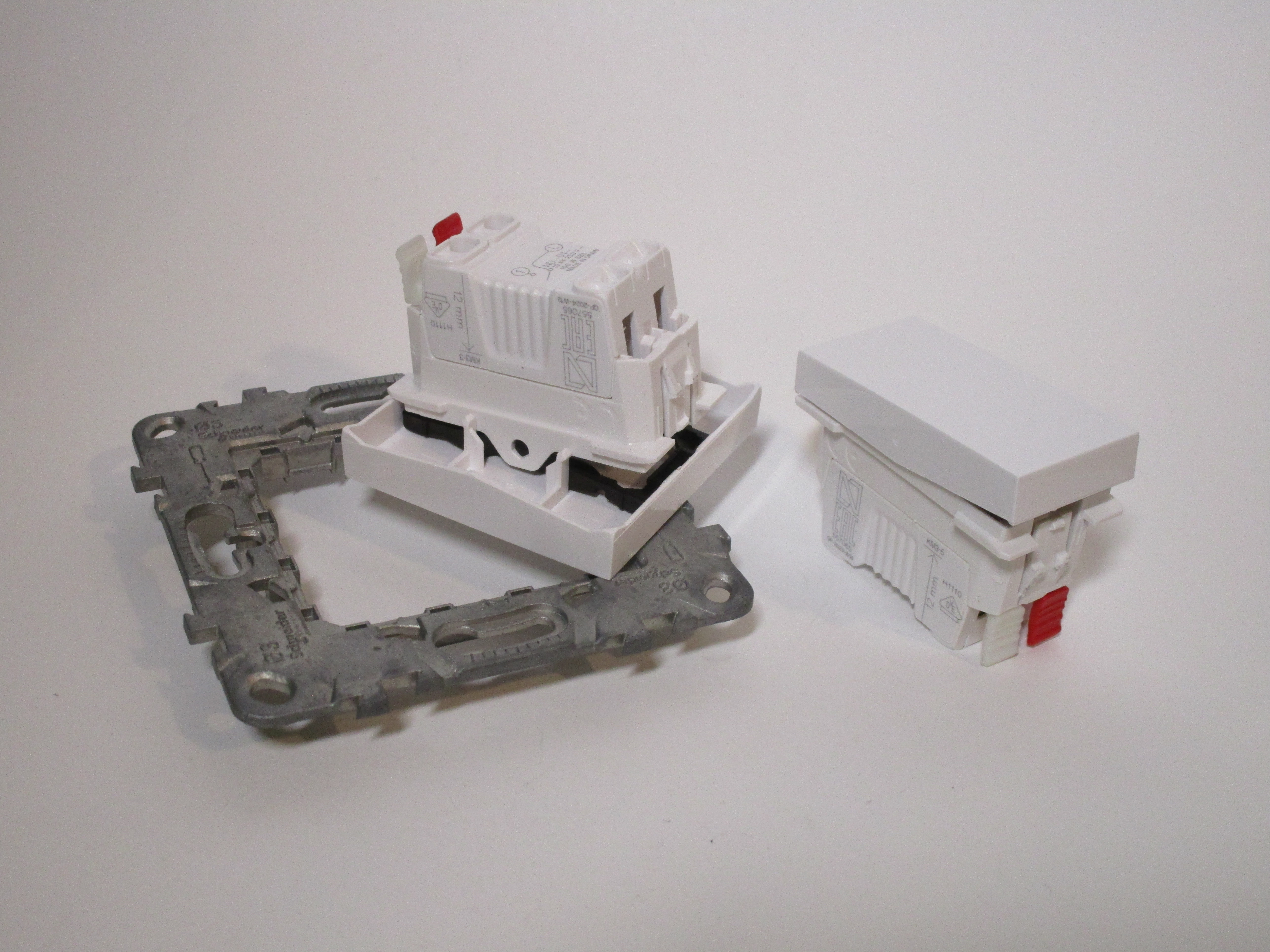
Light switches may take up one or two module-spaces. In the latter case, the module mechanism is identical and the only difference is the cover of the switch (which is removable), and the module is placed in the middle of the frame.
Just like with the 16A socket module, the terminals on the back are screwless.
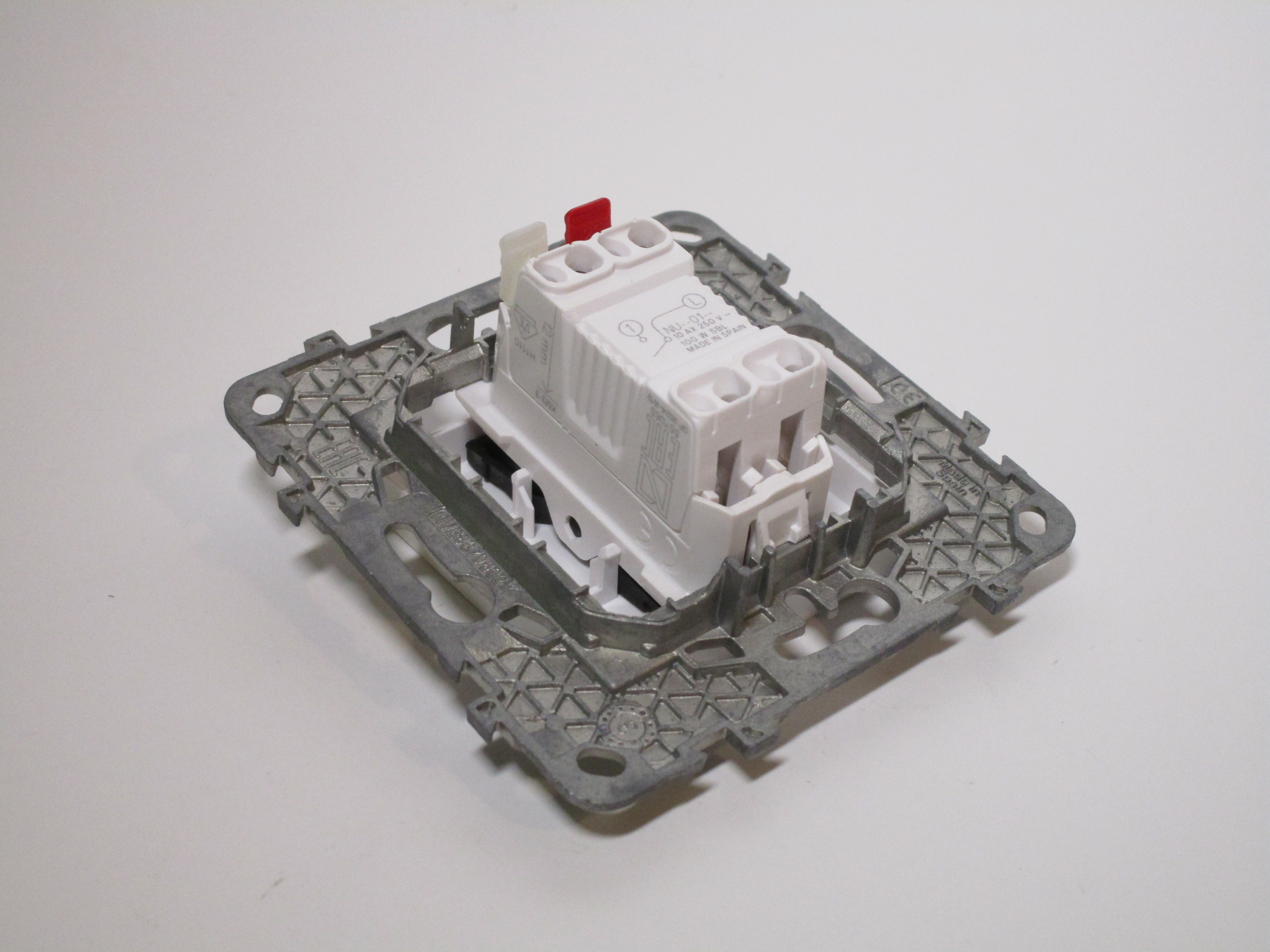
Europlug-style socket module
Rating: 10A 250V
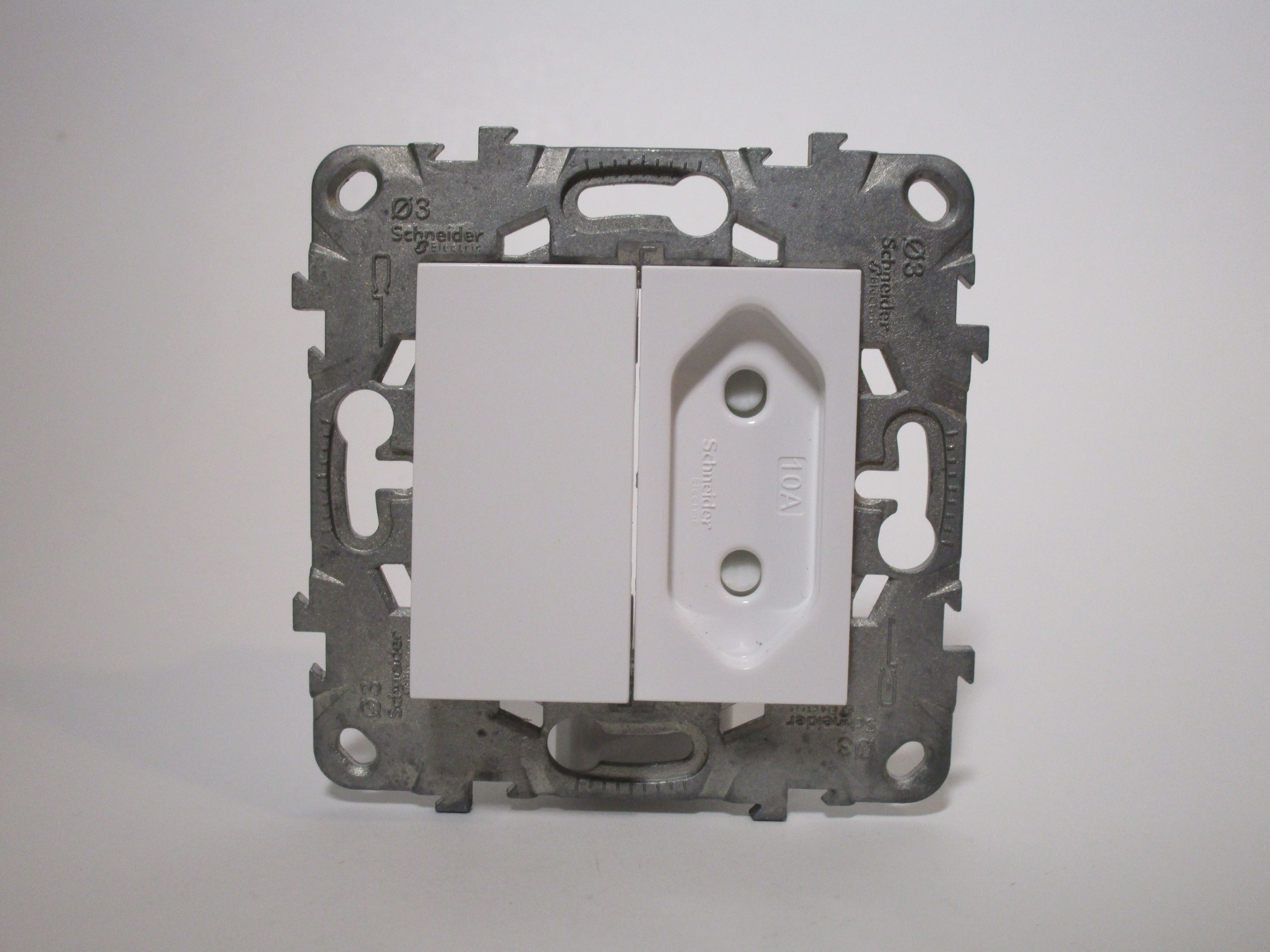
Aside from earthed sockets these special one-module non-earthed socket modules designed for Europlugs - the popular hexagonal plugs without earthing - are available in the Unica series. This makes sense given just how common these plugs are, and can save lots of space in specific applications like A/V systems as they take up half the space of an earthed socket.
It's worth noting that the socket is rated for 10A rather than the 2.5A of a fully compliant Europlug, presumably to account for "Europlug-shaped" plugs with higher ratings which are often available as replacements or specific appliances like travel hairdryers. While the likelyhood of a "fake" Europlug causing issues isn't particularly high, it's best to account for it with these sockets, given that they're already not basing themselves on a particular standard (the Europlug standard only specifies the plug itself and not an equivalent socket).
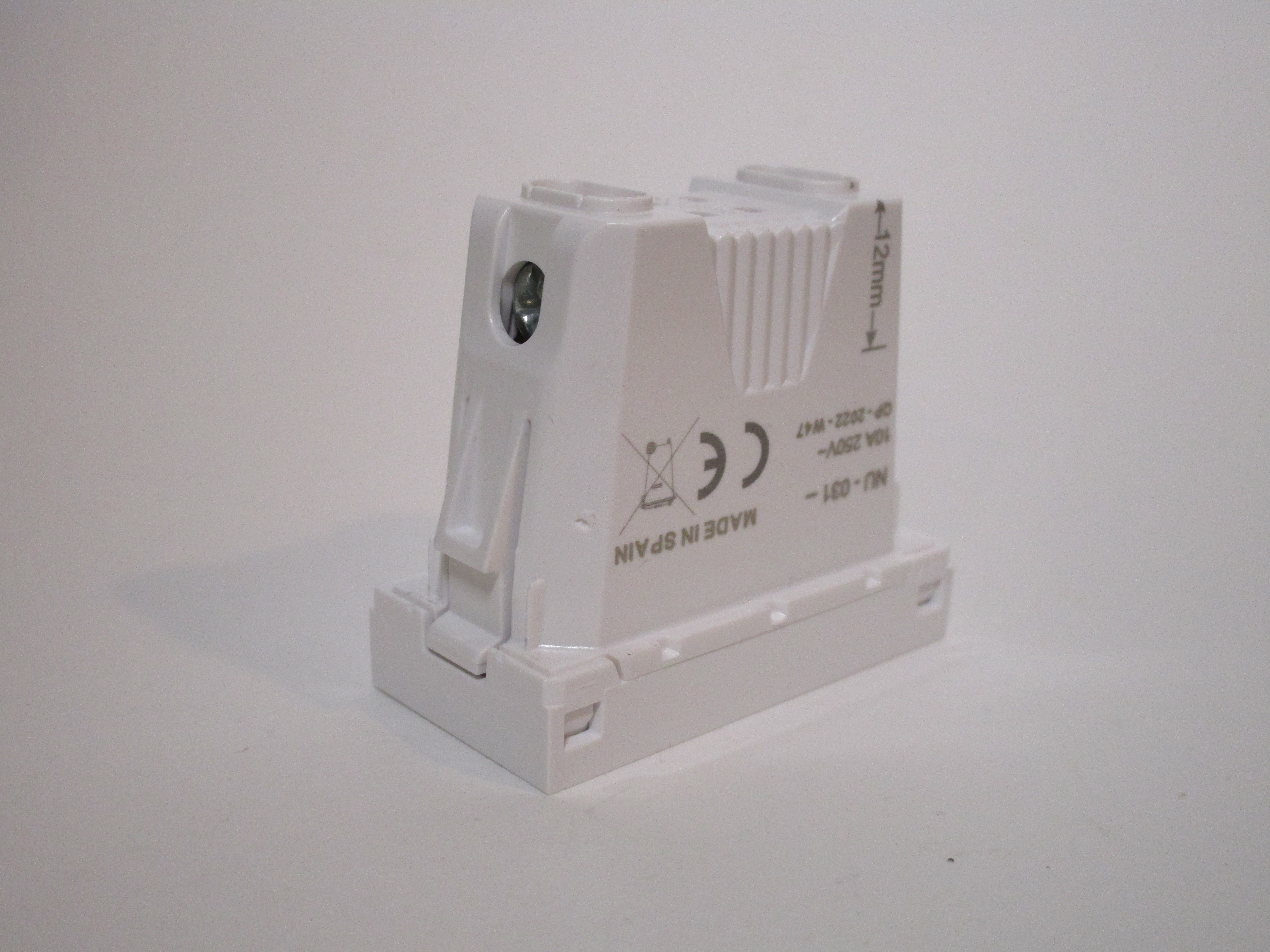
Additionally, unlike the earthed socket and lightswitch modules seen before, this one uses traditional wire connections that must be screwed in instead of toolless ones.
Comparison with Italian modular fittings
Overall the Unica modular series is clearly quite similar, even with some noteworthy differences, to the modular designs used in Italy from companies like BTicino and Vimar. This shouldn't be particularly surprising given the important role Italy has played in popularising modular electrical fittings around the world, especially in Latin America and south-eastern Asia.
The general design of rectangular modules placed directly adjacent to one another, with the
possibility of larger modules taking up multiple spaces (a necessity for Schuko and French-style
sockets), and with a single module-space being half the size of a Schuko/French power socket are
all elements directly comparable to current Italian modular systems.
The main differences are in the ability to place modules in the "middle" and in either direction
(sideways) on the frame, plus two features taken from ordinary non-modular fittings: the metal
(rather than plastic) frame, and screwless wire terminals.
Any European modular system though inherently has to deal with the limitations of the round wall boxes, which not only can only hold two modules but also have necessary empty spaces between each "area" of the box, which reduces flexibility in the placement of modules. By comparison, the Italian 3-, 4- and 7-module box standard is better in this regard, even if odd-numbered sizes are awkward with Schuko/French sockets. A potential compromise solution may lie in the French wall box system, which is a form of round box standard but with the larger sizes having removable sections in the middle. This makes it suitable both for modular and non-modular fittings.