Czech and Slovak plugs and sockets
The Czech Republic, Slovakia (both formerly part of Czechoslovakia) and Poland have all adopted the CEE 7/5 socket standard with an earth pin, also known as French-style, rather than the Schuko type used in other nearby Central European countries. Compatible earthed plugs are known as CEE 7/6.
There are however substantial differences between plugs and sockets from these countries and ones used in France: polarisation is reversed, with line on the left and neutral on the right; safety shutters aren't mandatory, so sockets without them are allowed to be sold; and the wall box standard used is of the German type rather than the smaller French standard. This means that, while the plug/socket type is the same, electrical items sold in these countries are different from those available in France and Belgium.
Czechoslovakia was notable in being the first country to have mandated earthed sockets in all buildings, including household installations, in 1933-34 - Poland followed along a year later (source). However the way this was typically implemented was with the TN-C earthing system, which was allowed in Czechia and Slovakia until the mid-90s. In practice, this meant that only two wires continued to be supplied, and the neutral was simply jumped across to the earth connection. This system saved the cost of a third wire, but is dangerous as any break in the neutral will render the chassis of the connected appliances live at mains voltage. These days the TN-C-S system has been adopted, however many old installations continue to be present with the old system.
ZES power socket
Rating: 16A 250V
This is a typical Czech-style power socket. It's a cheaper model based on an older design, but still available in hardware stores nowadays. Thus, it doesn't feature safety shutters and the terminals are of the old screw terminal type rather than push-in.
Notably, while the L and N terminals are of the rising clamp type, the two provided for the earth are simple screws. As mentioned earlier, TN-C earthing was common in these countries. The expected wiring for sockets was thus to connect the incoming neutral (in practice, PEN) to the top earth screw, without cutting it, and terminate it in the neutral terminal. This method of wiring is the safest with TN-C as it reduces the chance of failure of the earth connection.
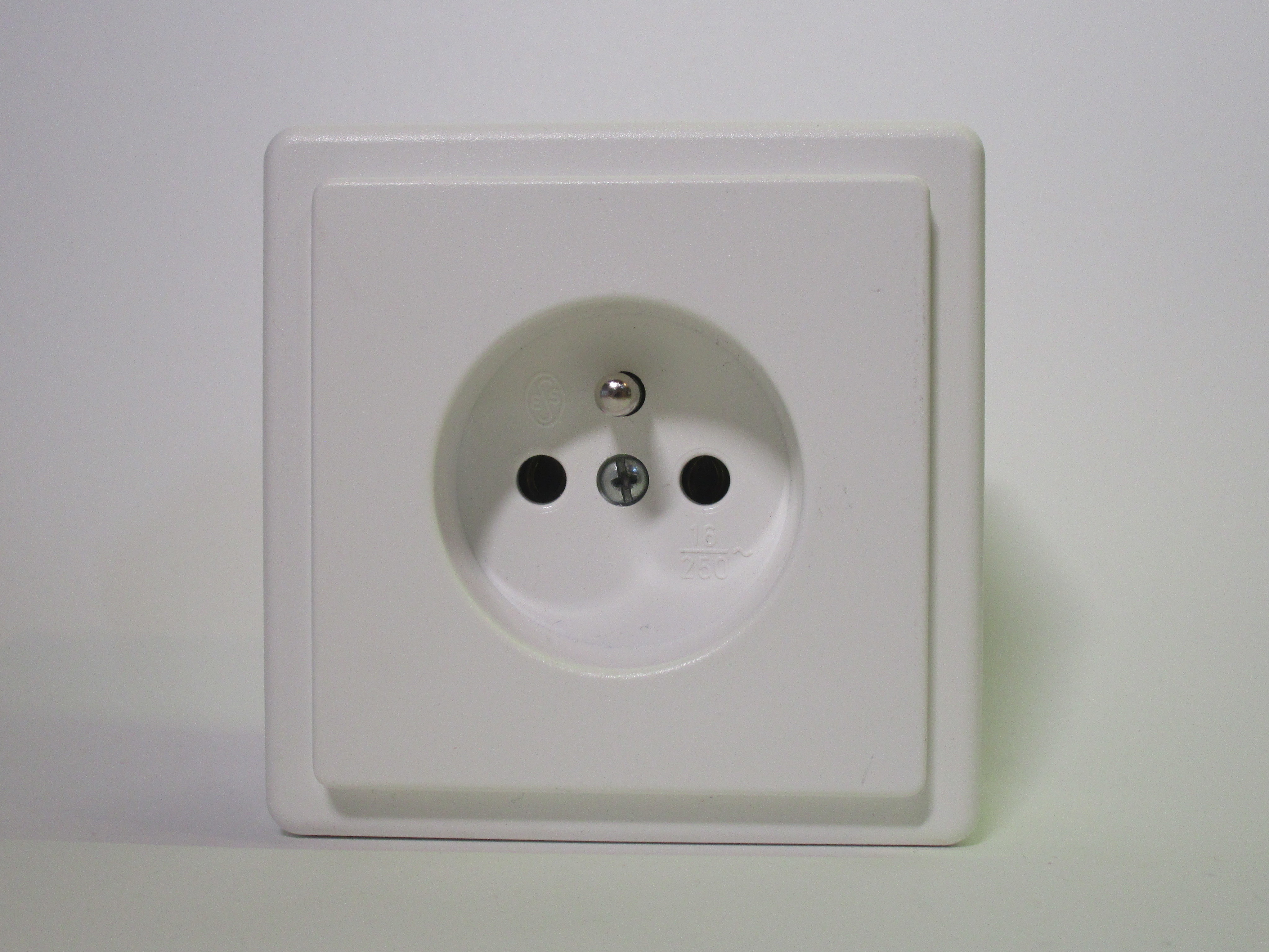
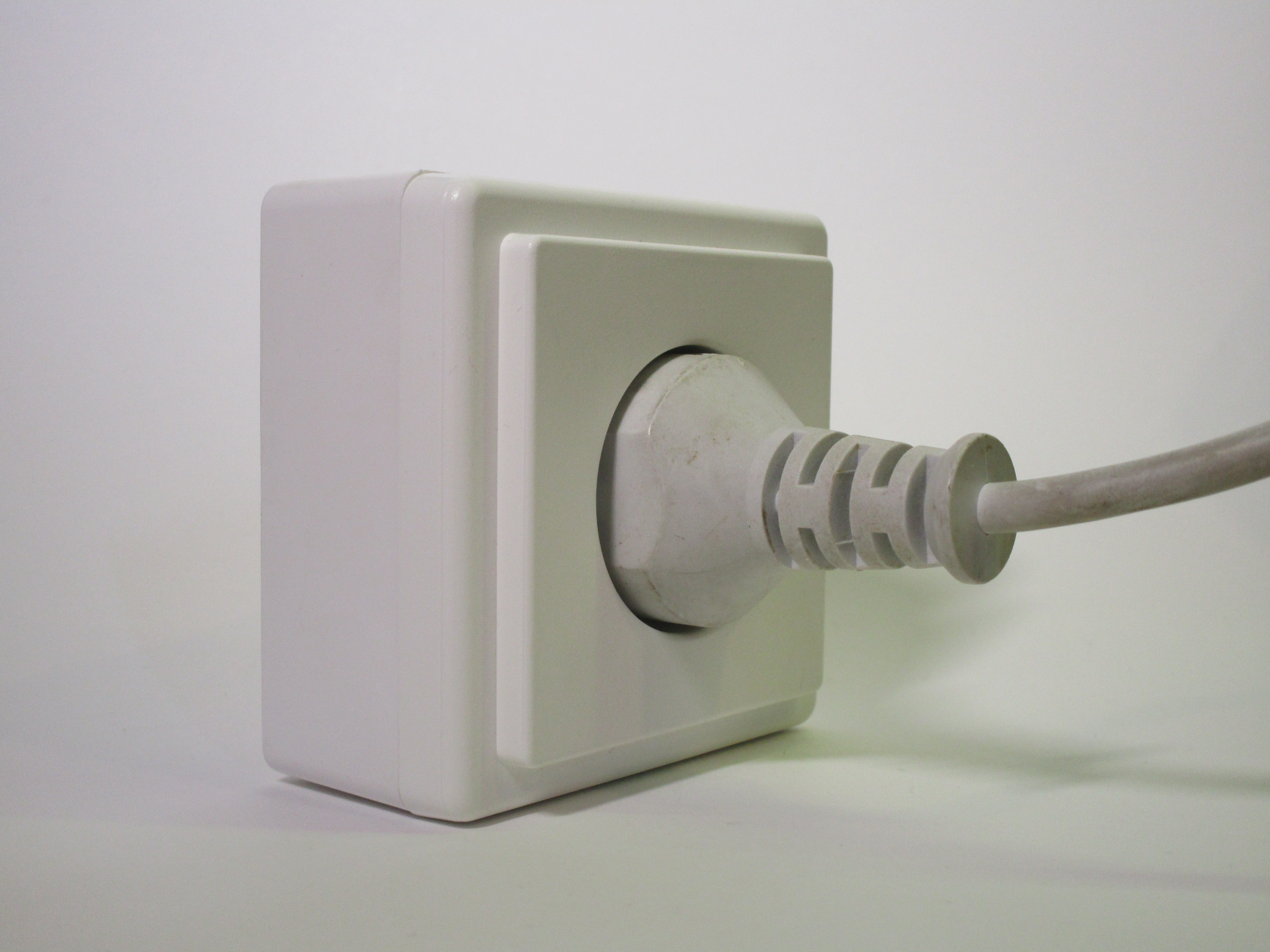
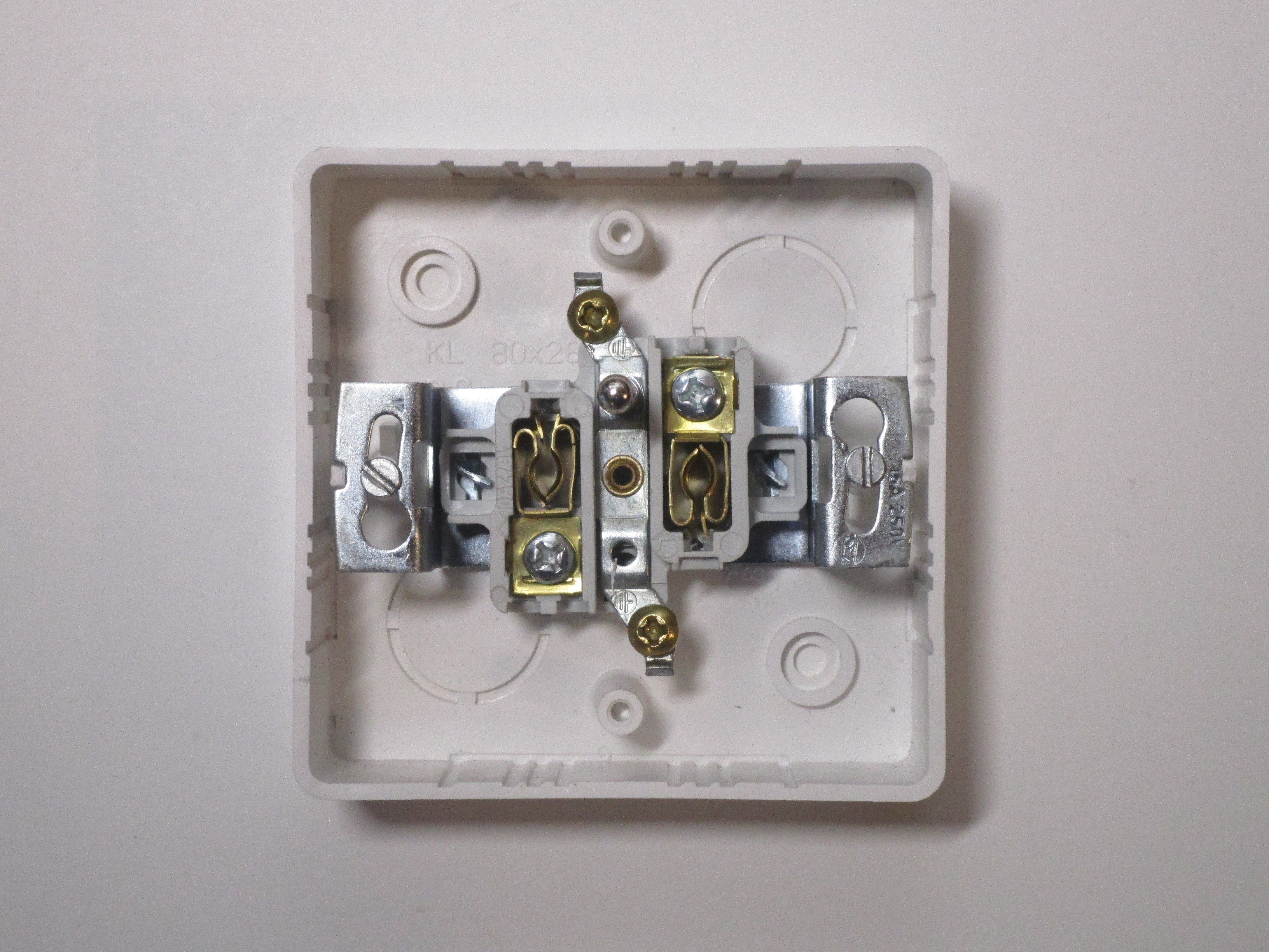
The outlet is built as a single block item, thus it can only be used in single wall boxes. In this example, it has been placed in a surface box specifically designed for it, however it can also be used with conventional in-wall ones.
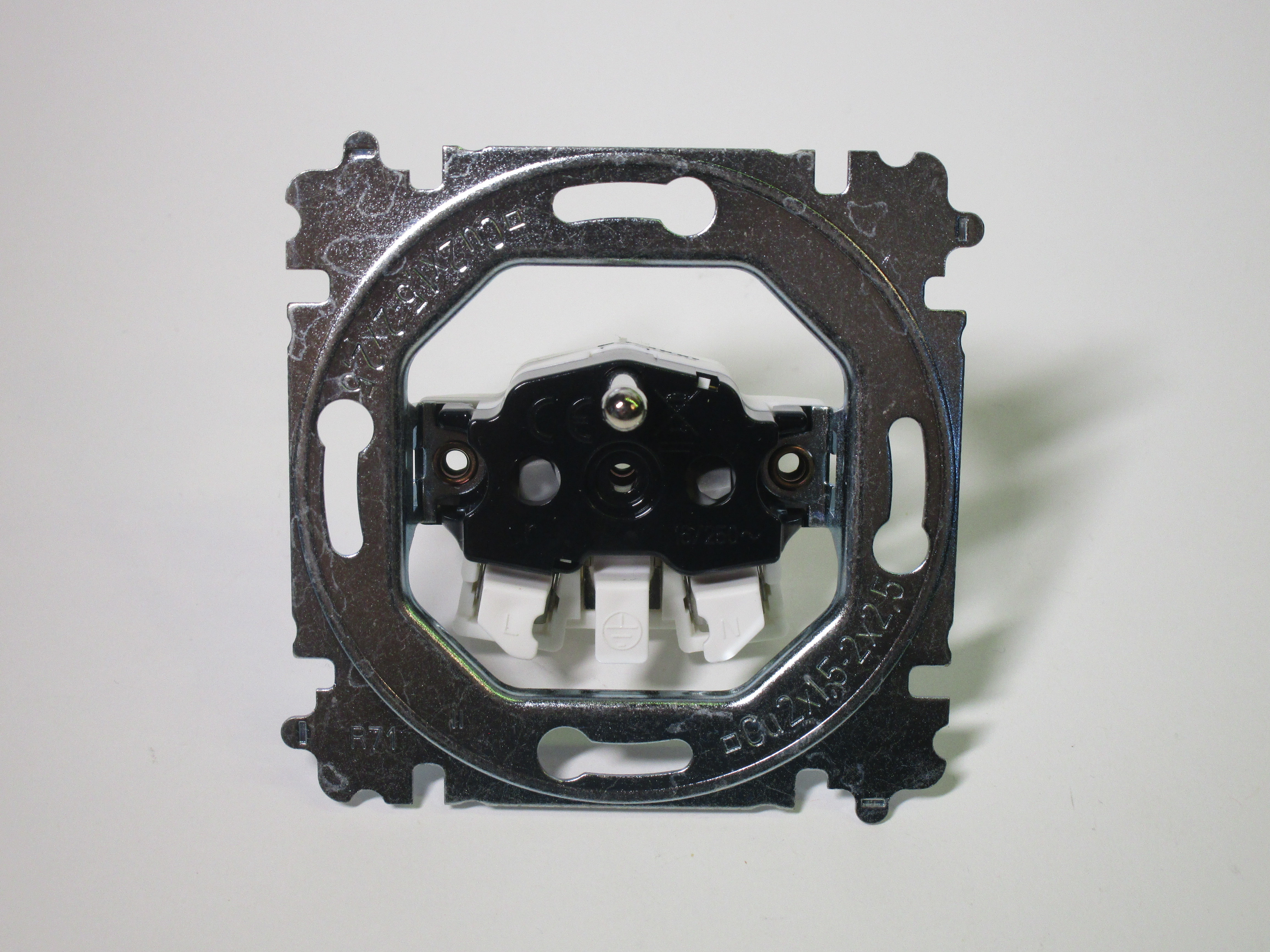
ABB Zoni socket
Rating: 16A 250V
This is a newer socket from ABB. Its styling is clearly quite modern, being made out of smooth white plastic. It also features safety shutters and push-in wire terminals, and supports larger wall boxes for mounting alongside other sockets or switches.
It should be noted that none of the sockets featured here seem to have mounting clamps - evidently this style of mounting was phased out early on in Czechoslovakia compared to other countries.
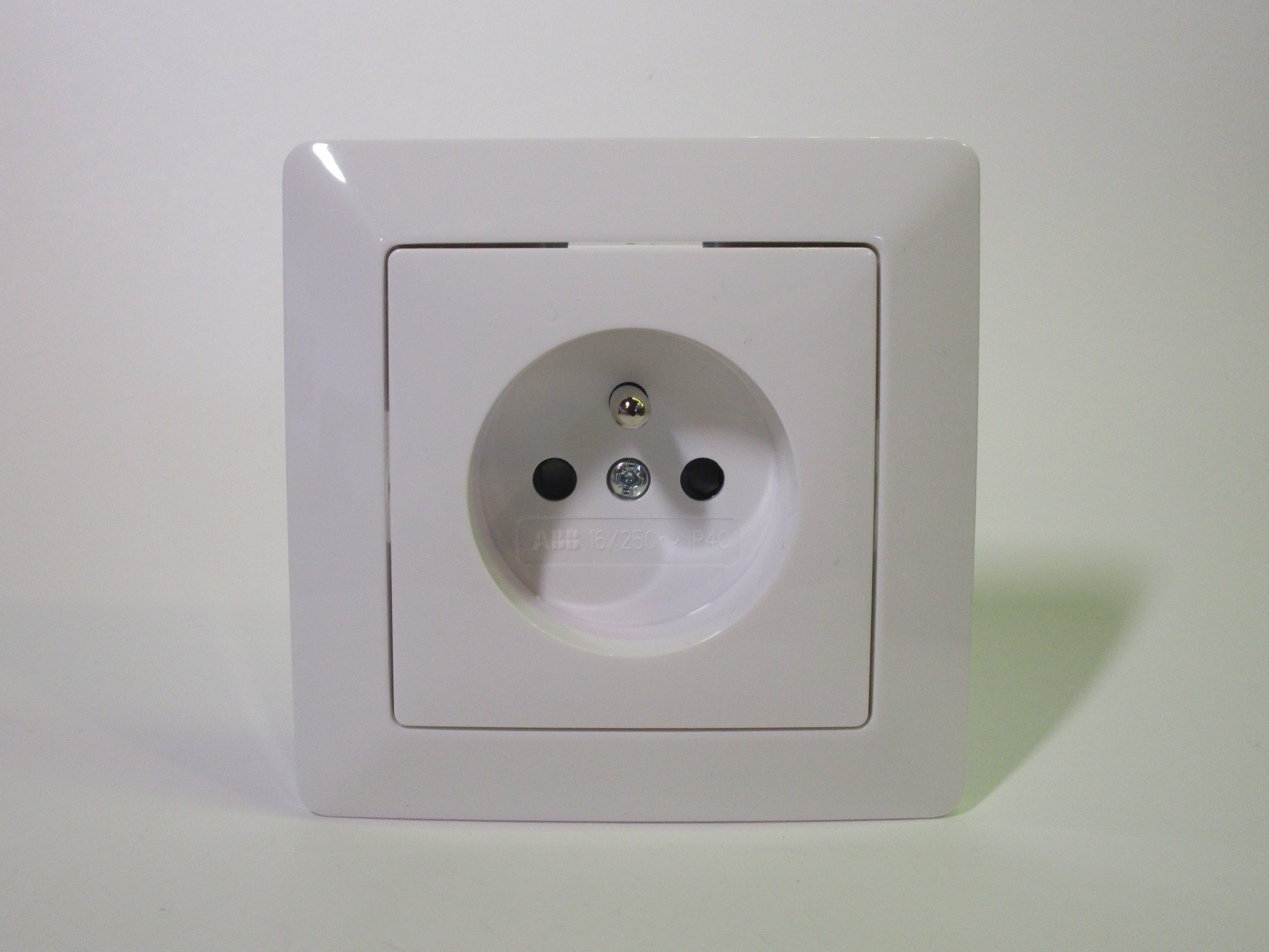
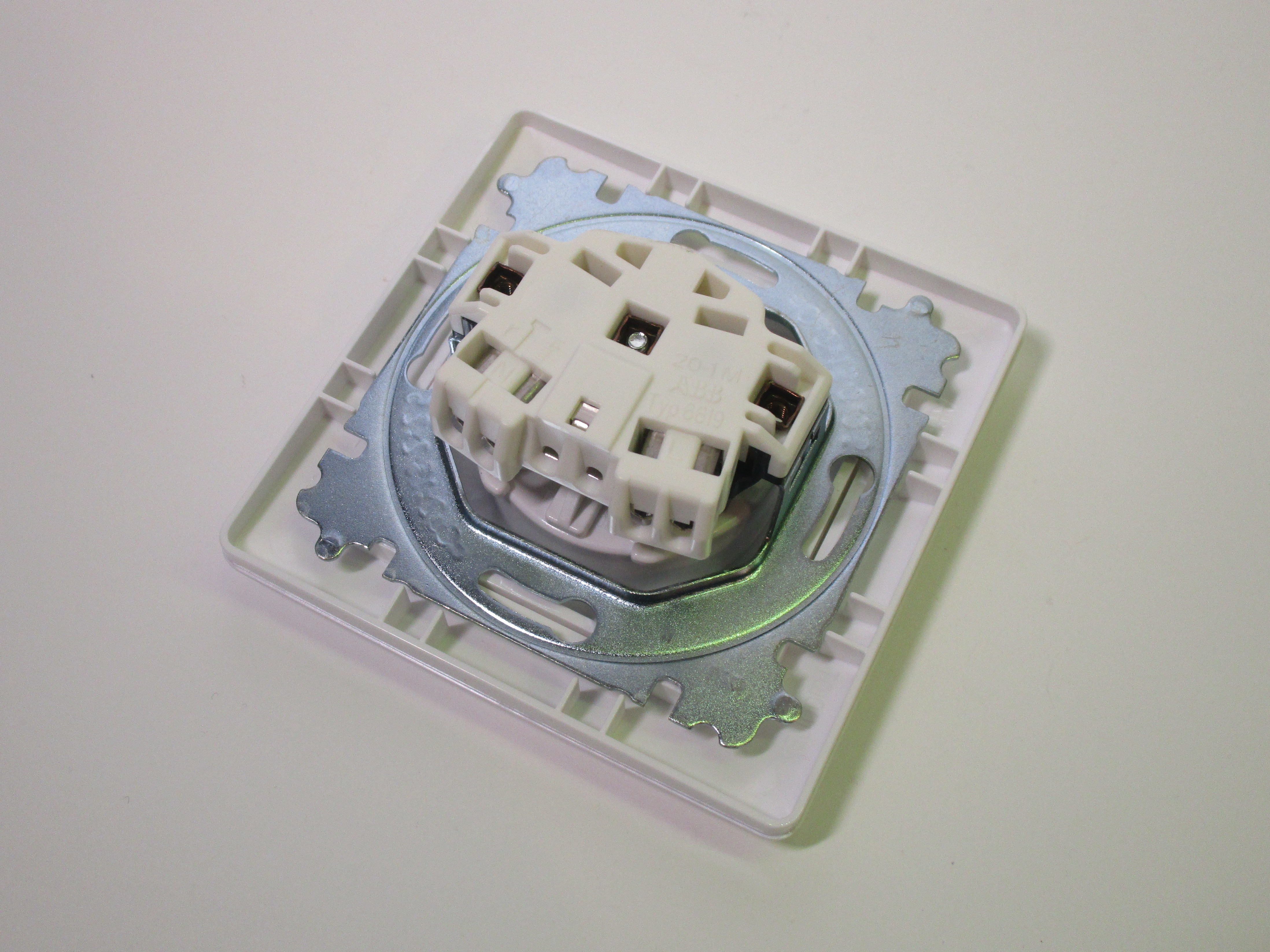
Rotatable plug from ABB
Rating: 16A 250V
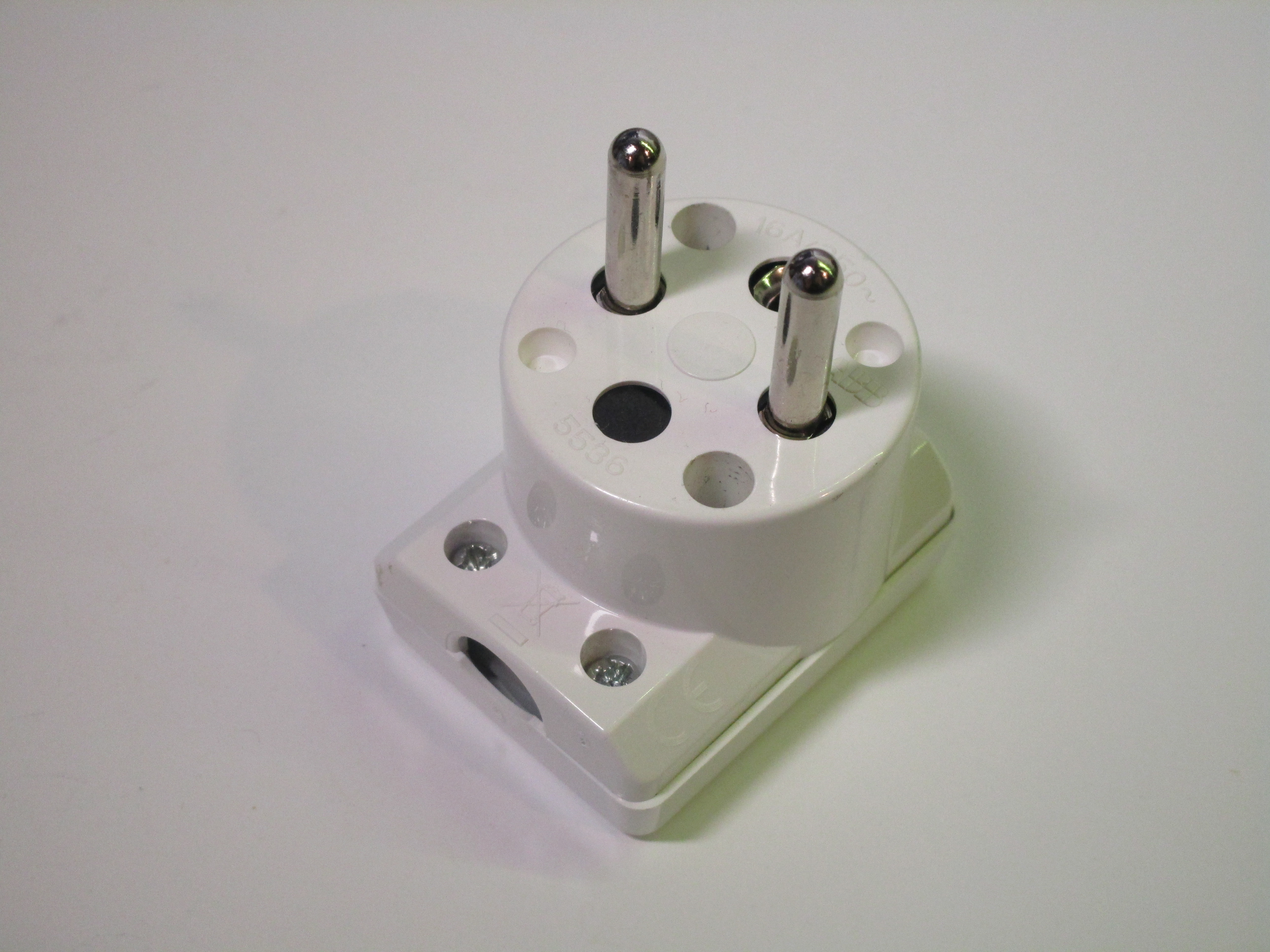
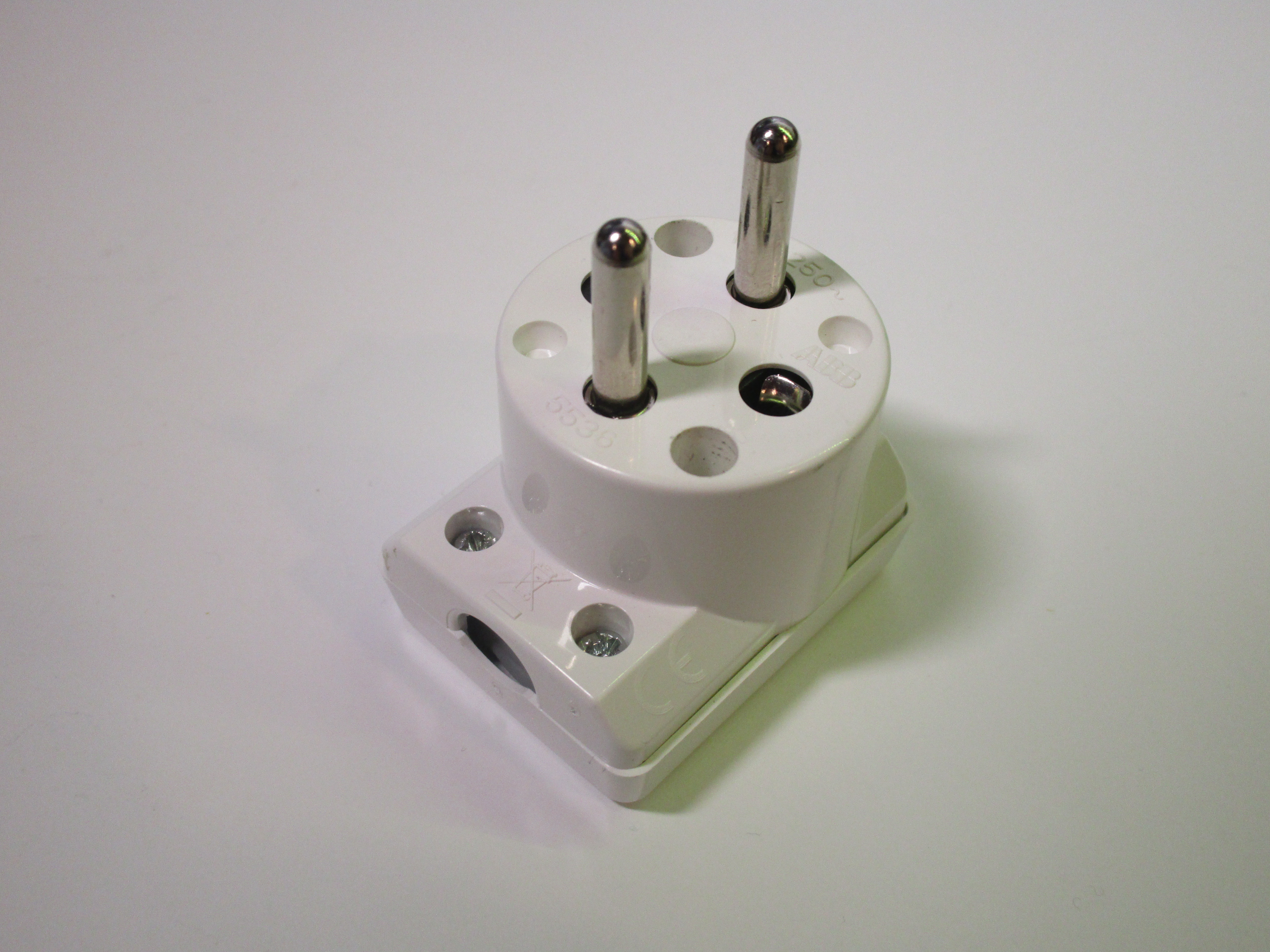
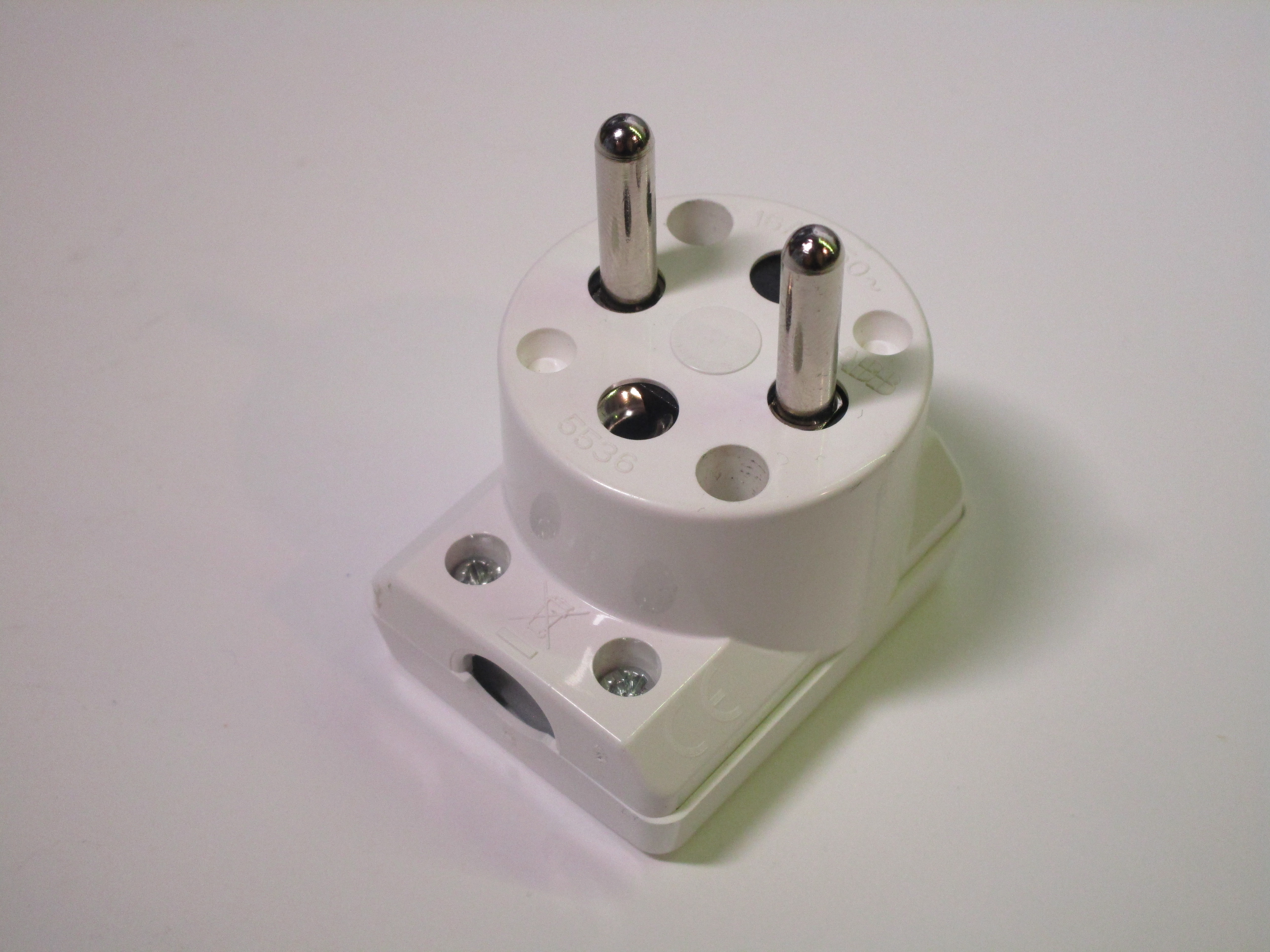
This plug, of the CEE 7/6 type, features an interesting rotatable design. The shell has four symmetrical holes which allow the body to be placed in one of four different orientations. This means that the cord entry can then be on the bottom, top, left, or right.
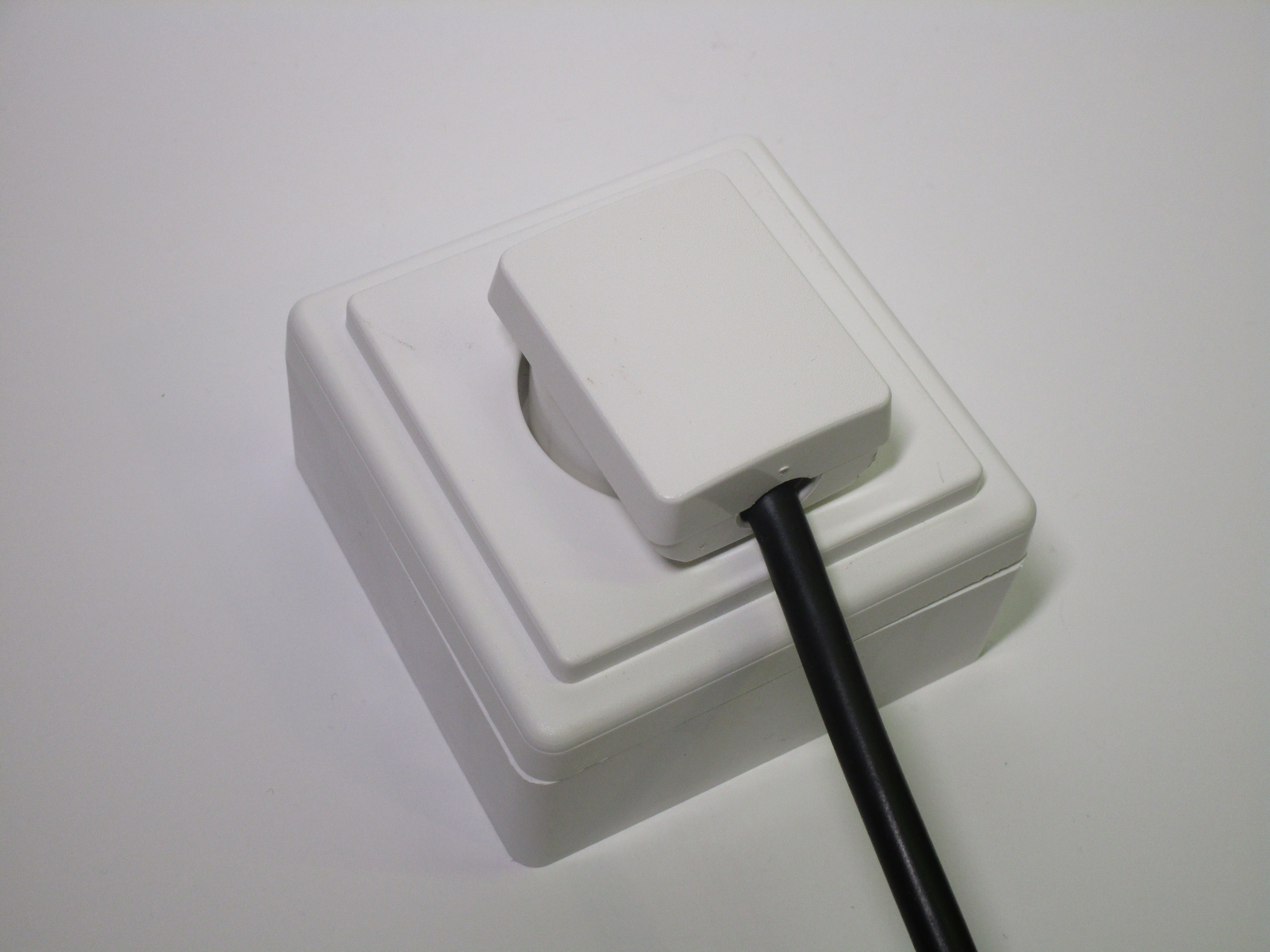
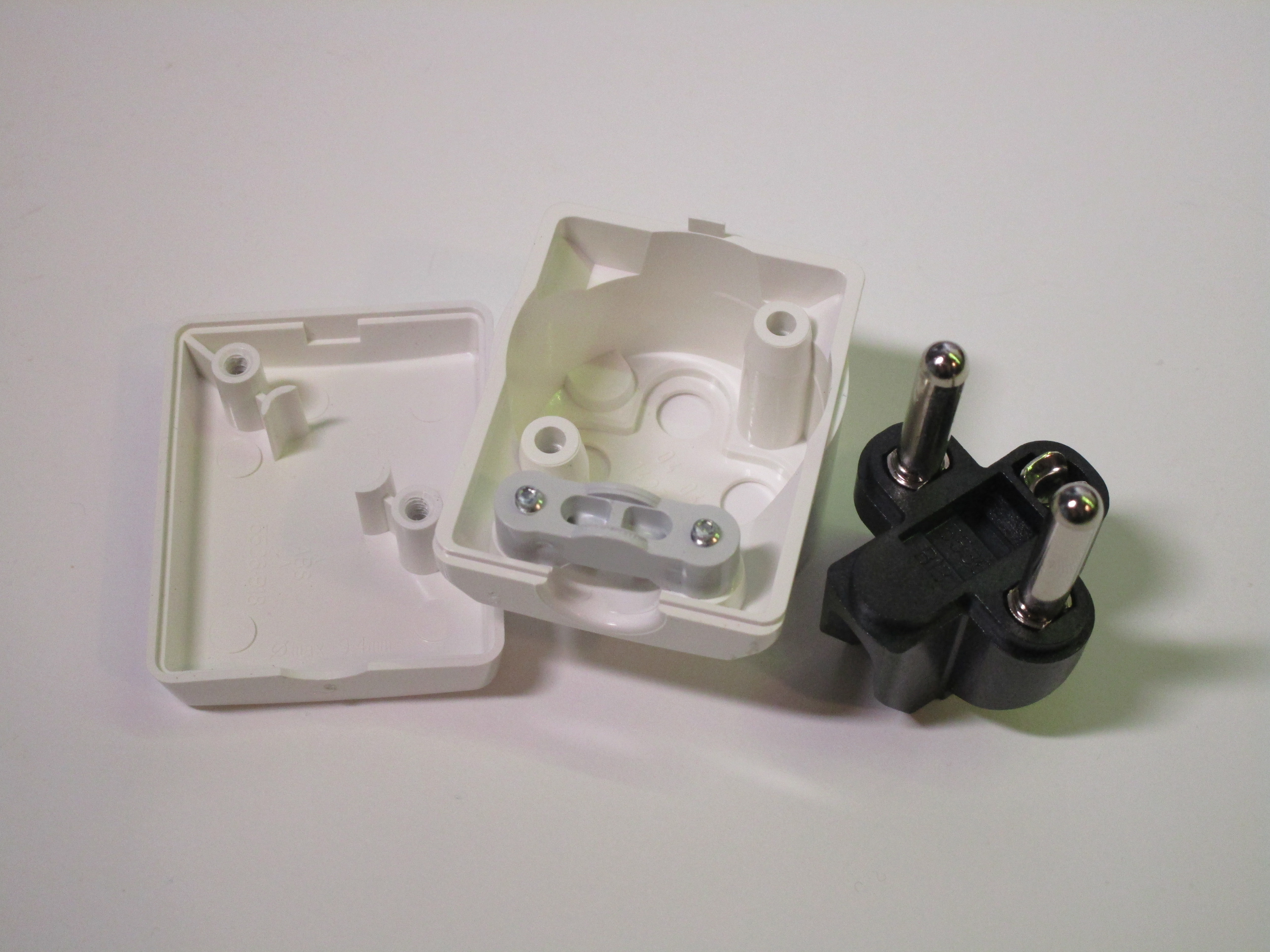
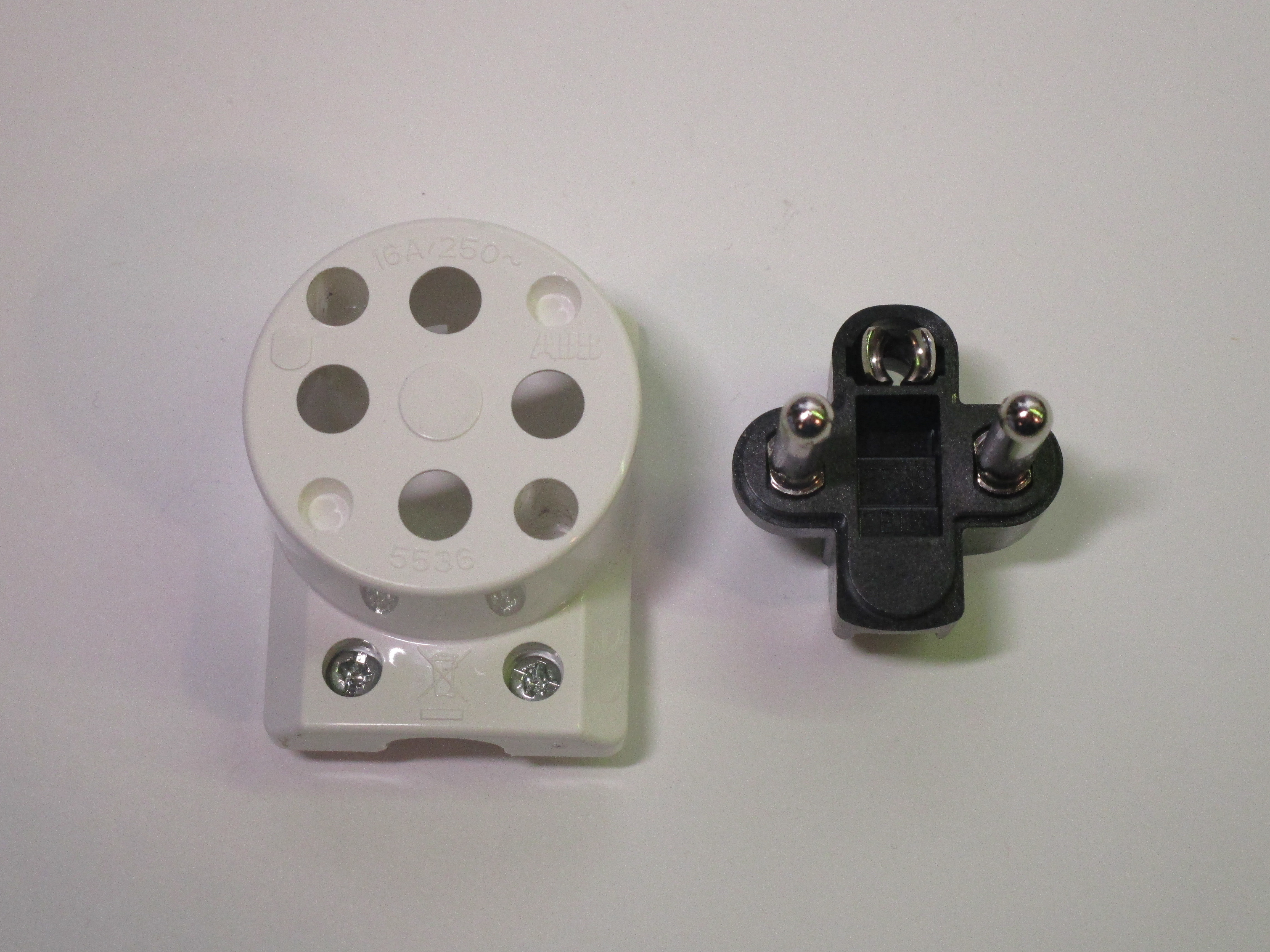
The pictures below help illustrate how this mechanism works: