Vintage British plugs and sockets
The UK has had an interesting history with plug standards; before WW2, the main types used were three non-earthed round pin plugs (BS372) and three earthed round pin plugs (BS546), all mutually incompatible. Additionally, there were oddball manufacturer-specific standards such as the one developed by Wylex, and the BS1363 standard used nowadays, introduced after WW2.
Historically, this sheer number of plug and socket types in simultaneous use caused many incompatibilities and even after BS1363 was introduced it took decades for it to become the predominant standard. For this reason, until the 80s it was common for appliances sold in the UK to come without a plug already fitted, as the user was expected to wire it themselves. Wiring a plug was and still is part of the school curriculum in the UK.
BS546 plugs
These three-pin plugs were most commonly used between the 1930s and 1950s. They were available in four sizes, though in practice the latter was very rare: 2A, 5A, 15A and 30A. Adaptors helped bridge the gap between incompatible plugs and sockets.
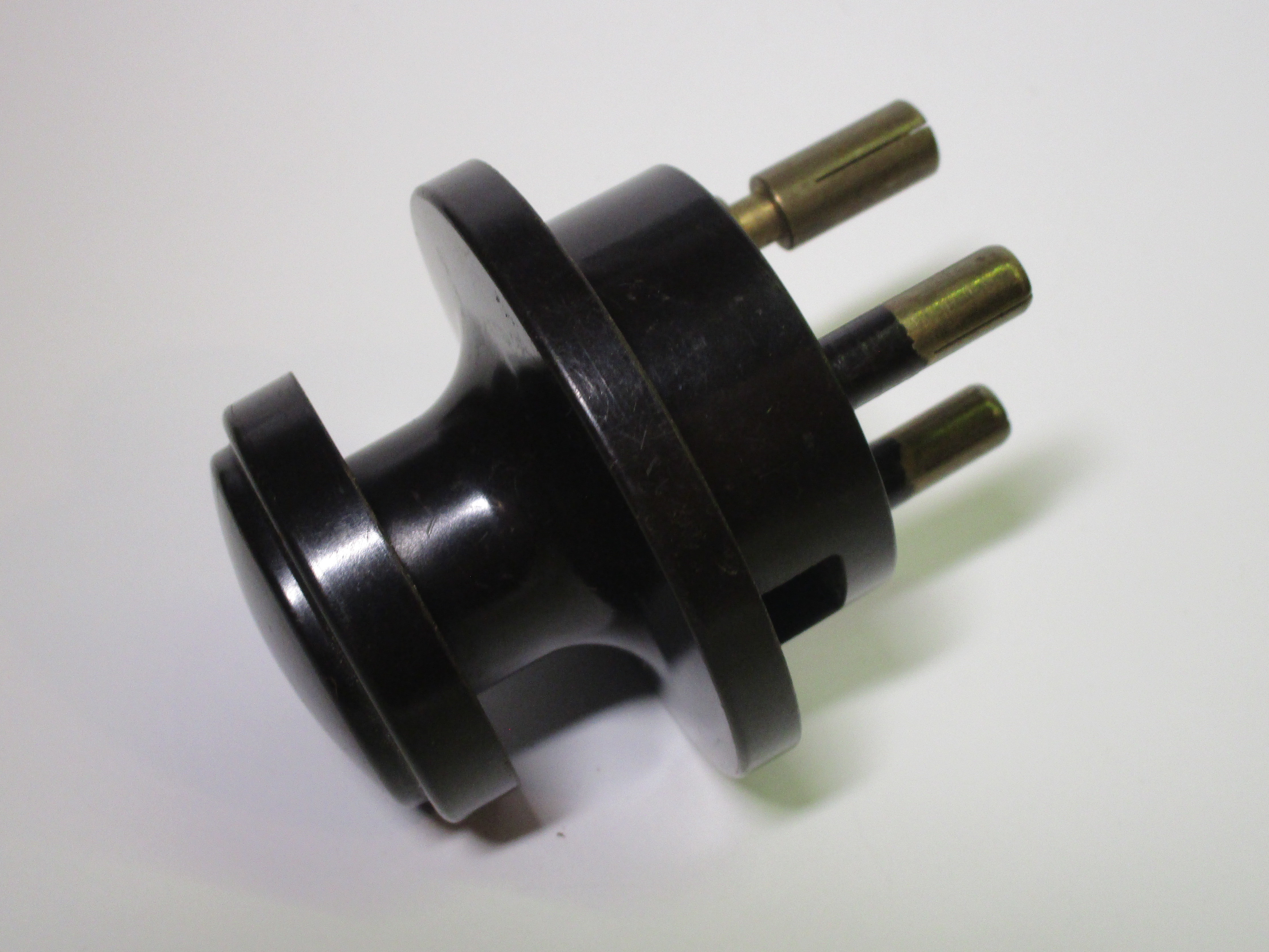
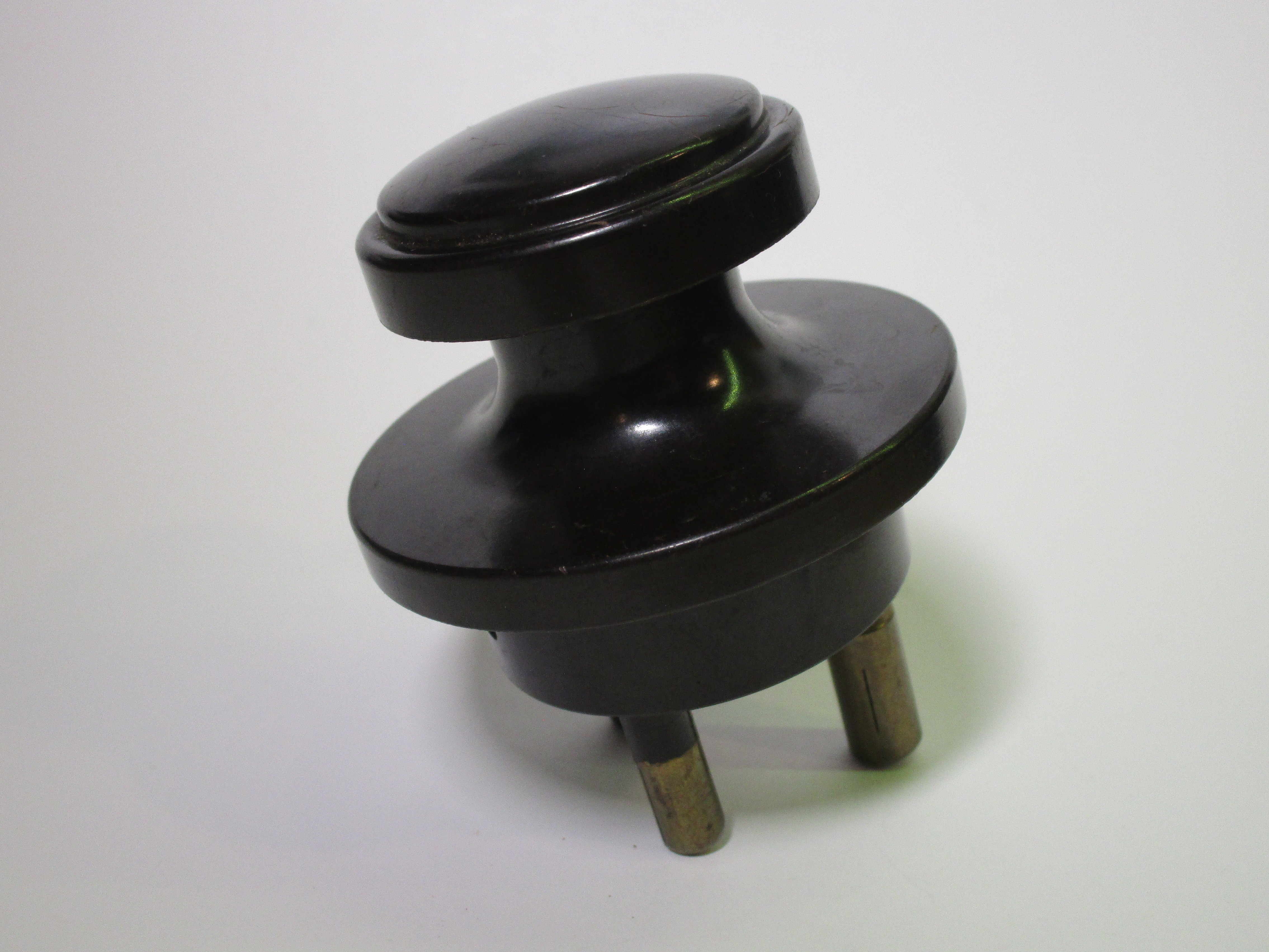
Crabtree 15A plug
Rating: 15A 250V
This large plug made in England by Crabtree is an interesting example of the 15A standard, the largest size typically available. The main visual feature of this plug is the giant handle present on the back, which is purely there to aid in the disconnection from a socket; the cord grip is placed on the side, as specified by regulations, to prevent someone from pulling on the cord to unplug it.
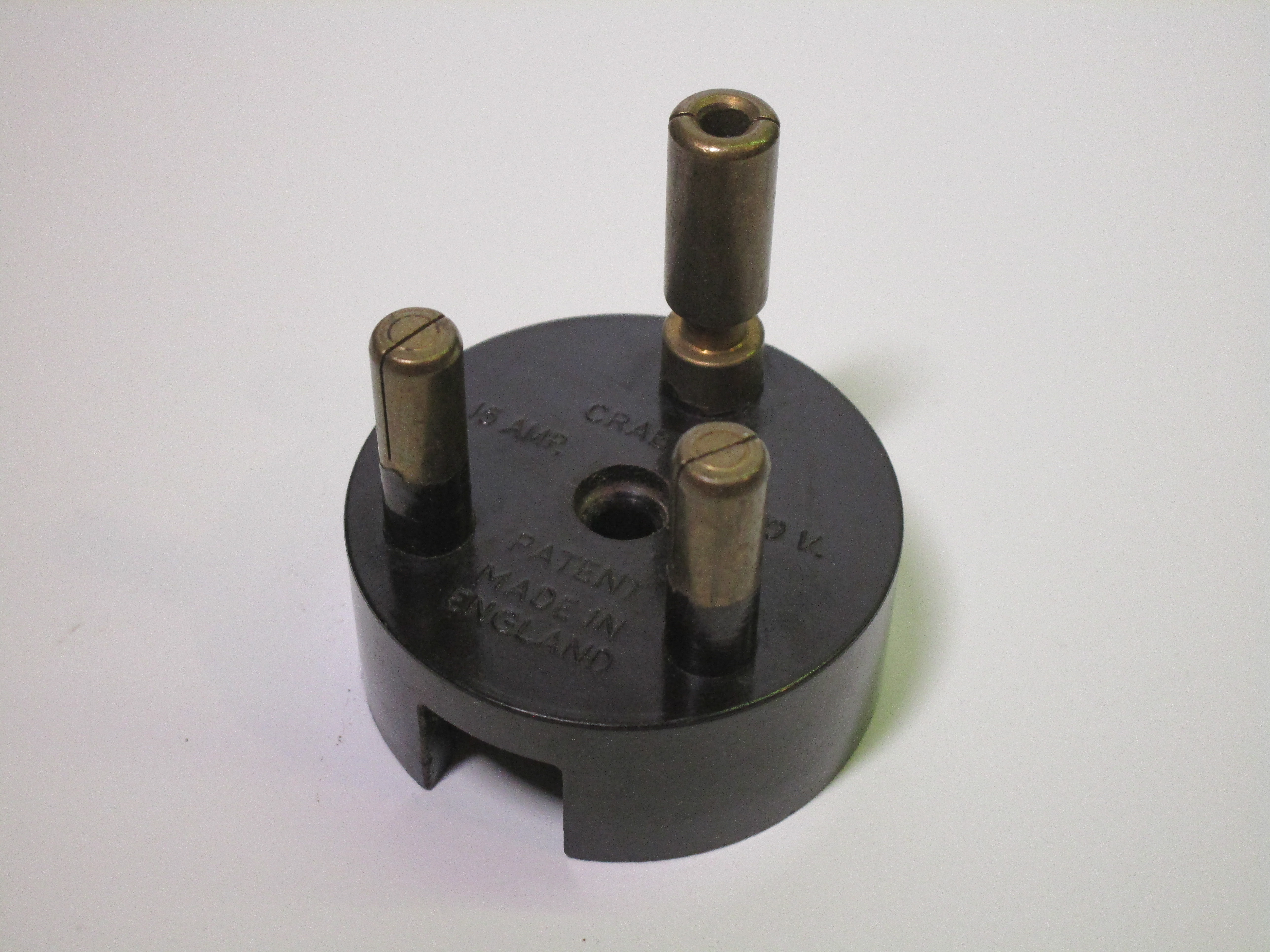
The plug features an early example of sleeved pins, which would later become mandatory on all plug types in the UK.
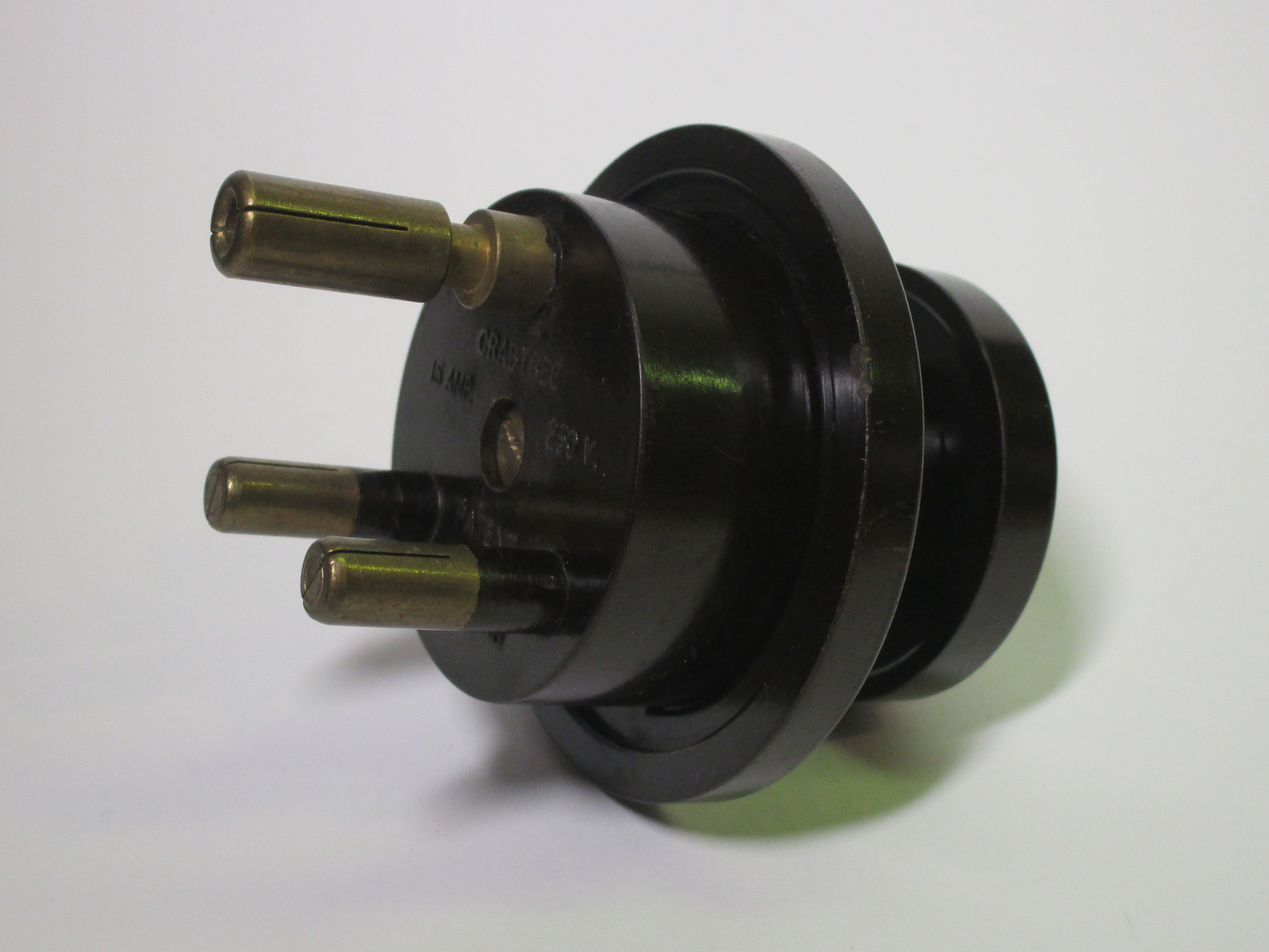
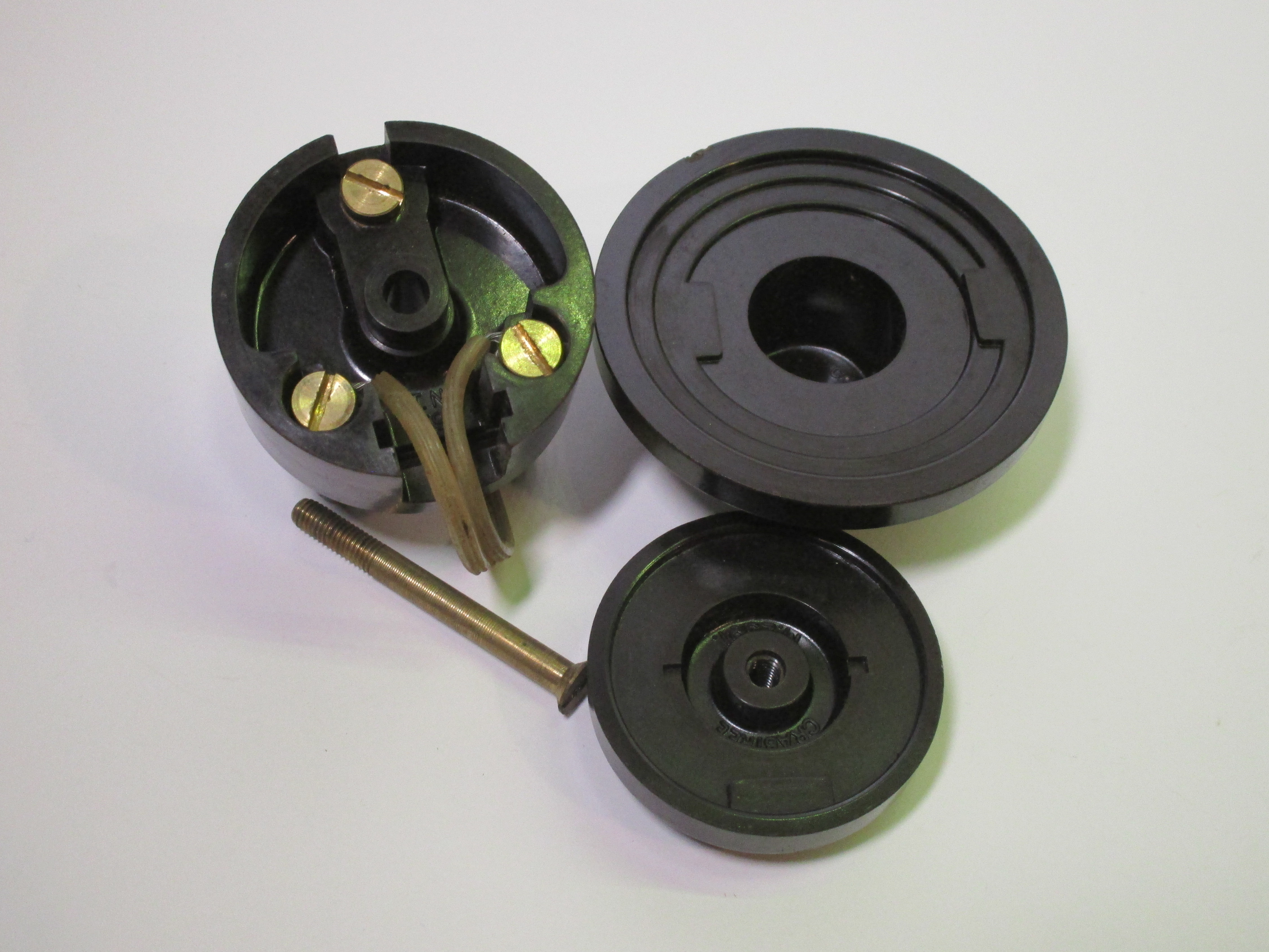
After taking it apart, the handle section consisting of two bakelite pieces can be removed, leaving the main body. The screw terminals used work by wrapping the wire around the screw which is then tightened to secure it.
Another noteworthy feature is the presence of an indent at the end of the earth pin; this would've been used with a special locking socket which likely required turning off a switch before the plug could be removed.
Unnamed 5A plug
Rating: 5A 250V
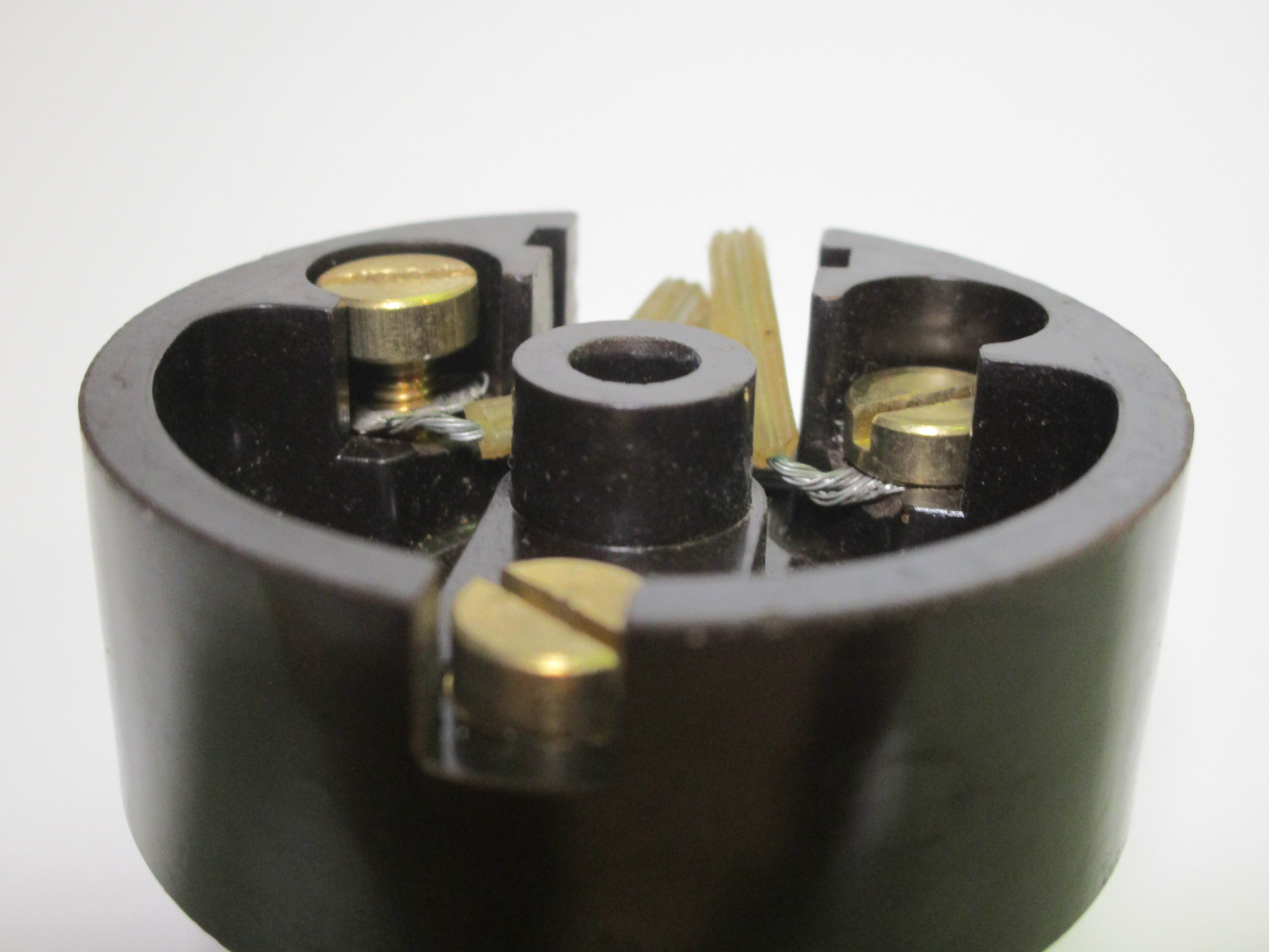
This plug is an example of the common 5A size. A manufacturer name is not present, but it does mention having been built in England. A cord grip is present to secure the cable to the plug, while the pins are split to ensure proper contact with older sockets as their contacts comprised purely of a tube.
A common feature of these old British plugs was the presence of a small cutout in the body, close to the earth pin contact, in order to inspect whether or not the earth wire had been connected without needing to disassemble the whole plug.
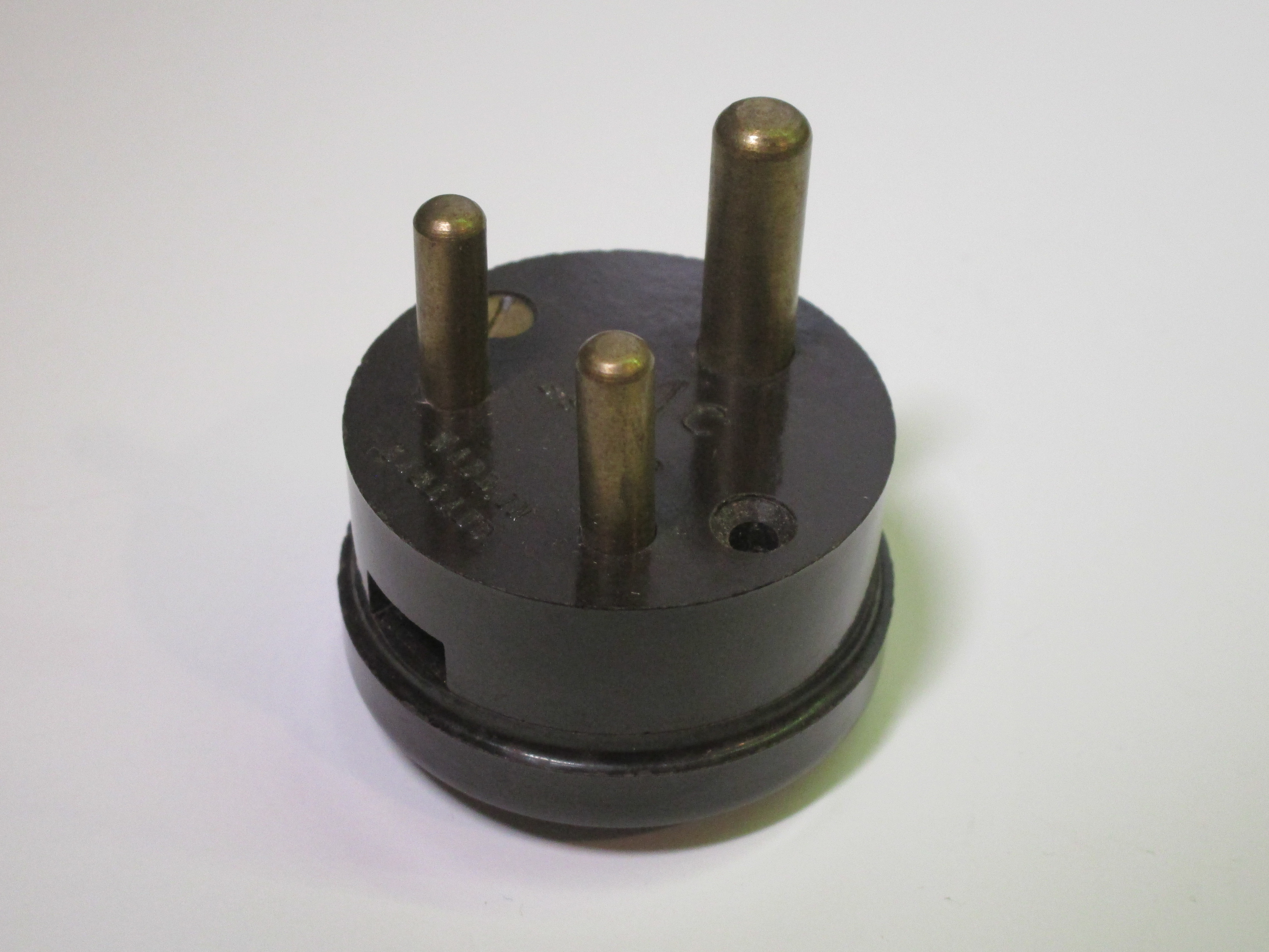
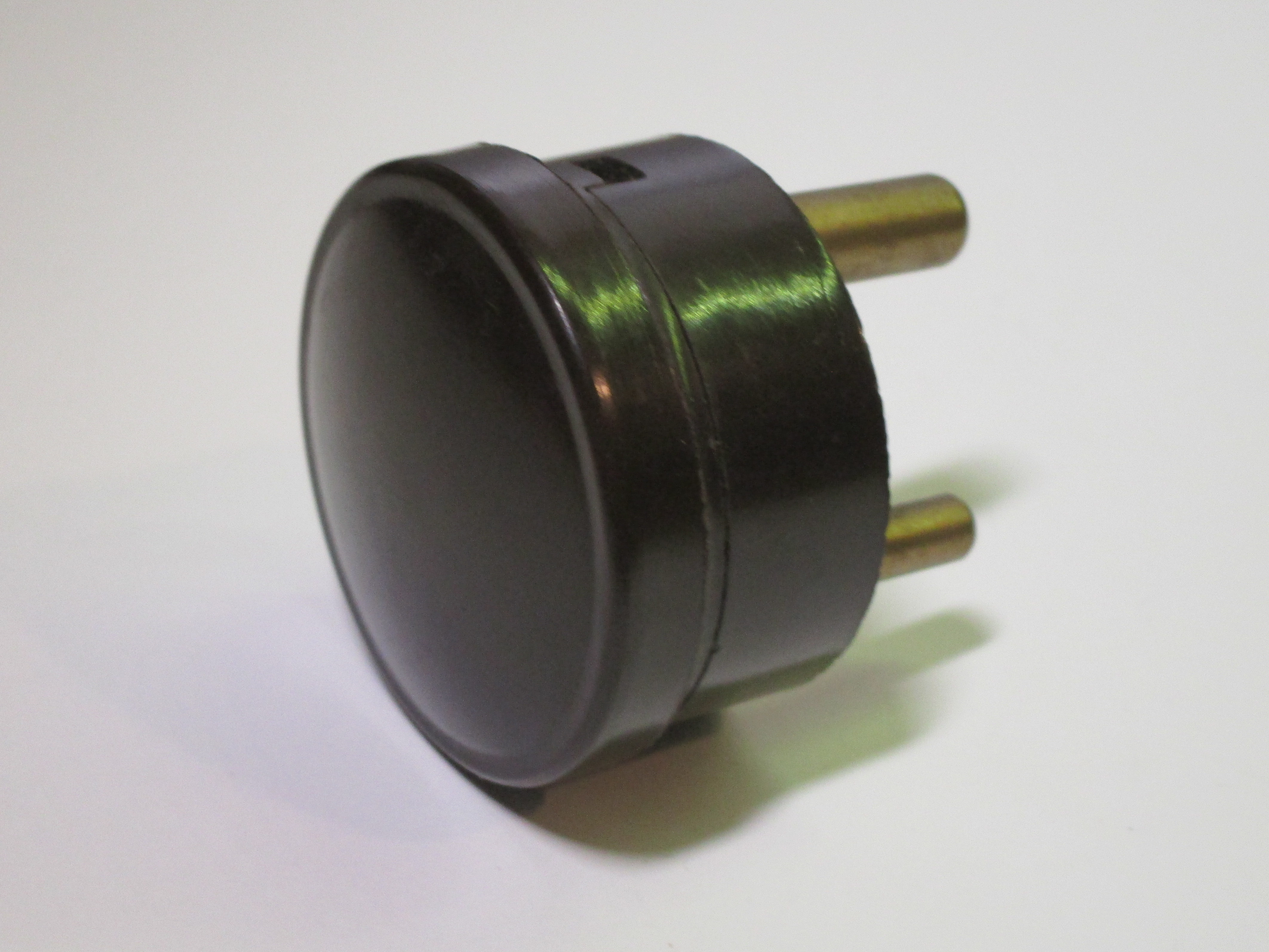
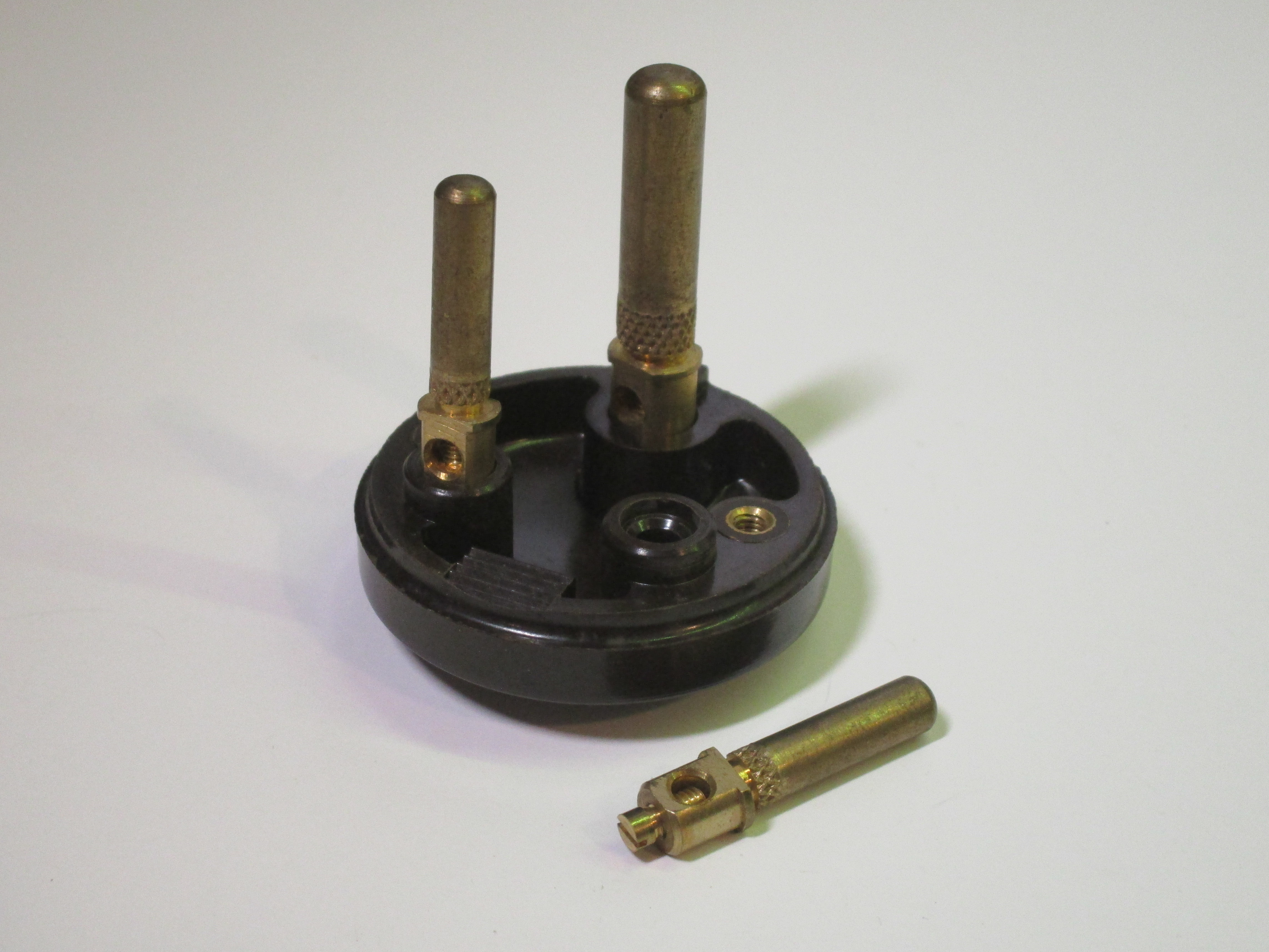
GAC plug
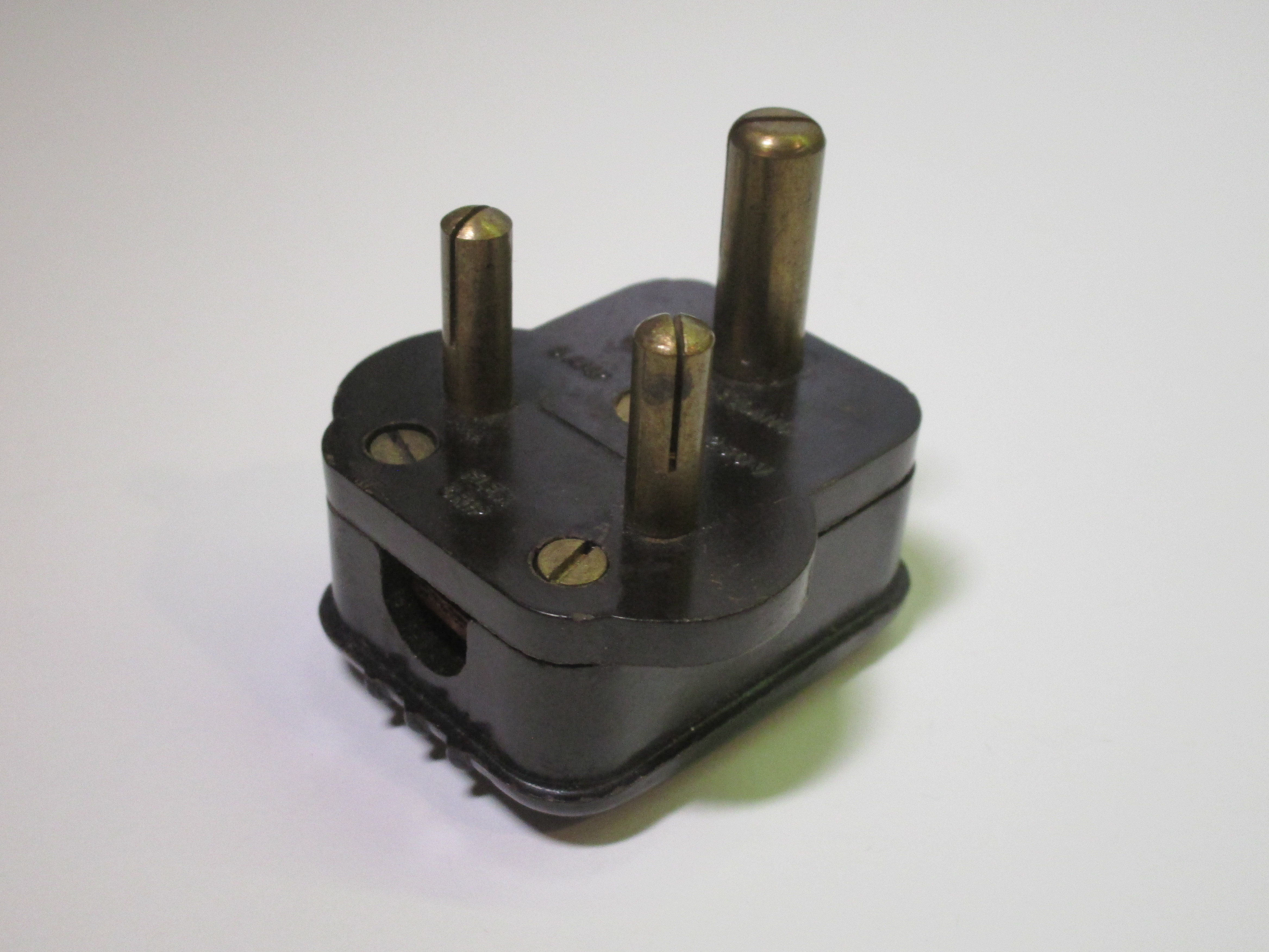
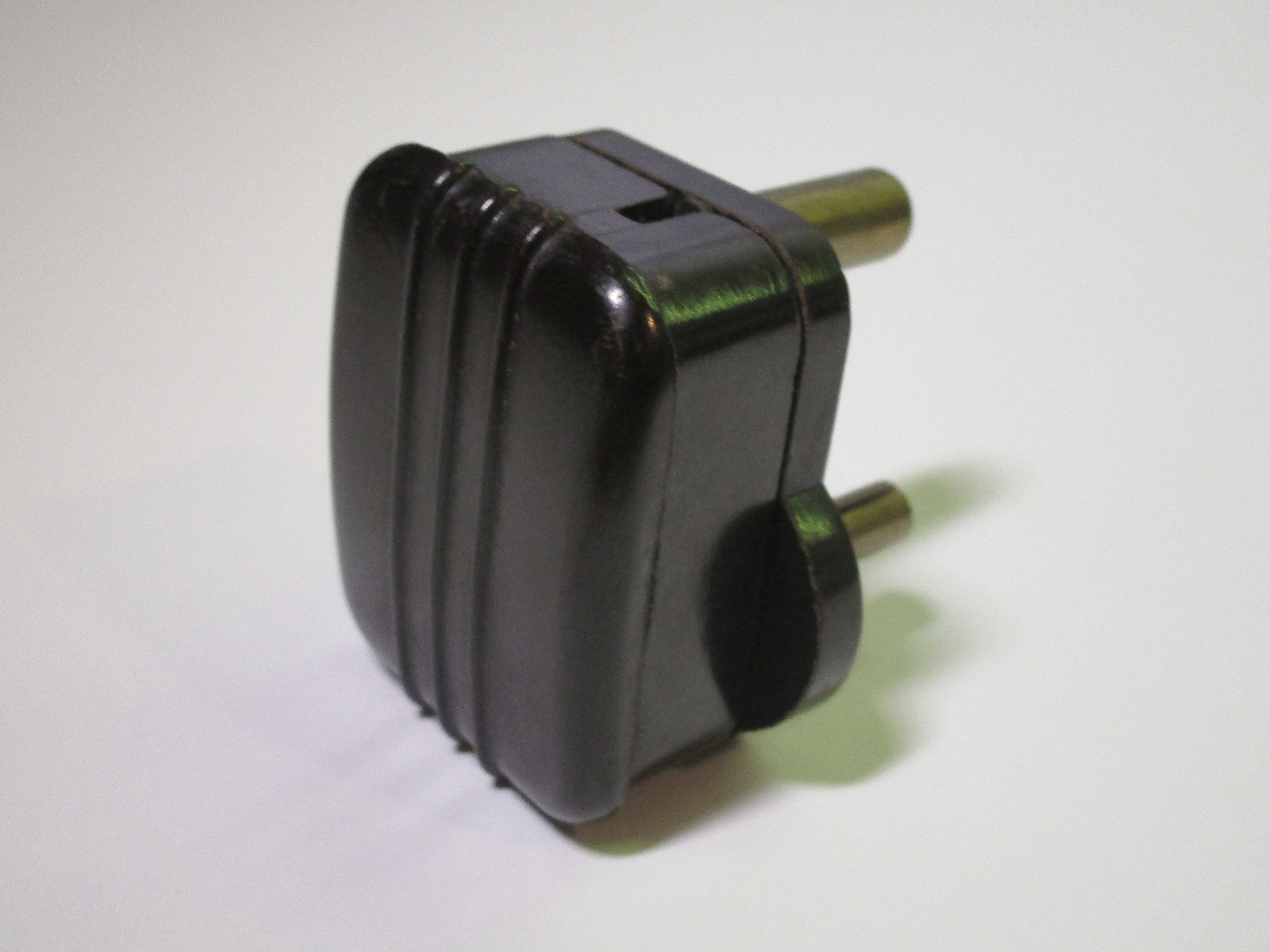
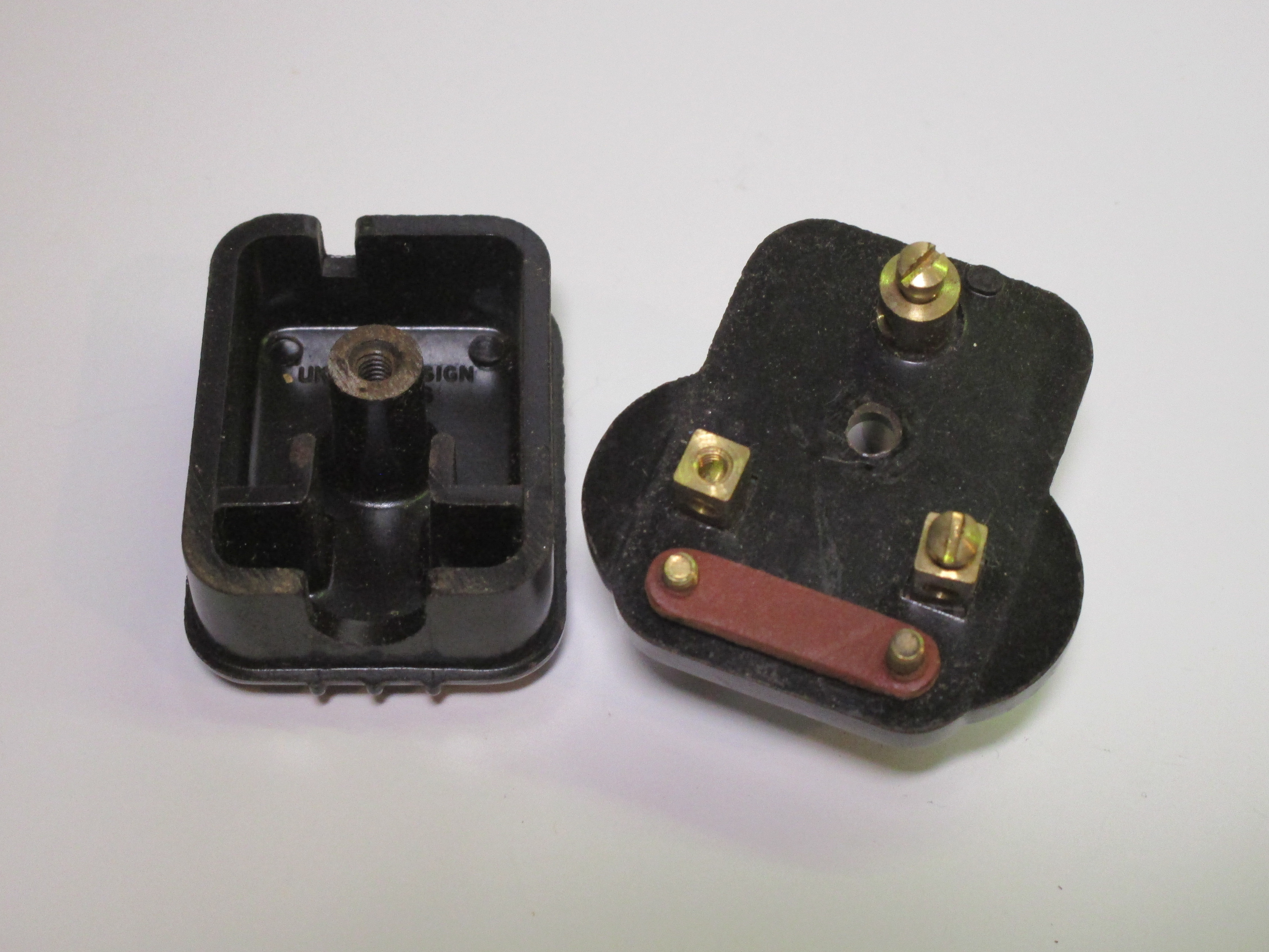
Rating: "BS 5 AMP"
This round plug was manufactured by General Accessories Corporation. Unlike the previous example, it uses solid pins, introduced after socket designs with more reliable contacts were designed. Previously, split tubes were needed so the plug could provide adequate contact force in the socket, now the socket itself had the spring tension needed to provide this force.
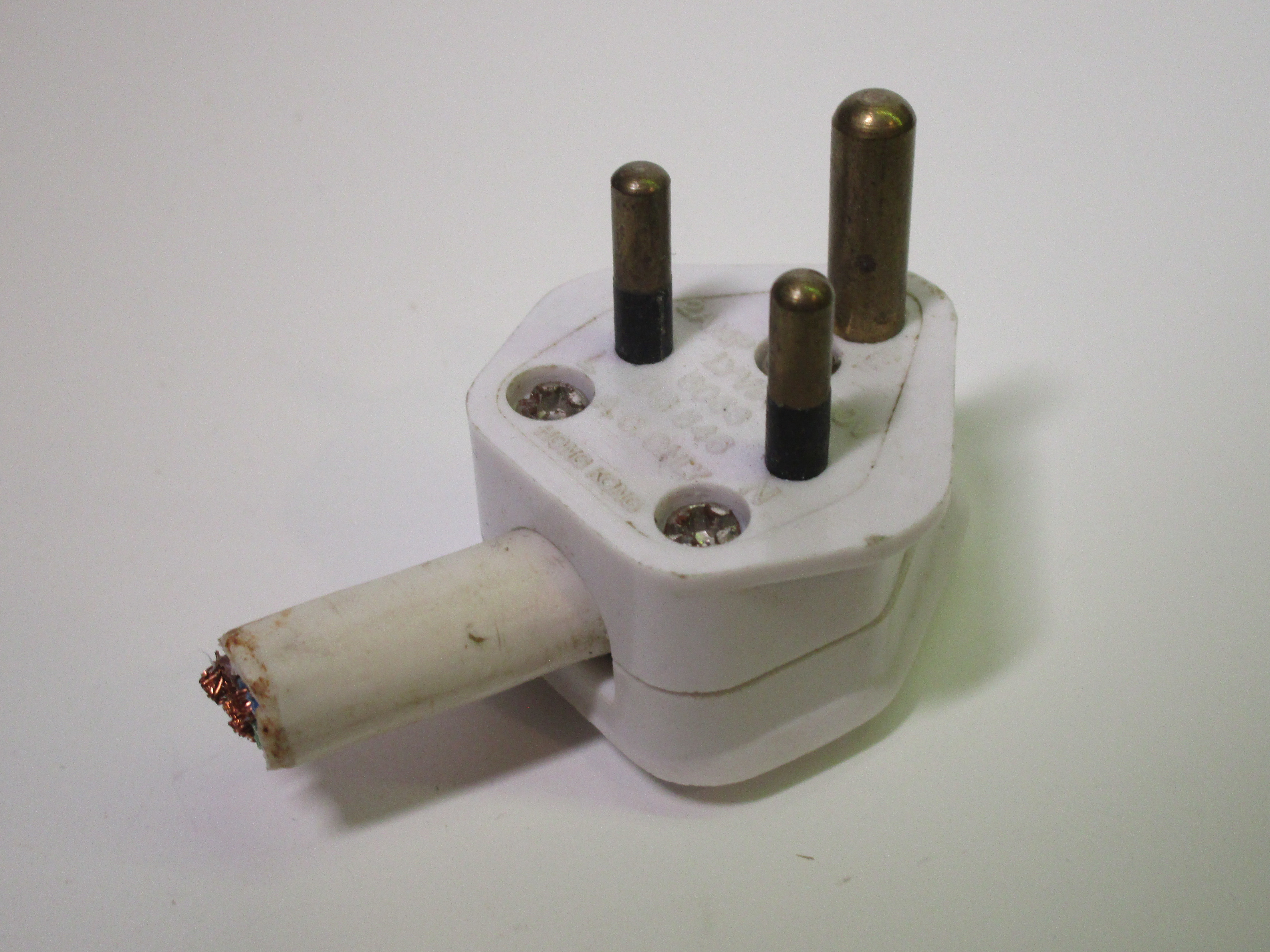
Lyvia 2A plug
Rating: 2A 250V
This is a more recent example of a rare 2A plug, manufactured by Lyvia in Hong Kong. These plugs have always had a limited use, as their limited rating would only make them suitable for table lamps or radios. That being said, they continue to be manufactured for special applications.
The plug is new enough that it features sleeved pins, a modern requirement, and Phillips screws rather than flat-head ones.
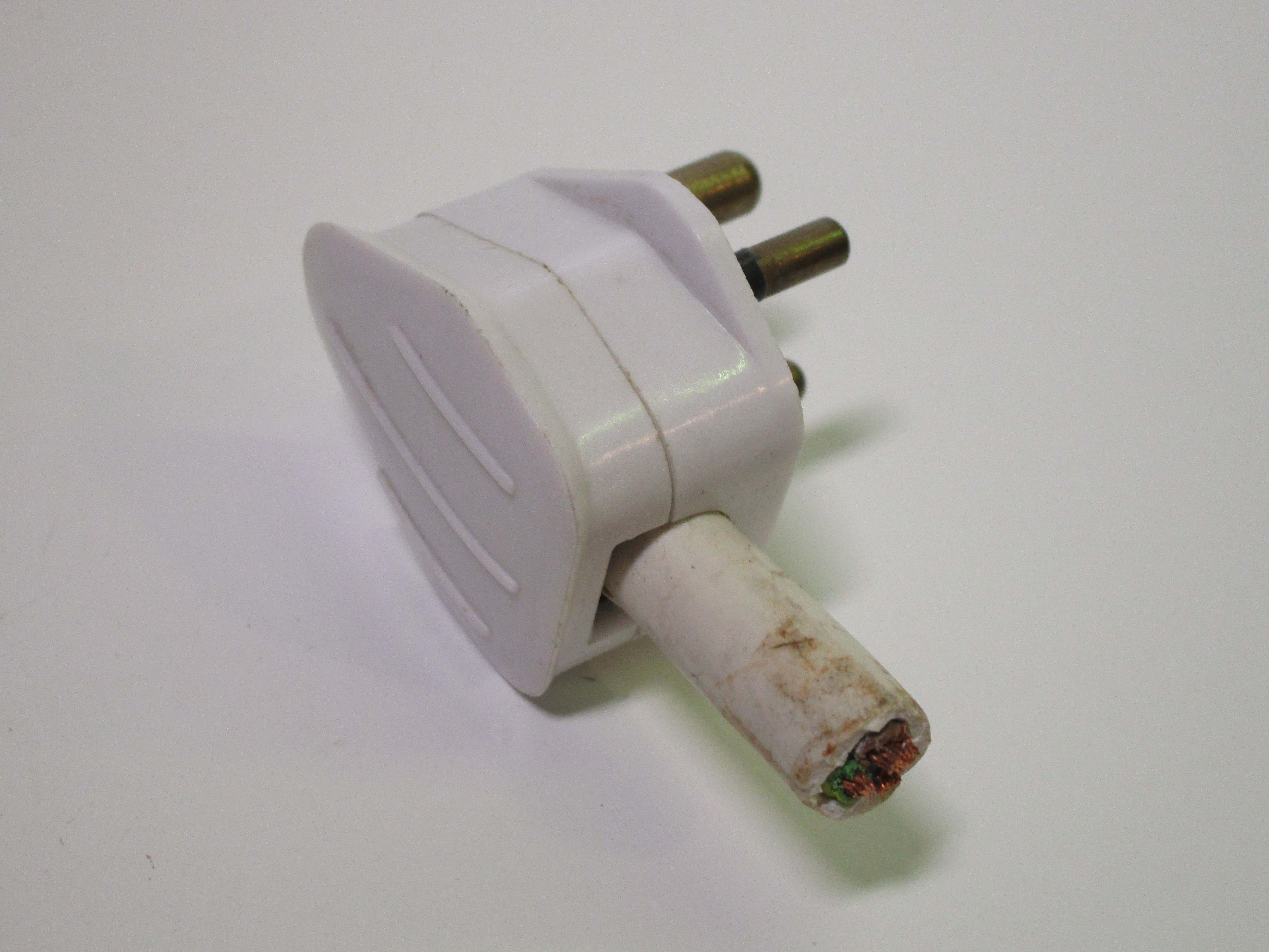
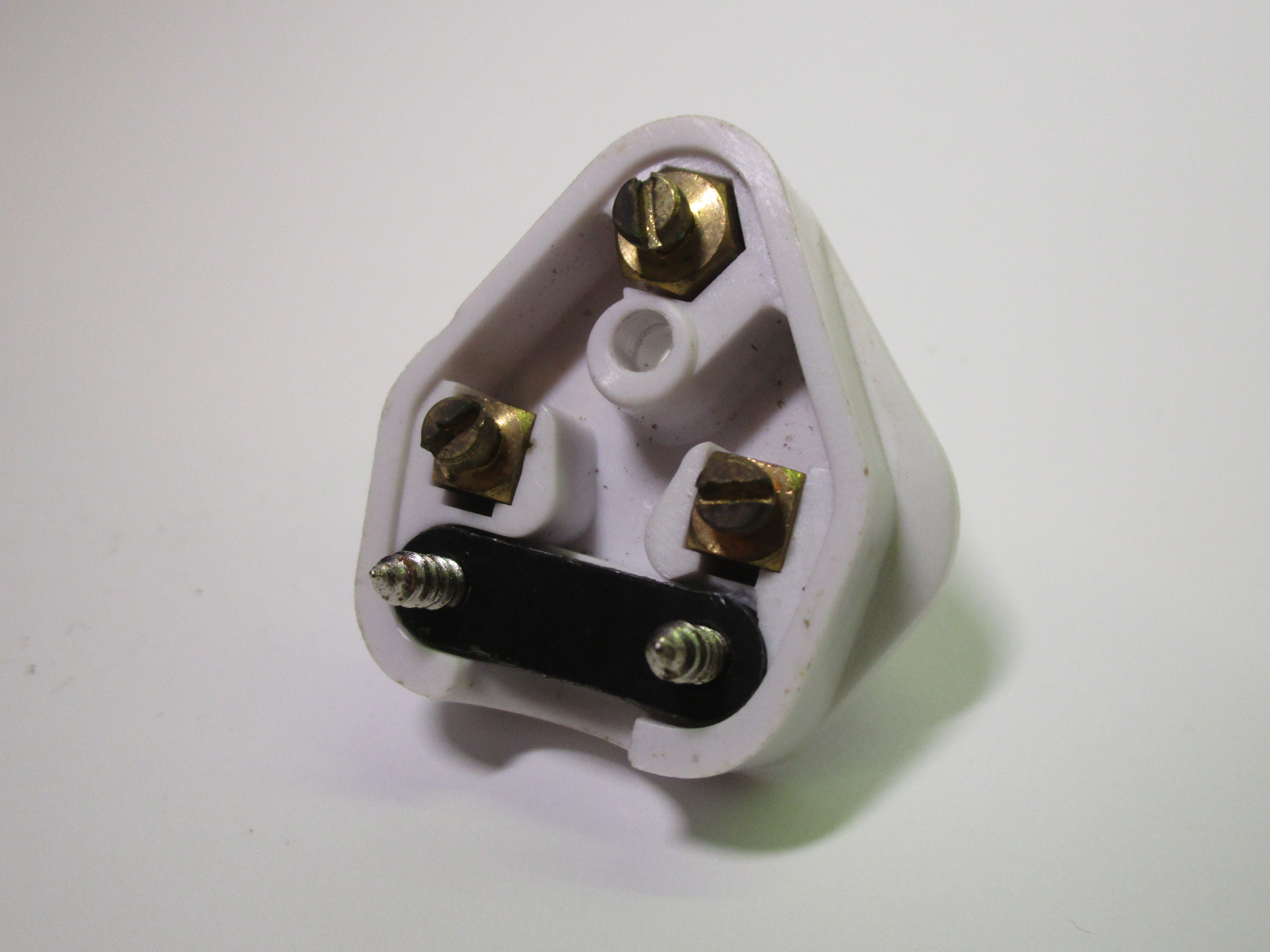
BS1363 plugs
The BS1363 standard was introduced shortly after the second World War. Its goal was to unify the many existing plug types at the time; however, as mentioned, it took years for it to become the default.
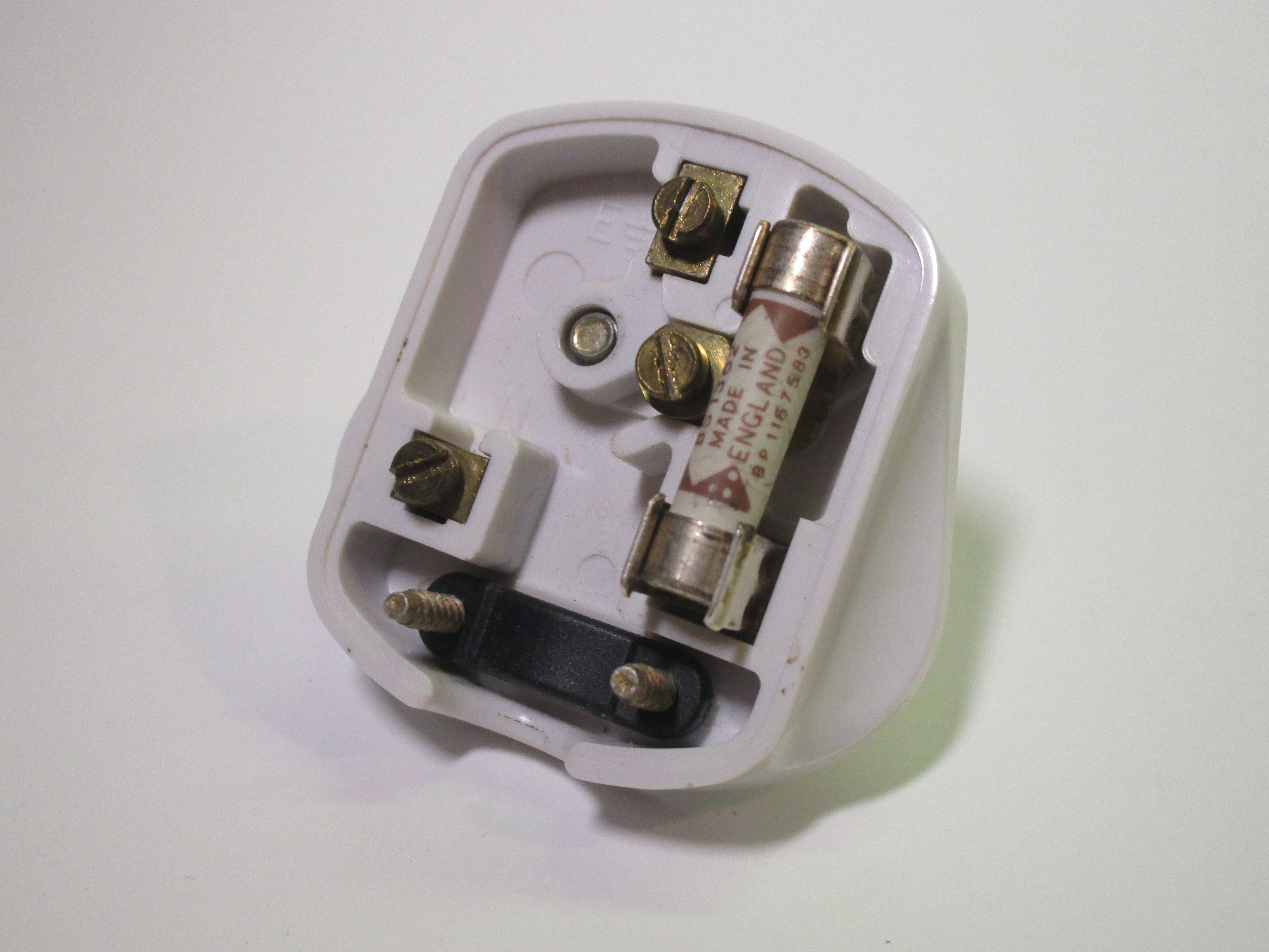
A unique feature is the presence of a fuse built into the plug; this is due to the ring circuits implemented alongside the BS1363 plugs, which were fed by a high-current fuse (30A) or, later, a circuit breaker. Additionally, sockets were designed with safety shutters from the beginning, which were operated by the insertion of the earth pin.
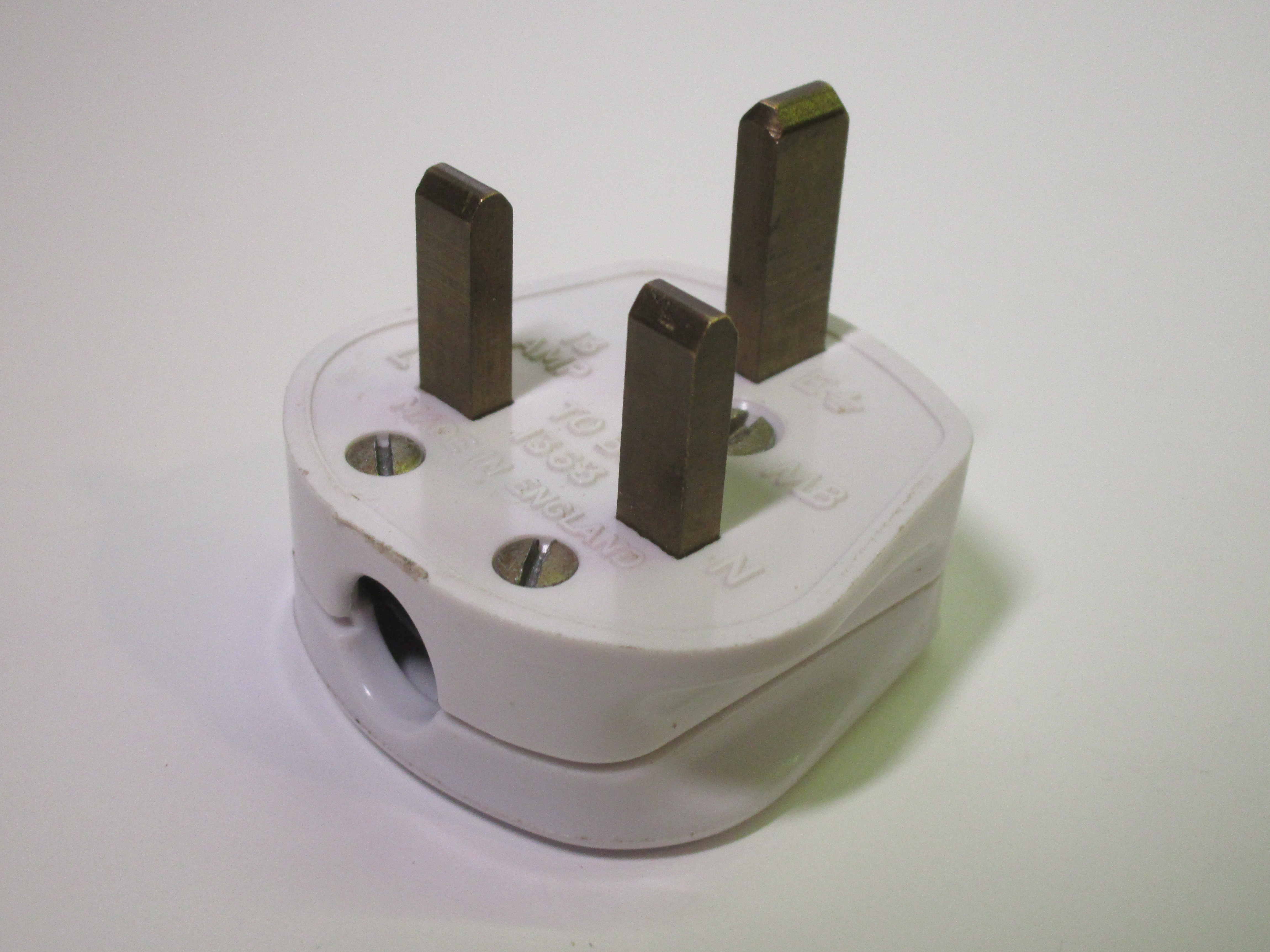
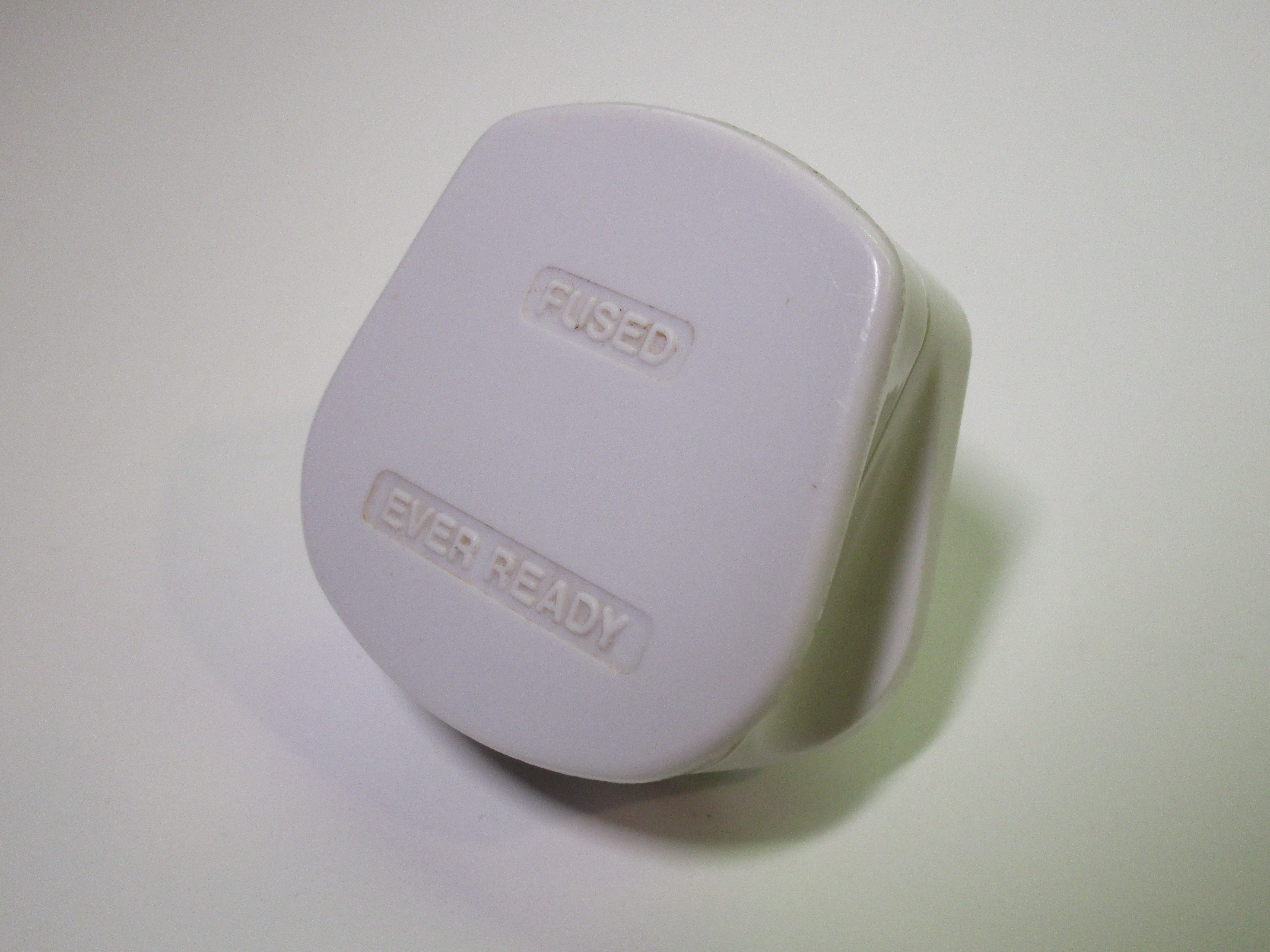
Ever Ready plug
Rating: 13A 250V
This is an example of an older BS1363 plug, from Ever Ready. It's quite similar to ones still available nowadays, however with a significant difference: the lack of sleeved pins. This safety feature was only made mandatory in the UK in 1984.
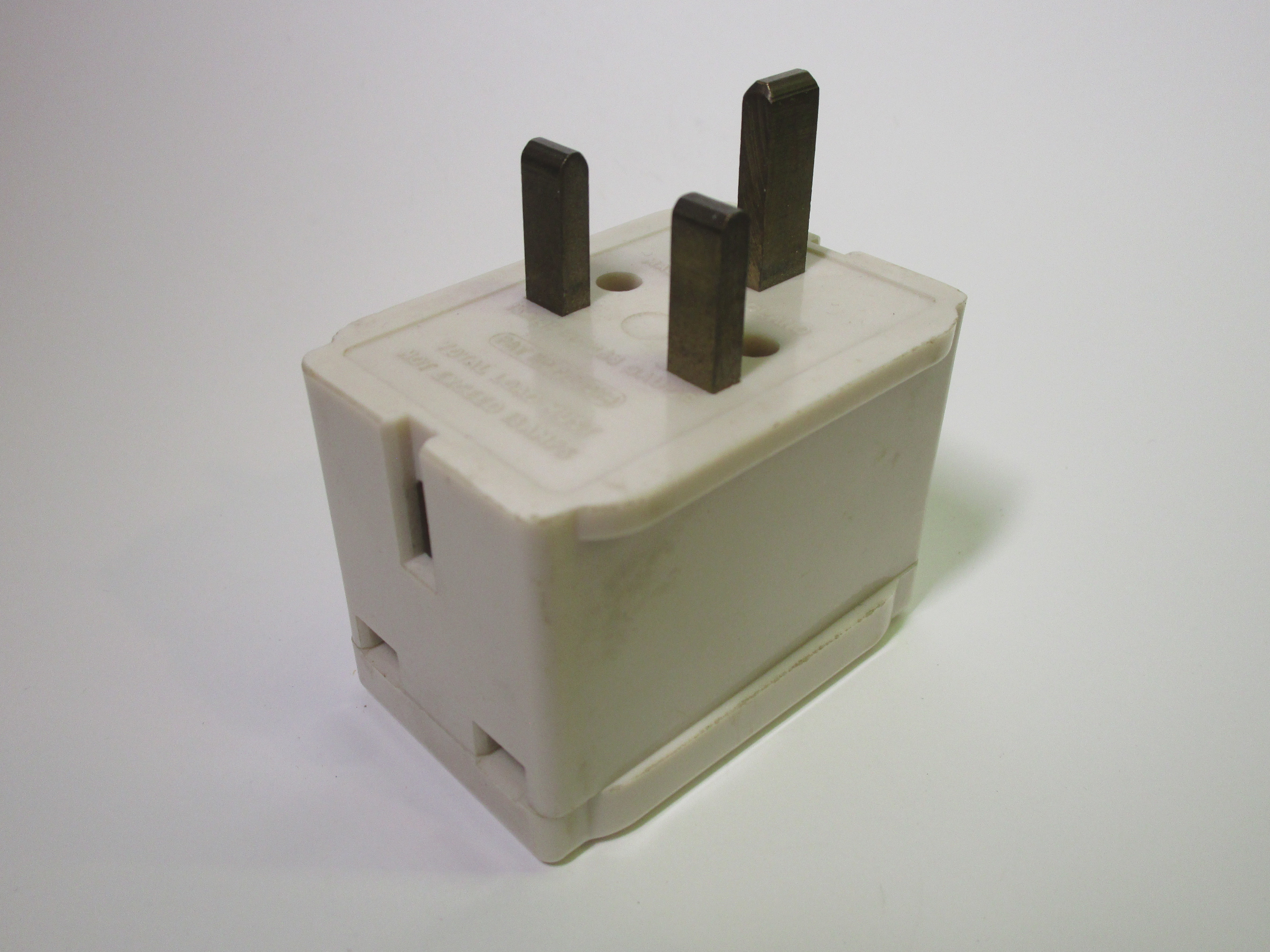
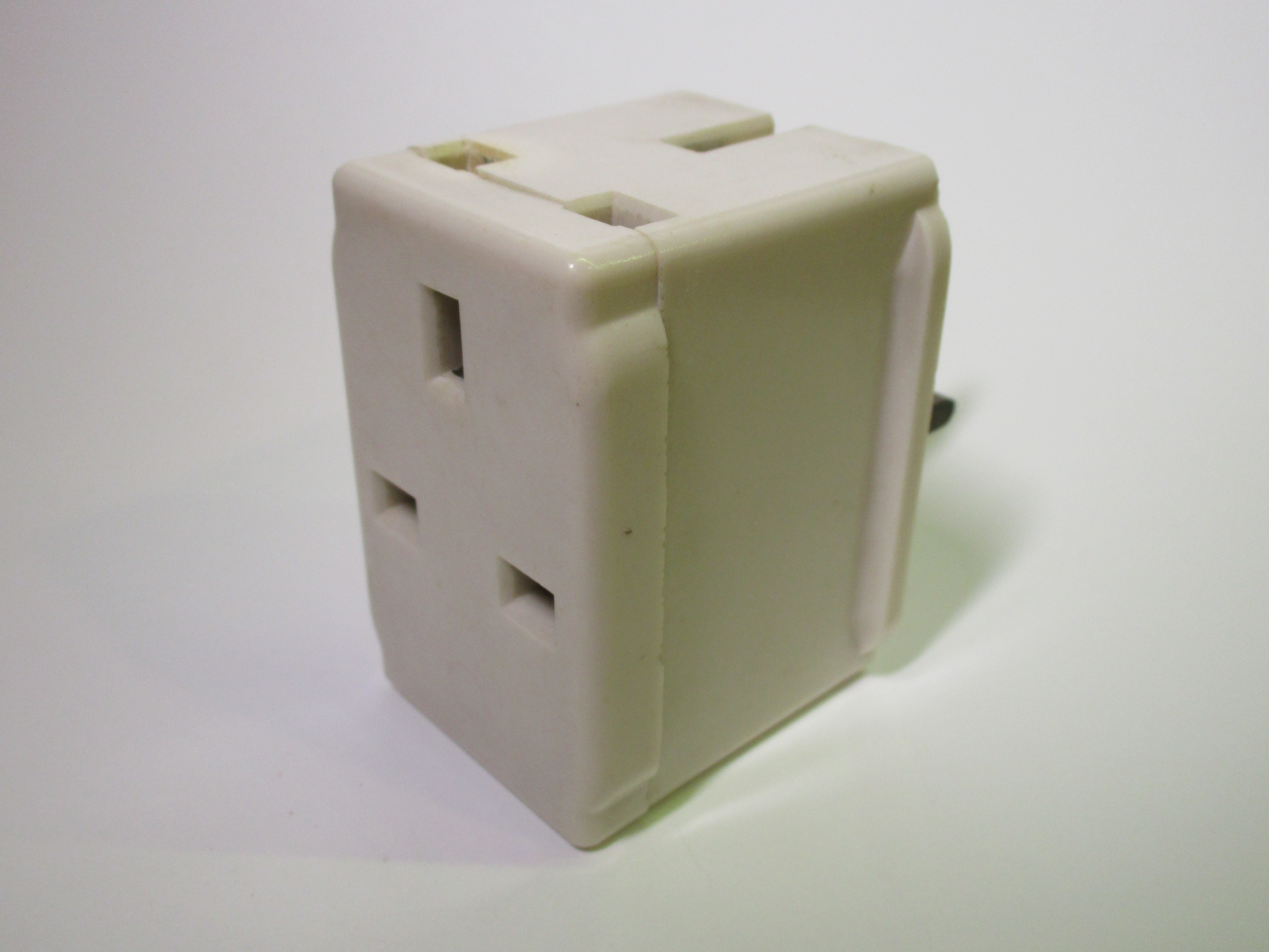
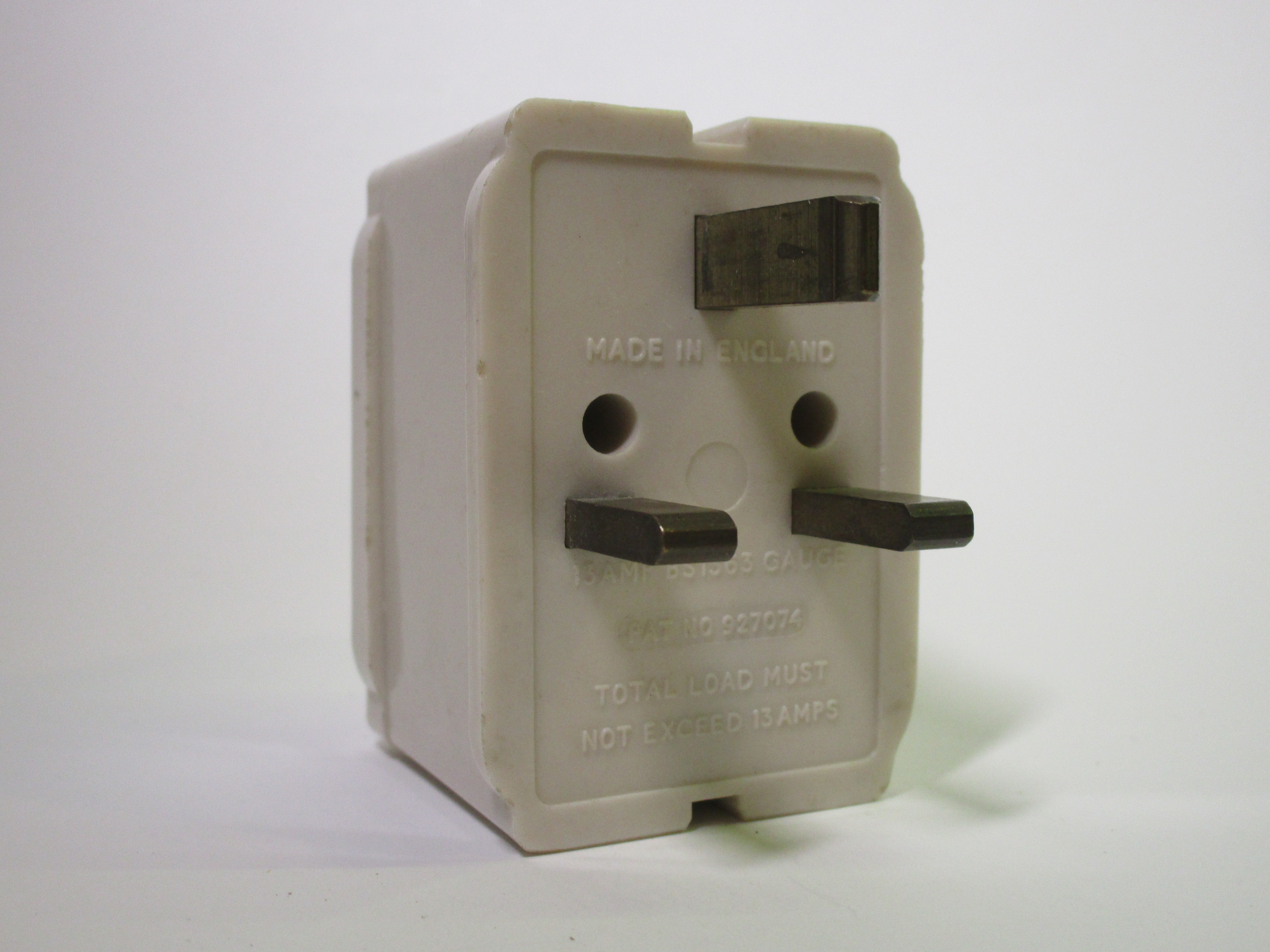
Multiway adaptor
Rating: 13A 250V
This old multiway adaptor allowed for the connection of up to three plugs to a single socket. Due to its age, it doesn't have plastic sleeving on the L and N pins.
BS372 plugs
Crabtree 5A socket
Rating: 5A 250V
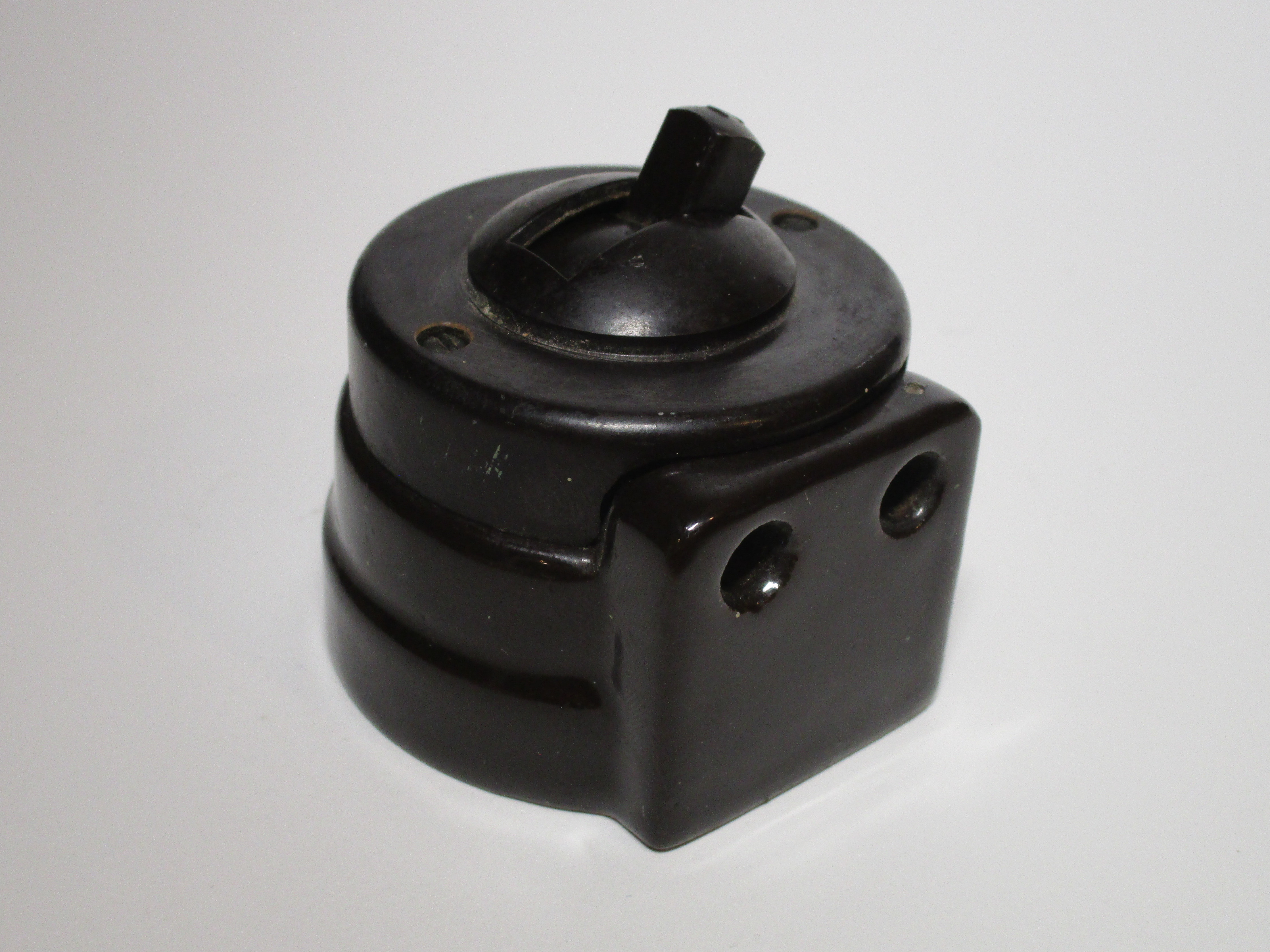
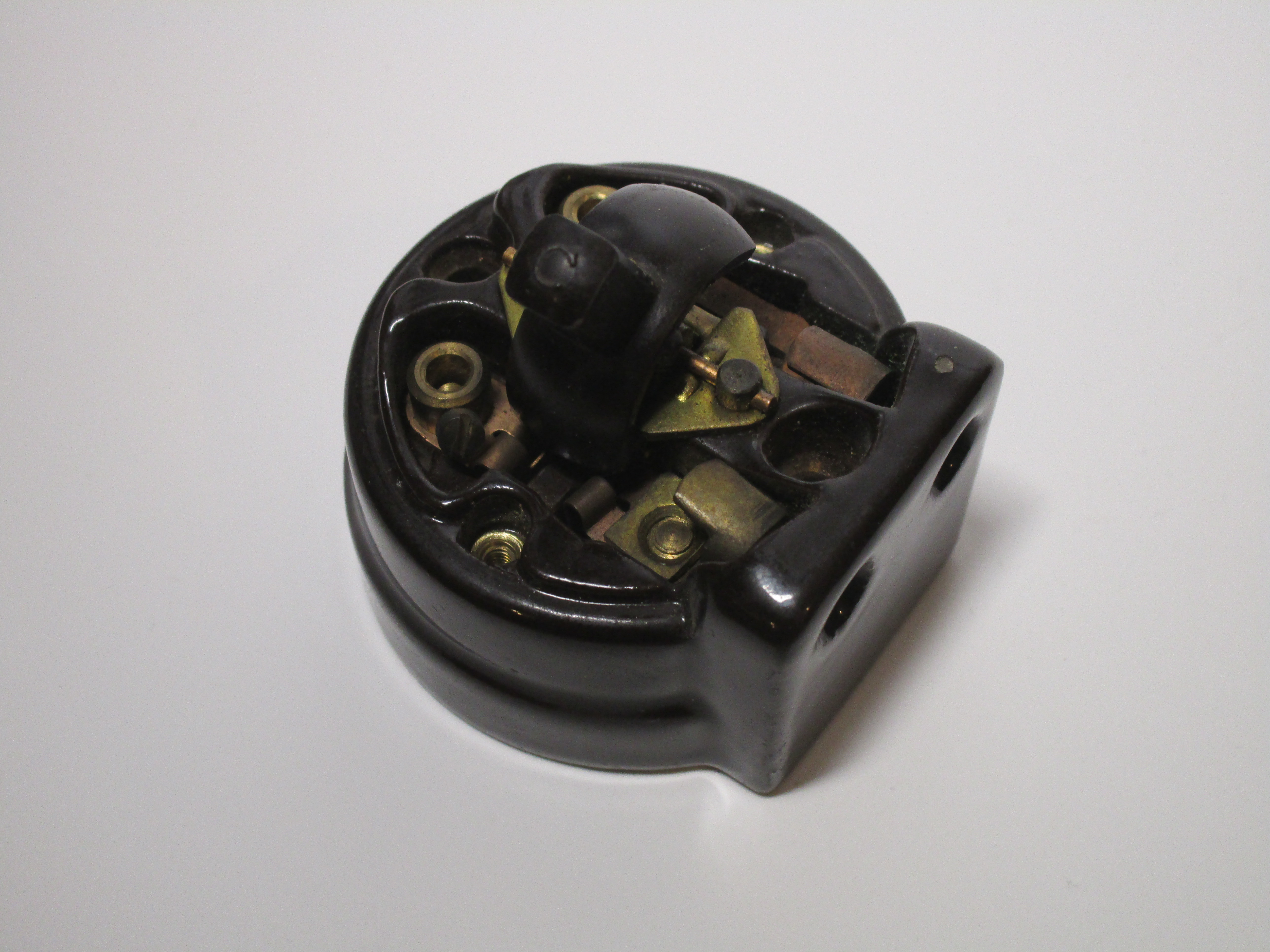
This is a 5A non-earthed socket from Crabtree, featuring a switch to turn power to the socket on or off. The socket itself is on the side, while the front features the switch - whose moulding features the letter "C", to indicate its manufacturer - and a front cover. Both are made out of bakelite, while the main body is made out of a dark brown ceramic-style material. After removing the front cover the switch mechanism and terminals can be accessed.
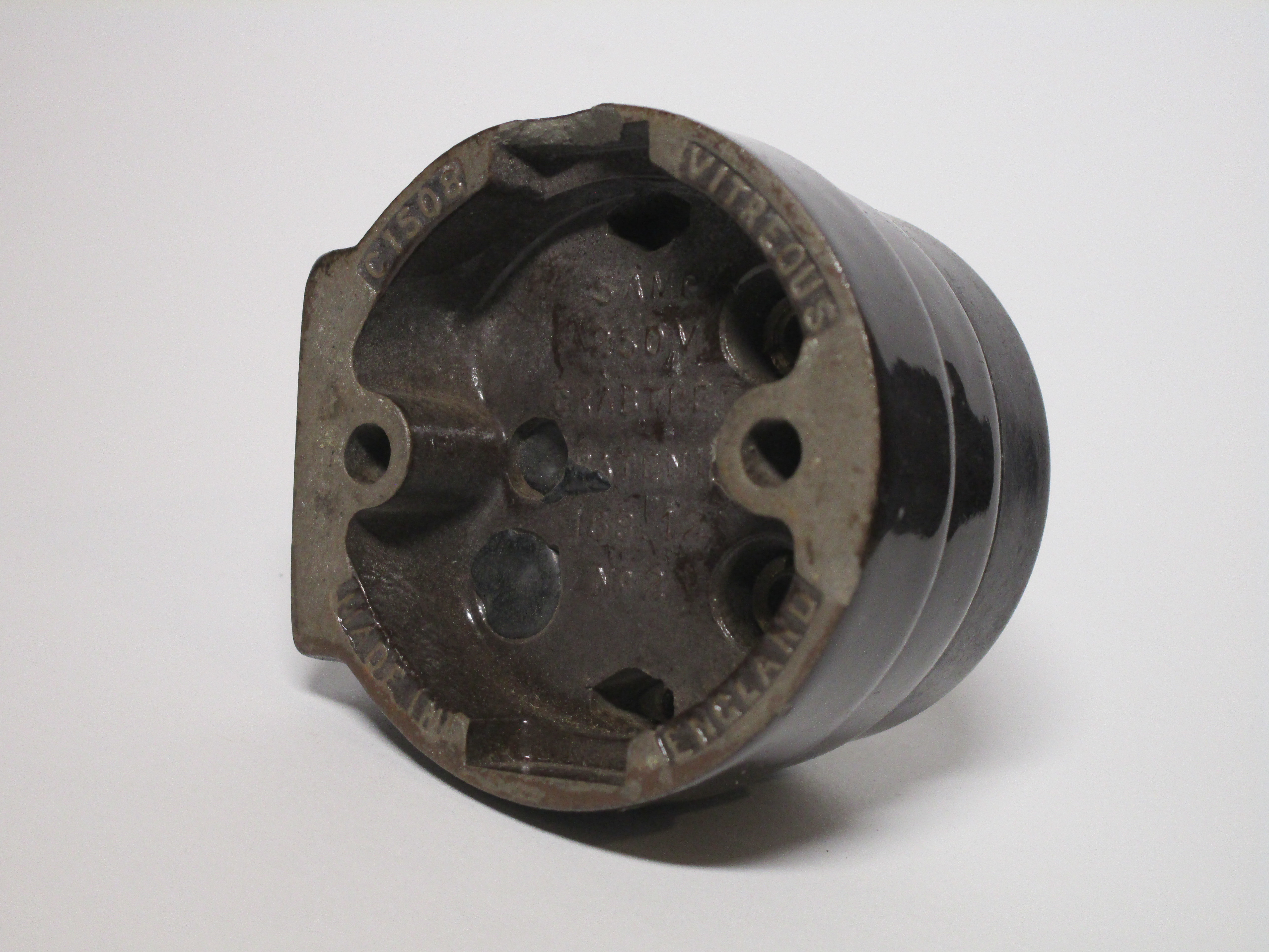
Despite the screws for the terminals being at the front, the wires are meant to be inserted from the opposite side. The rear of the socket has a small cavity for wiring, as well as indents on the top and bottom of the ceramic body which may be chipped at to allow surface cables to be brought in.
The rear of the socket features the following labelling: "C1508 - VITREOUS - MADE IN ENGLAND" and "5 AMP 250V CRABTREE PATENT 168.12 N°2".
2-way adaptor
Rating: unknown, likely 5A 250V
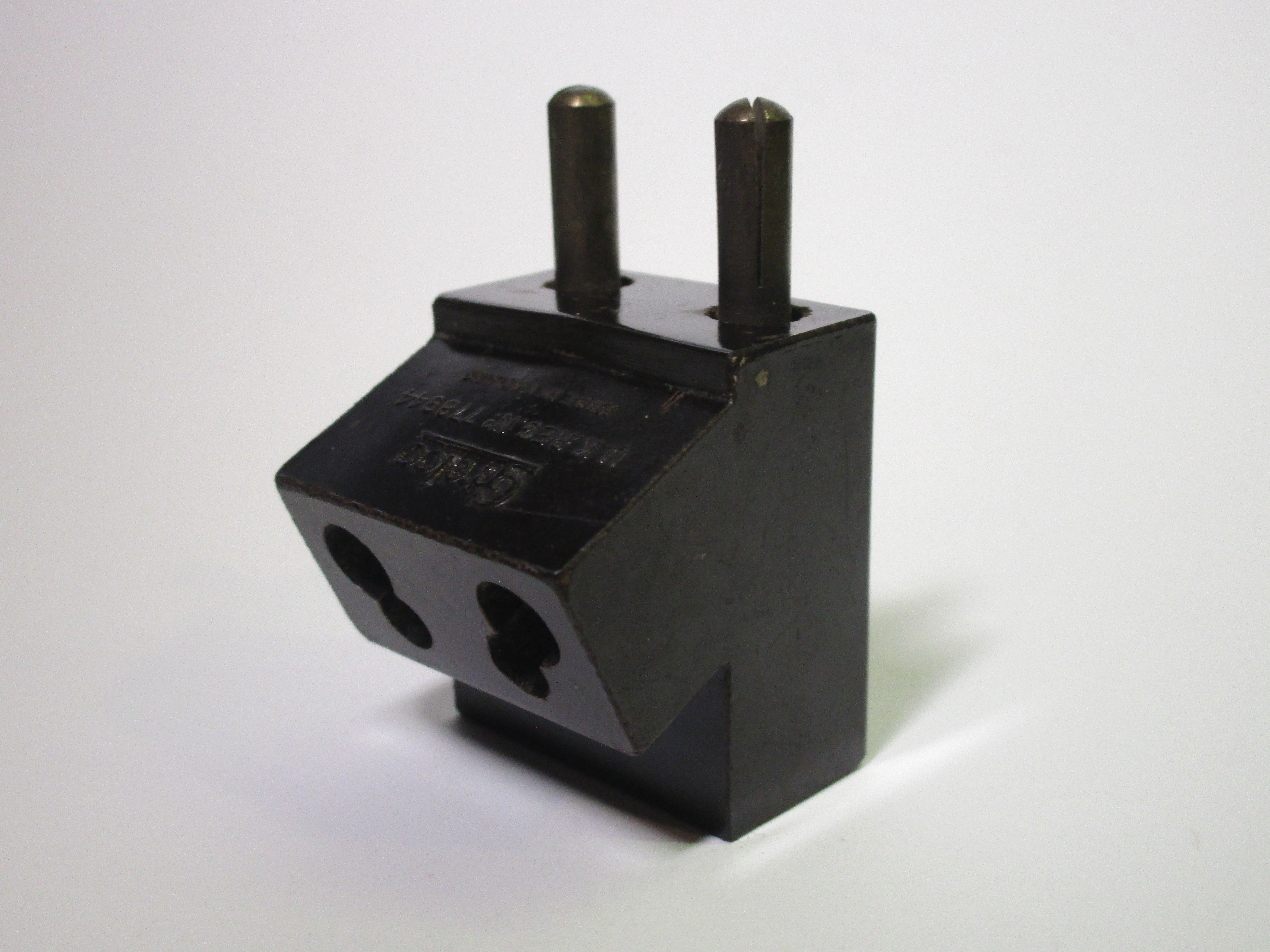
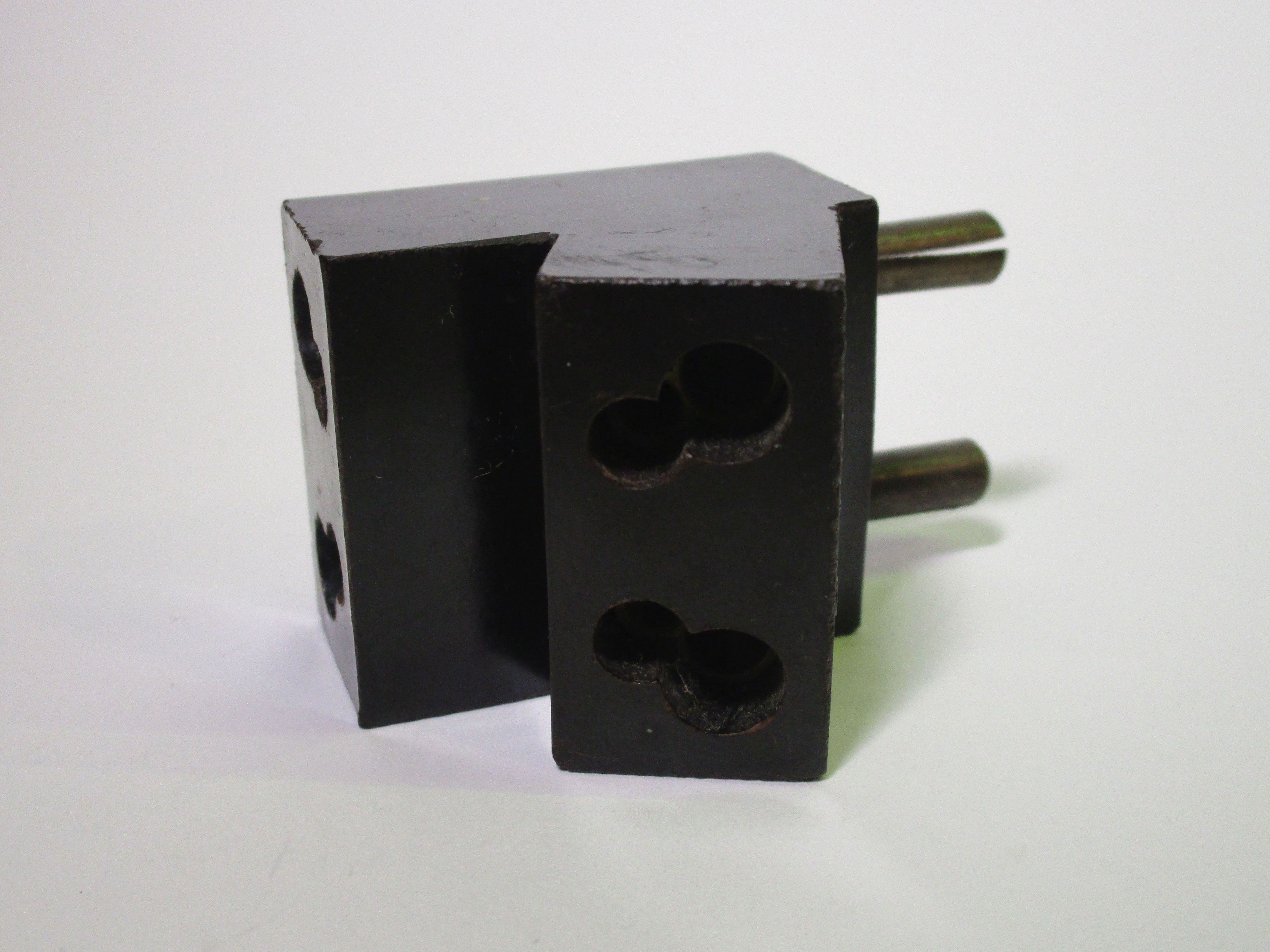
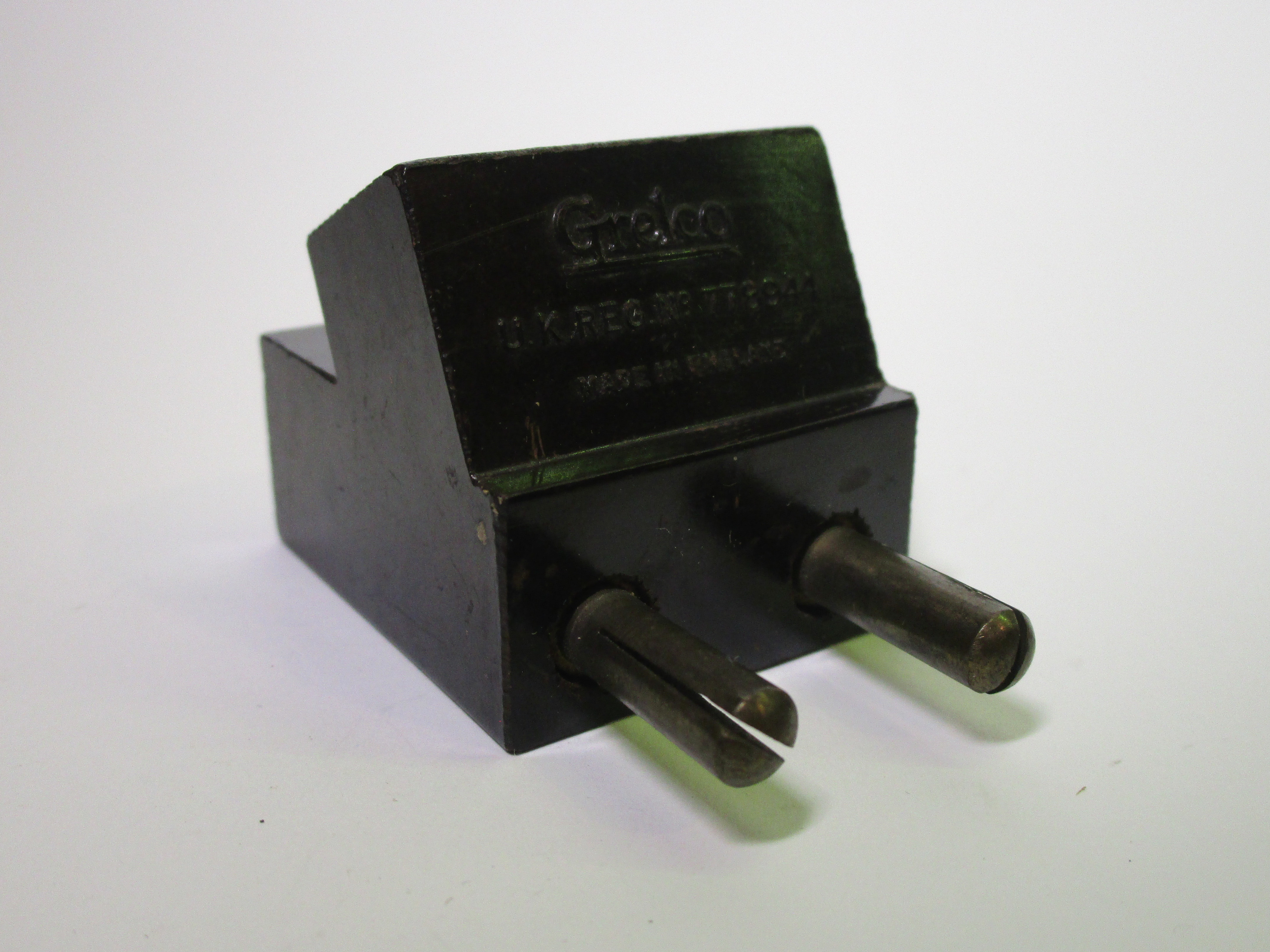
This non-earthed adaptor allowed for the connection of two appliances to a single 5A socket. It also served as a plug converter, as both sockets could accept either a 5A or a 2A two-pin plug. The adaptor was made in England by Grelco and mentions "U.K. Reg. N° 778944".