North American heavy-duty sockets
North America has an incredibly high number of plug and socket types, all specified in the NEMA standard. While many are designed for the ordinary voltage of 120V (at 60Hz) regular appliances run at, the majority of these types are rated for higher voltages, such as 240V, 120/208V and 277/480V.
To understand American sockets, knowledge of American electrical supplies is required; while conventional appliances run on 120V, high-powered devices such as electric stoves, dryers and EV chargers all require a higher voltage: typically 240V, from a split-phase supply, or two phases from a three-phase supply, resulting in 208V. Additionally, industries and commercial buildings are regularly provided with three-phase power, in the form of 120/208V and/or 277/480V supplies.
Thus, plug types need to be available for all of these supplies, at different amperages; furthermore, 2- and 3-phase connectors may or may not require a neutral connection (e.g.: an EV charger only needs 240V, while an oven also needs 120V for the lamp), and locking plugs are also available to assure a reliable connection in industrial settings.
Plugs and sockets (receptacle in US terminology) in the NEMA standard all follow the same identification code format, which indicates the type - based on the rated voltage and presence of a neutral and/or earth (ground) connection, the rated current and whether the item is a plug (P) or receptacle (R).
A chart on Wikipedia shows some of the main NEMA plug and receptacle types available.

50A split-phase socket
Rating: 50A 250V
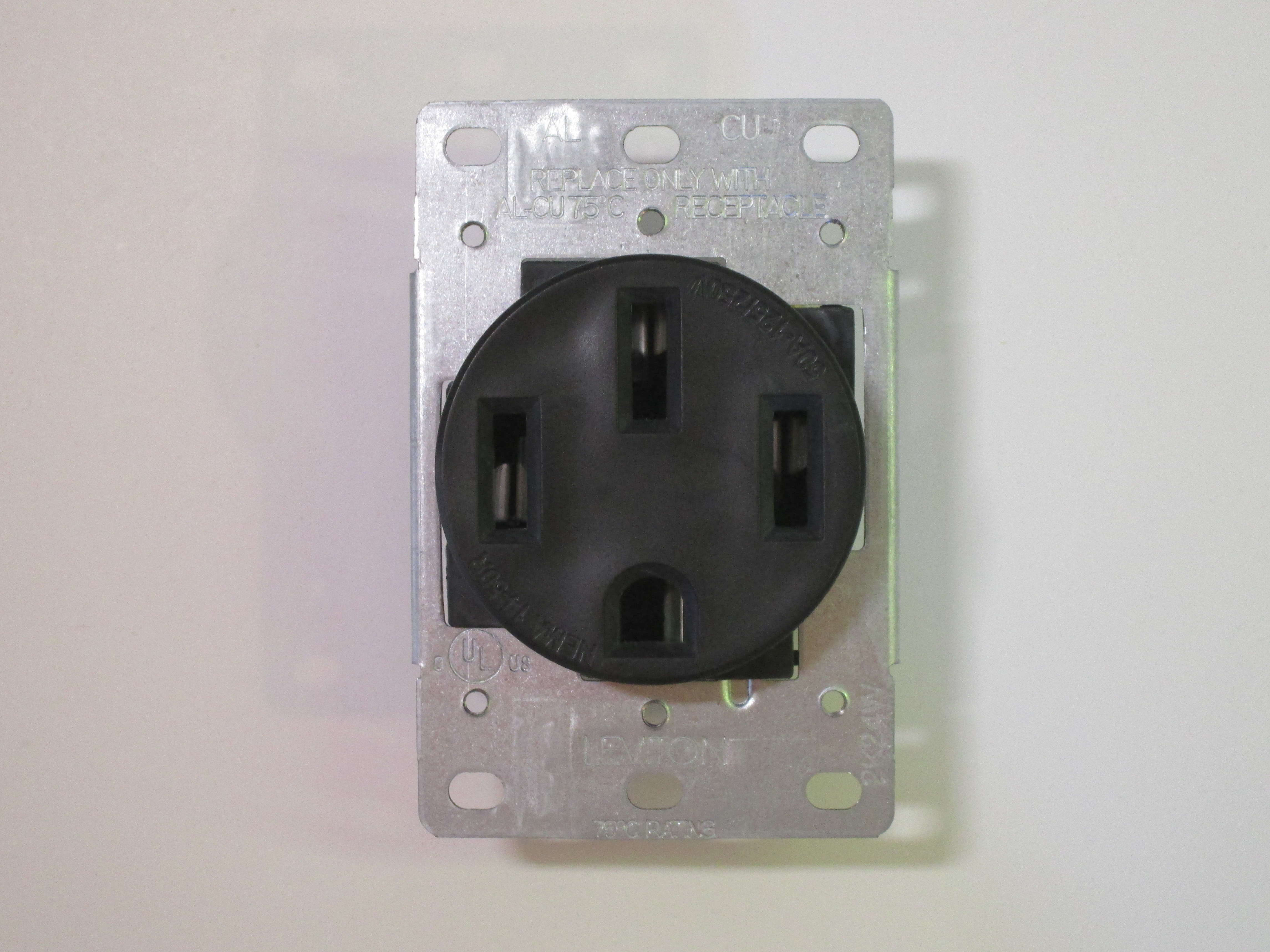
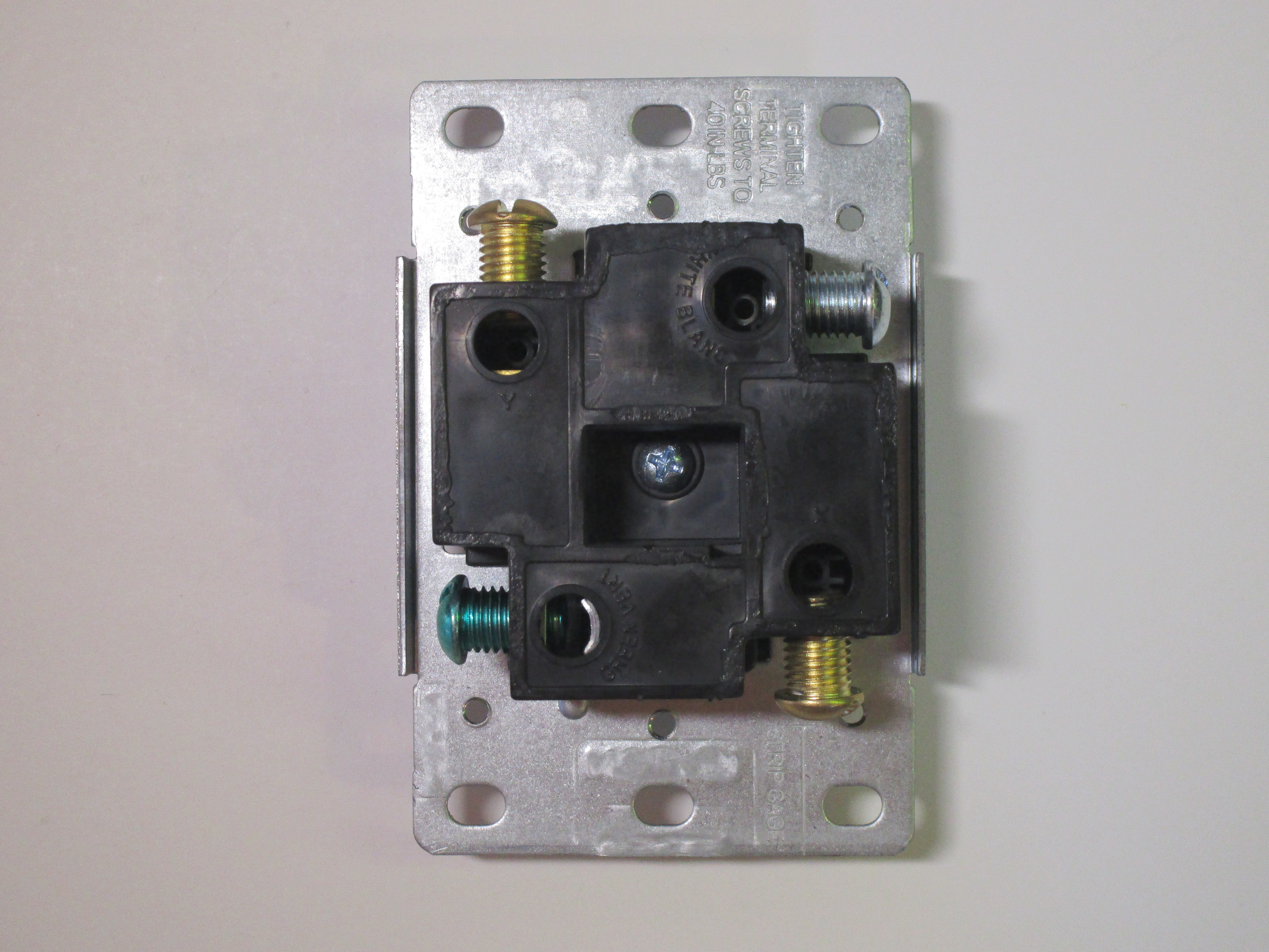
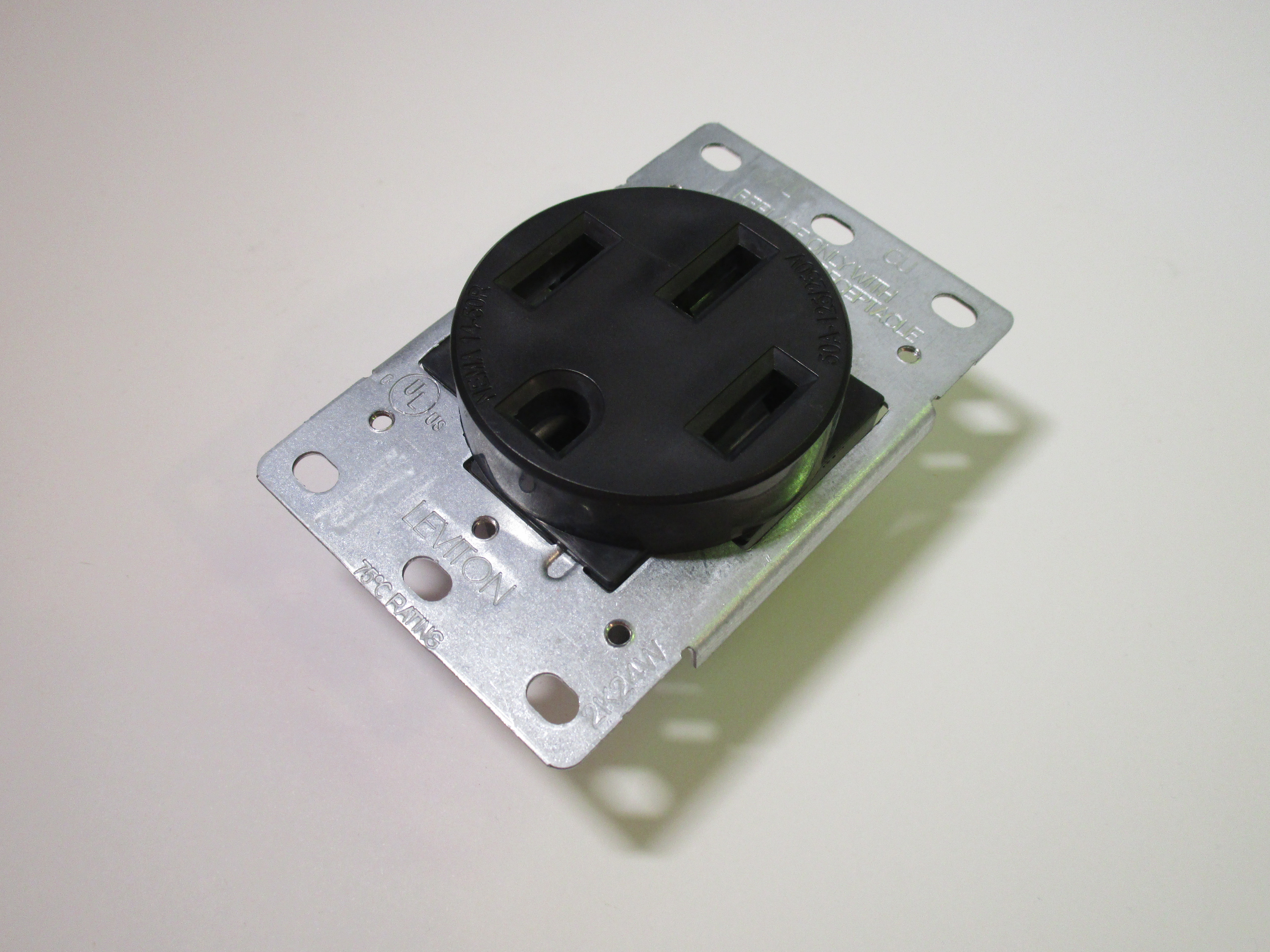
This is a NEMA 15-50R socket from Leviton, commonly used in North America for connecting electric stoves - as such it's sometimes referred to as a "range outlet". It has two line connections, a neutral and an earth/ground; thus, it can provide both 240V (on split-phase supplies - 208V on three-phase supplies) and 120V. This is specifically useful on devices such as stoves, as the stove heating elements themselves are naturally powered with 240V, but electronics, fans and lamps are often just powered with 120V.
The metal frame of the socket is marked with "AL CU" inscriptions, meaning it can be safely used either with copper or aluminium wiring. In the US, it's normal for aluminium wiring to be used for the incoming supply (typically 200A) and high-amperage circuits as such cables tend to be cheaper; however, special care is needed to ensure proper installation and avoid failure over time, including the use of breakers, connectors and outlets specifically designed for such wiring.
Three-wire 30A and 50A sockets
Rating: 50A 250V, 30A 250V
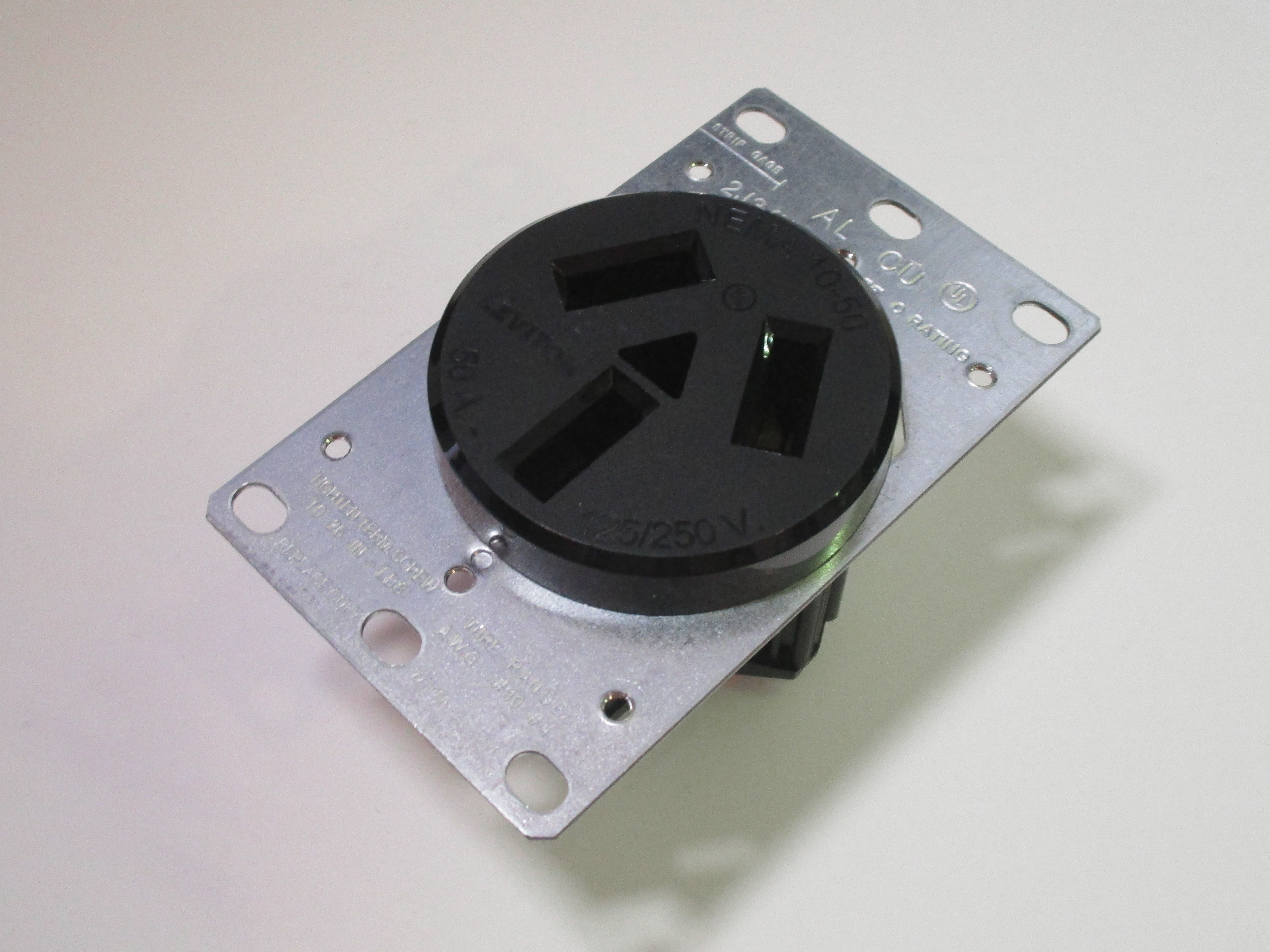
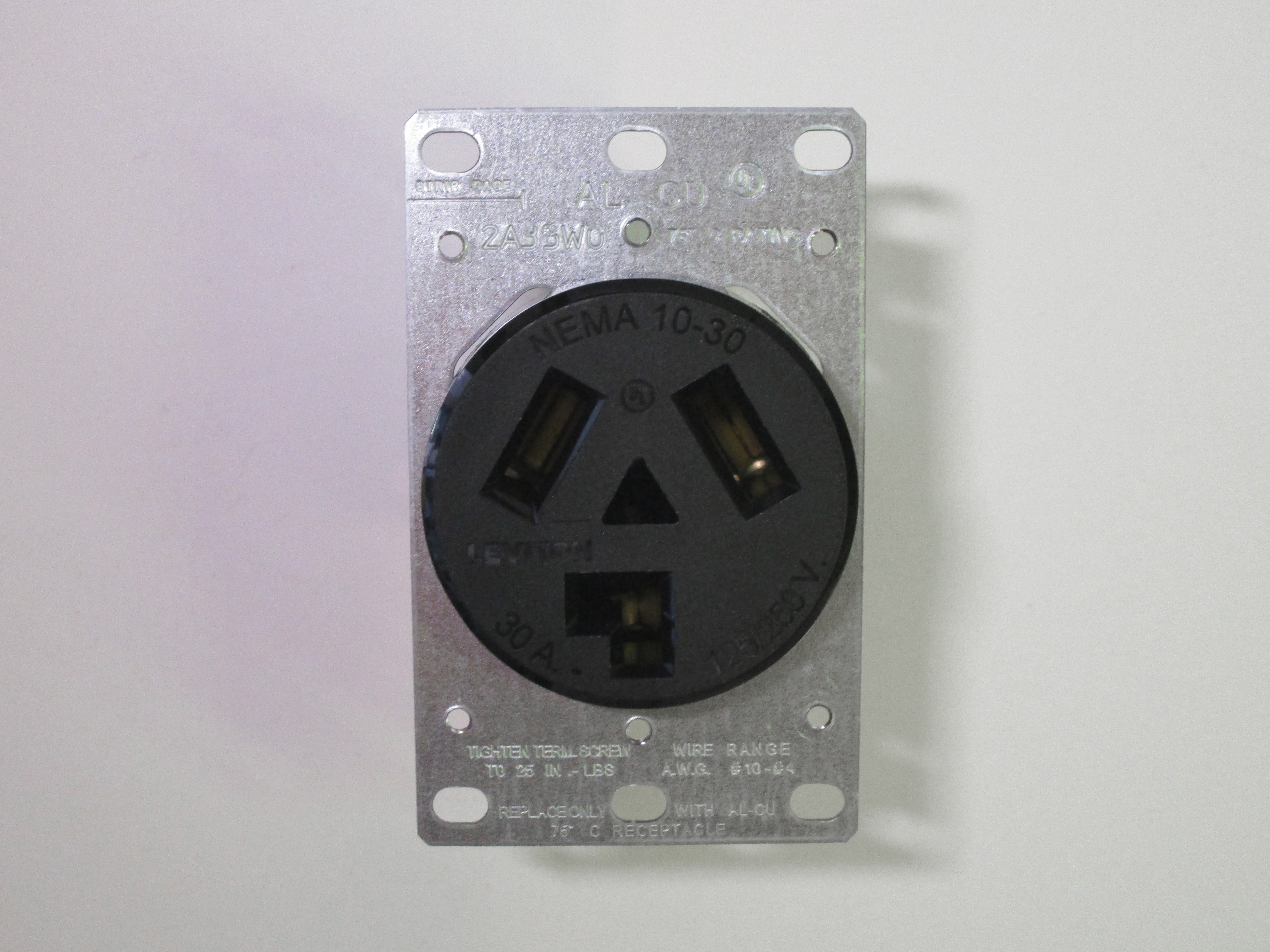
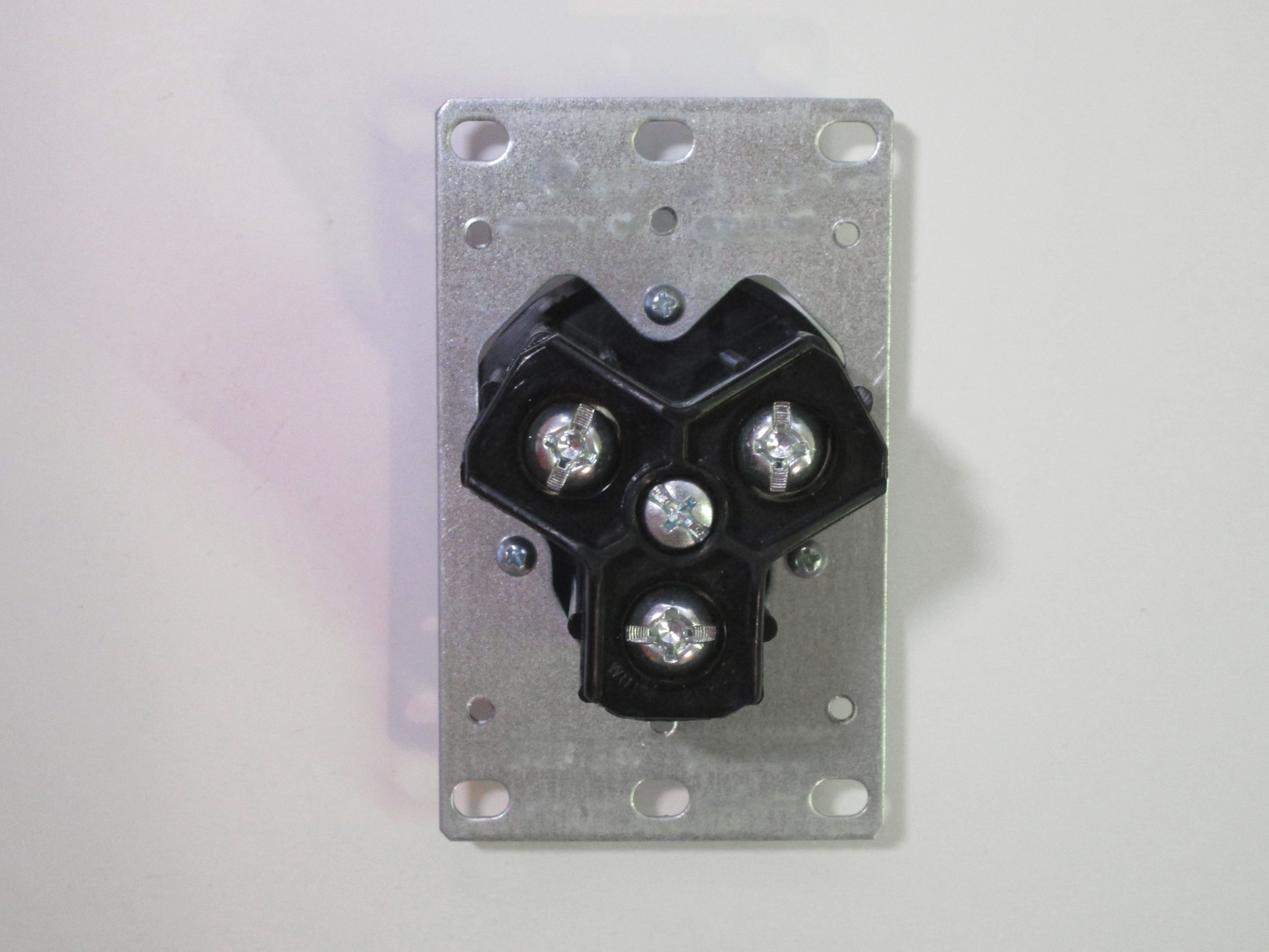
NEMA 10 connectors are a nowadays-deprecated series with two line terminals, providing 240V, and a neutral, but no separate earth connection; they are thus often referred to as "three-wire" plugs. The NEMA 10-50R and 10-30R types shown here were particularly common for electric stoves and clothes dryers, and have nowadays been replaced with the 14-50R and 14-30R shown previously.
Three-wire outlet circuits work under the TN-C earthing system,
where a single conductor - the neutral, or in European terminology, the PEN - serves both the function of
being the neutral and the earth. This is typically done by connecting the neutral terminal to the chassis
of the appliance inside the terminal block of the appliance itself.
While this practice saves the cost of an additional wire, it means that if the connection is broken or
damaged in any way the chassis of the appliance will become live and thus highly dangerous. For this
reason such wiring connections haven't been allowed since the 90s in the US.
15A 240V socket
Rating: 15A 250V
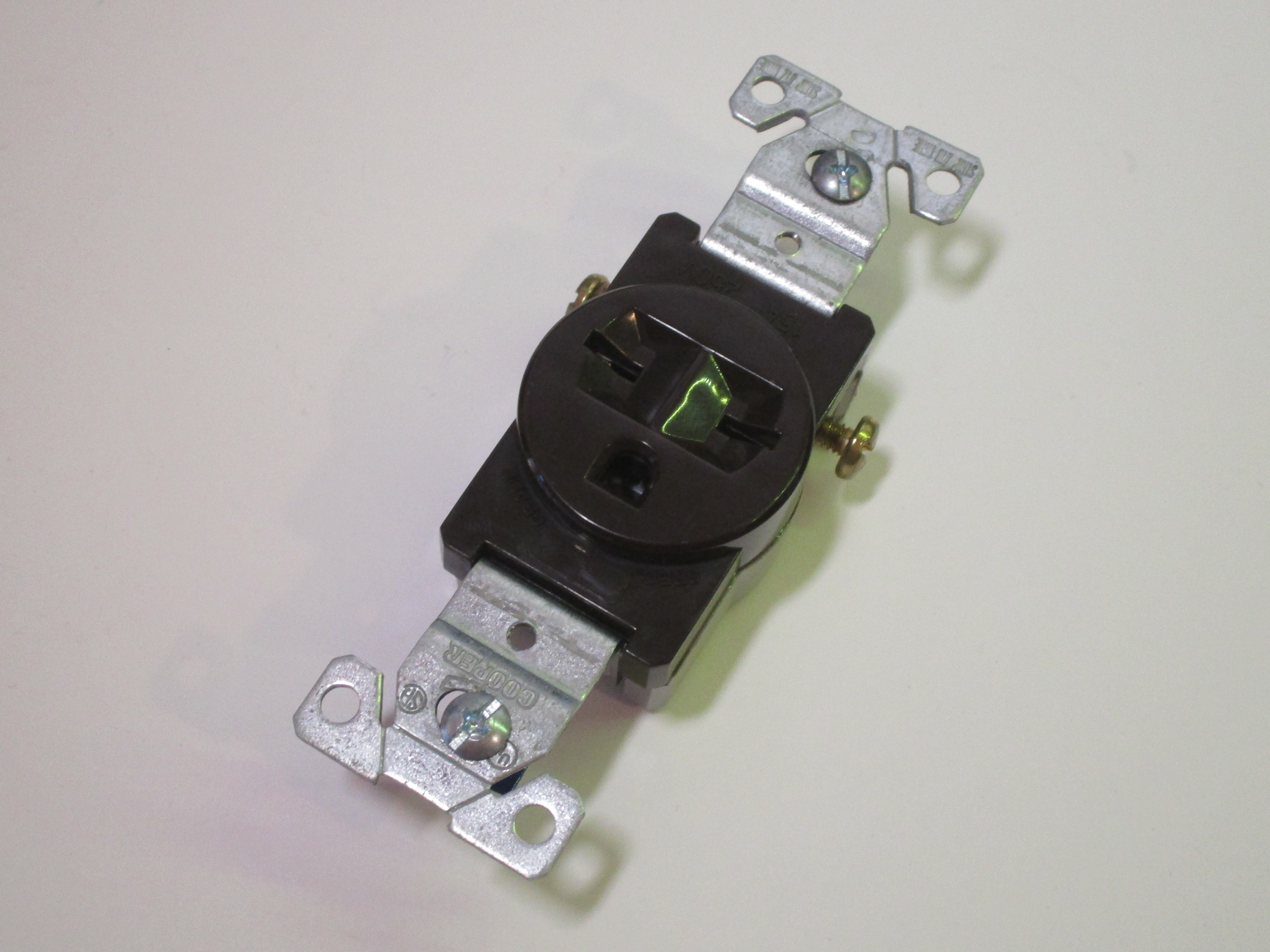
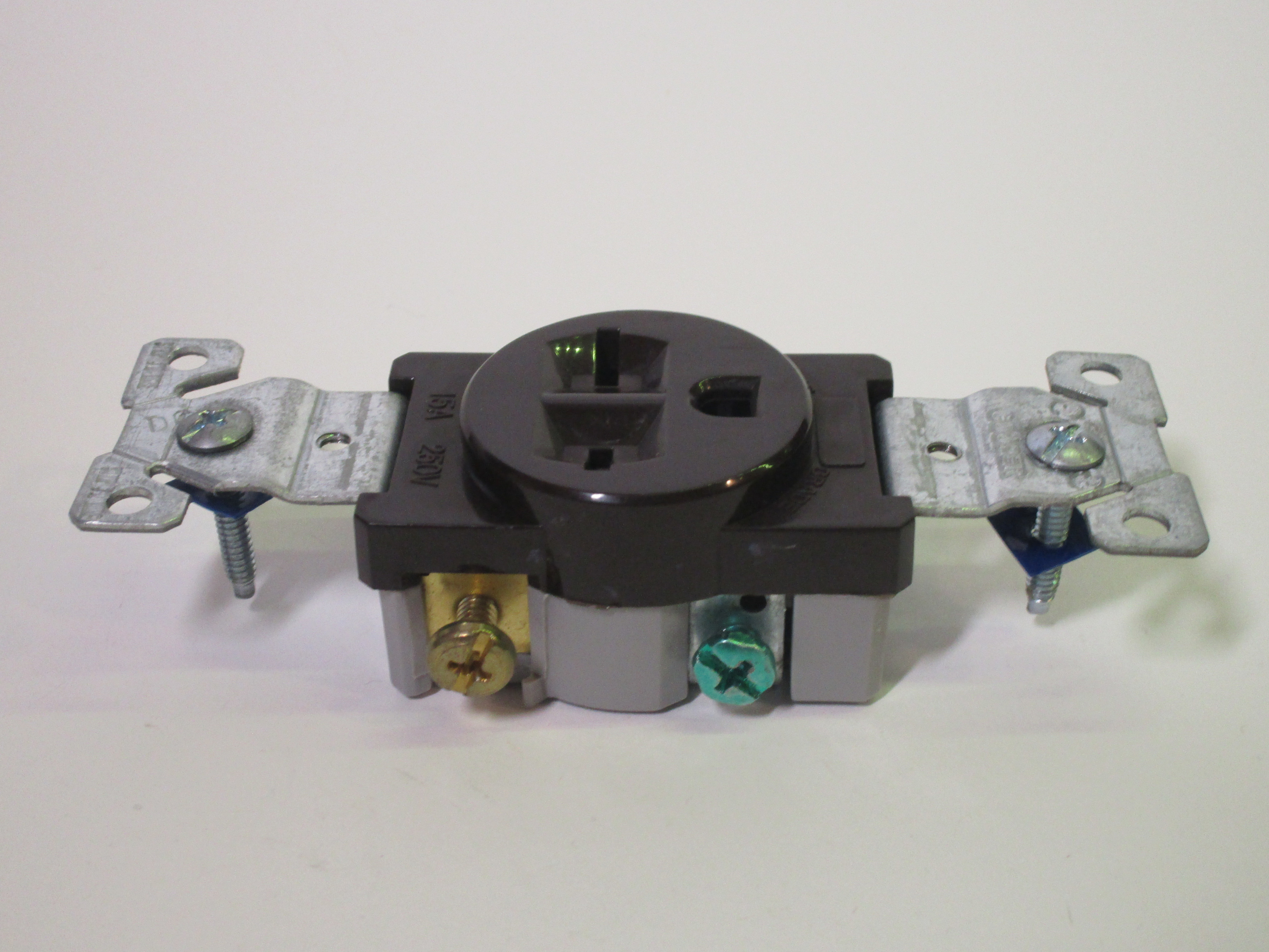
This is a NEMA 6-15R single socket from Cooper. NEMA 6-series plugs and sockets are 240V devices with an earth connection but no neutral. 6-15R outlets are essentially identical to conventional 5-15R 120V types but with the pins rotated by 90° so they're horizontal. A 6-20R version also exists, which, similarly to 5-20R sockets, has a T-shaped pin to support both 15 and 20A plugs.
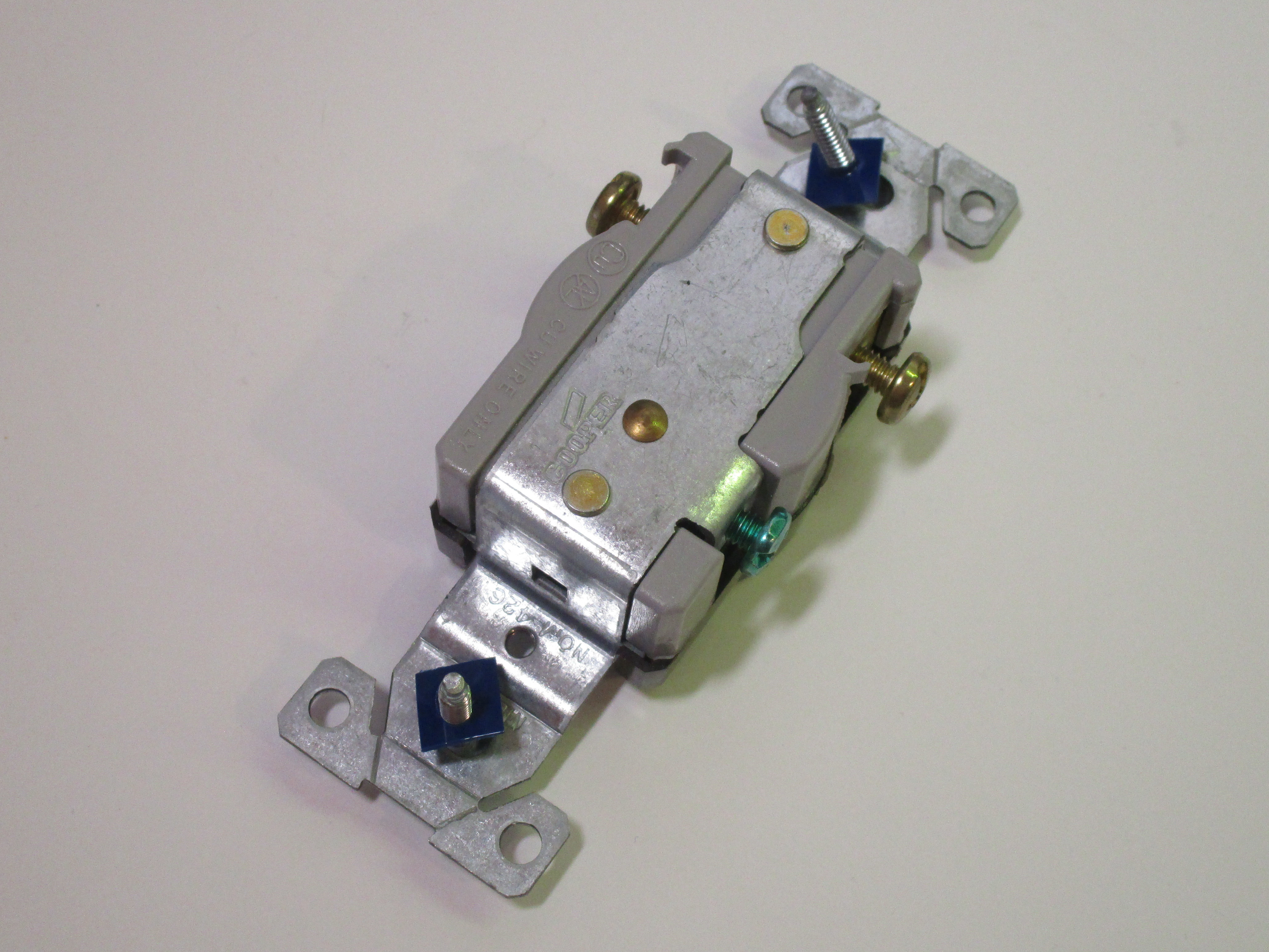
As is typical with Cooper sockets, the metal frame has two cutouts to serve as a crude wire stripper. The terminals are of the usual screw type seen on regular American outlets; the line ones are coloured gold, while the earth one is coloured green.