Japanese electrical fittings
Note: detailed images are still missing
Japanese electrical fittings such as outlets and switches originally derived from North American designs, but evolved in ways that make them substantially different nowadays. Modular components are common, especially in the case of light switches, which allows for greater flexibility. Wire connections are entirely screwless.
The wall boxes are of the rectangular American style and are available in multiple sizes. A single box can hold up to three modules, or one non-modular device. Faceplates and module sizes are largely standardised, though practically speaking most electrical accessories are made by one company, Panasonic.
Construction
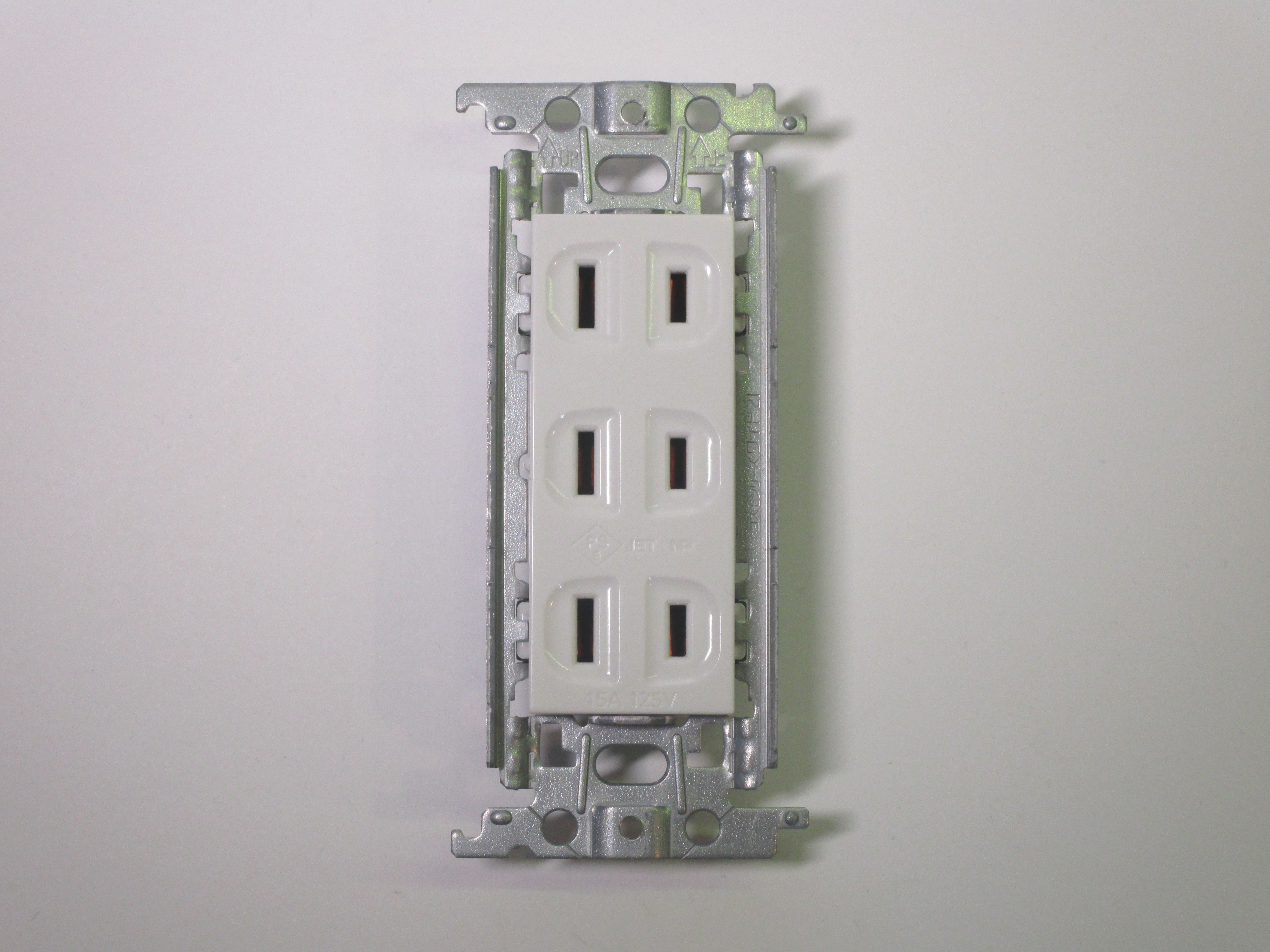
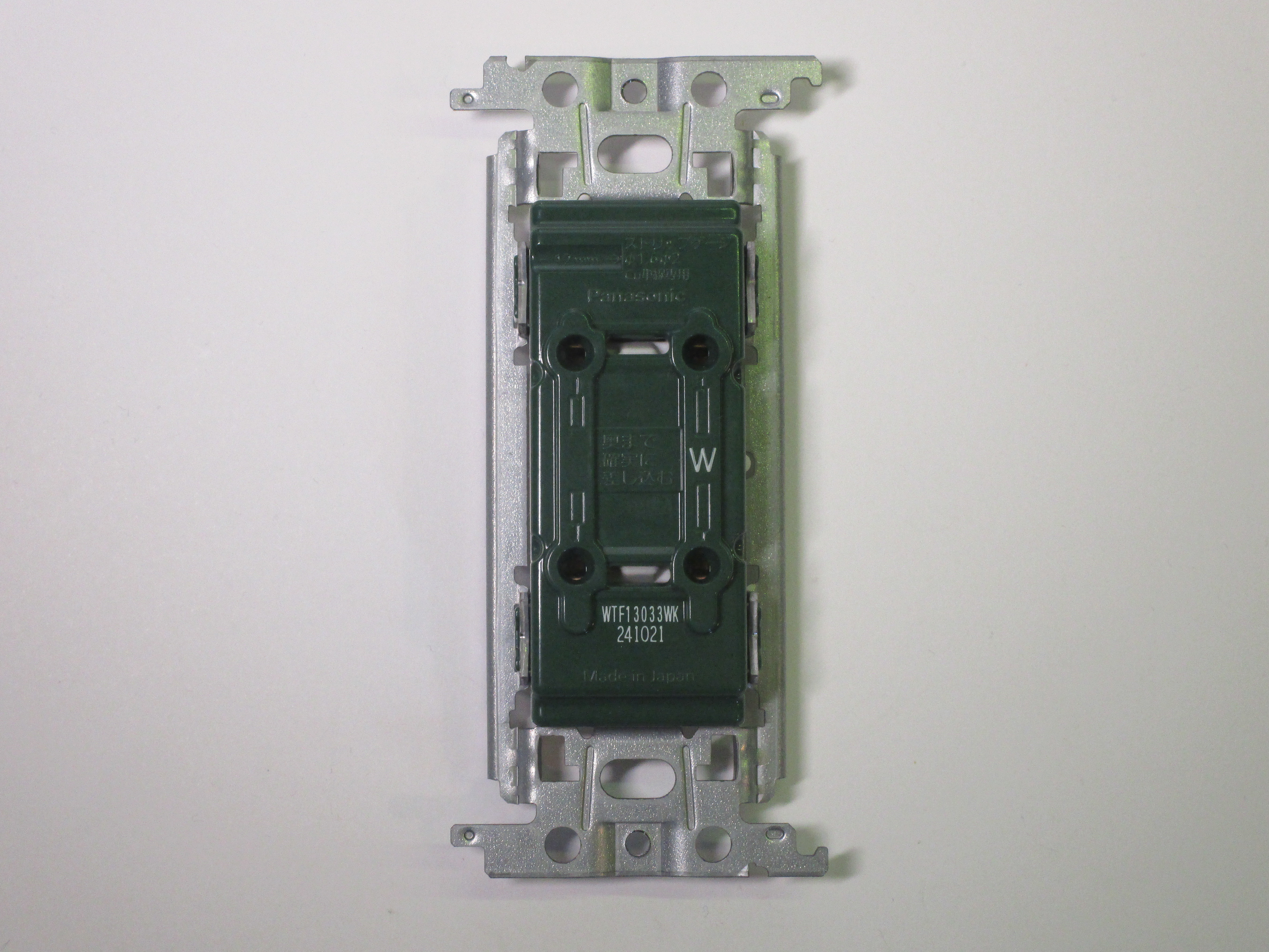
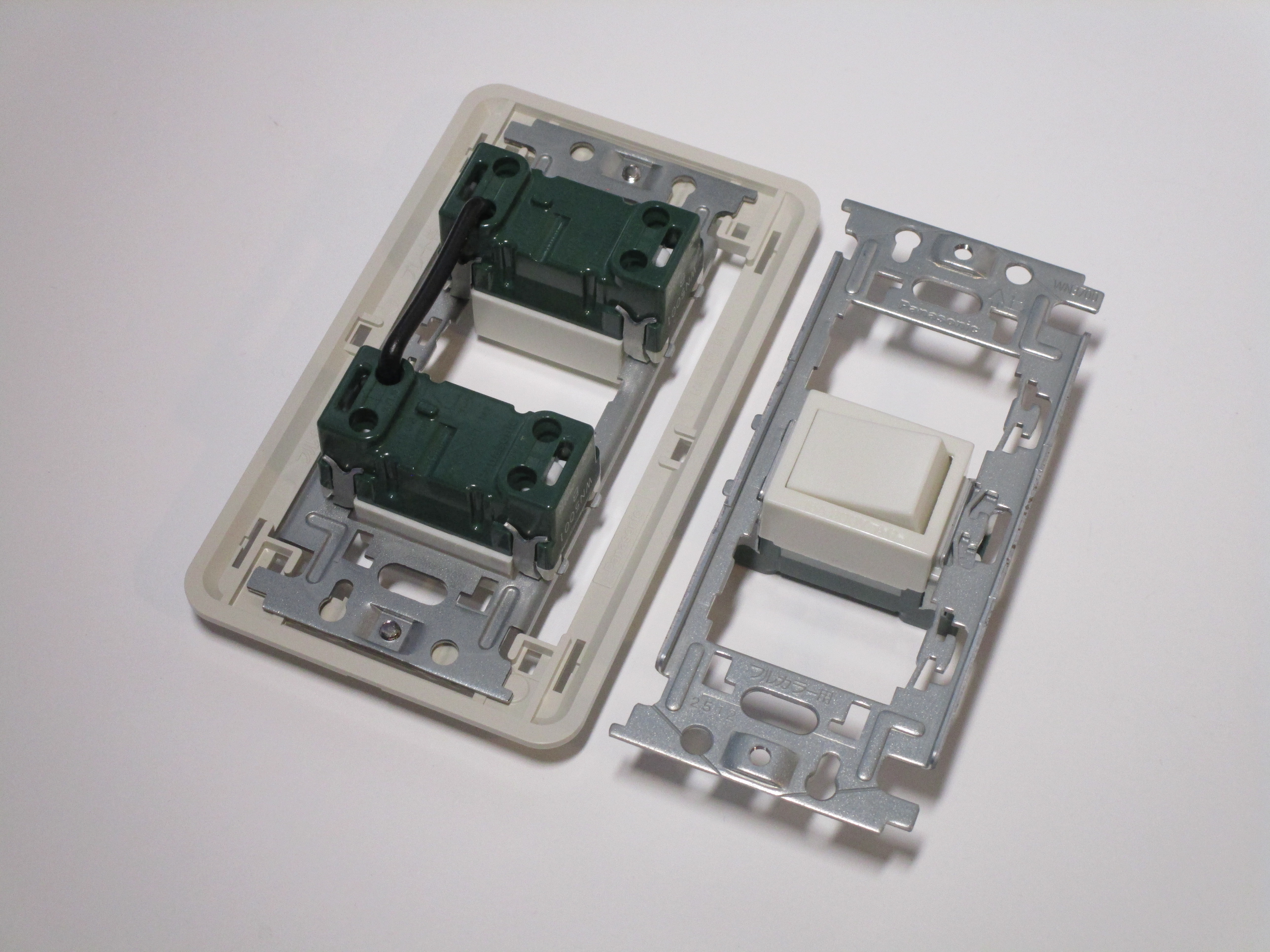
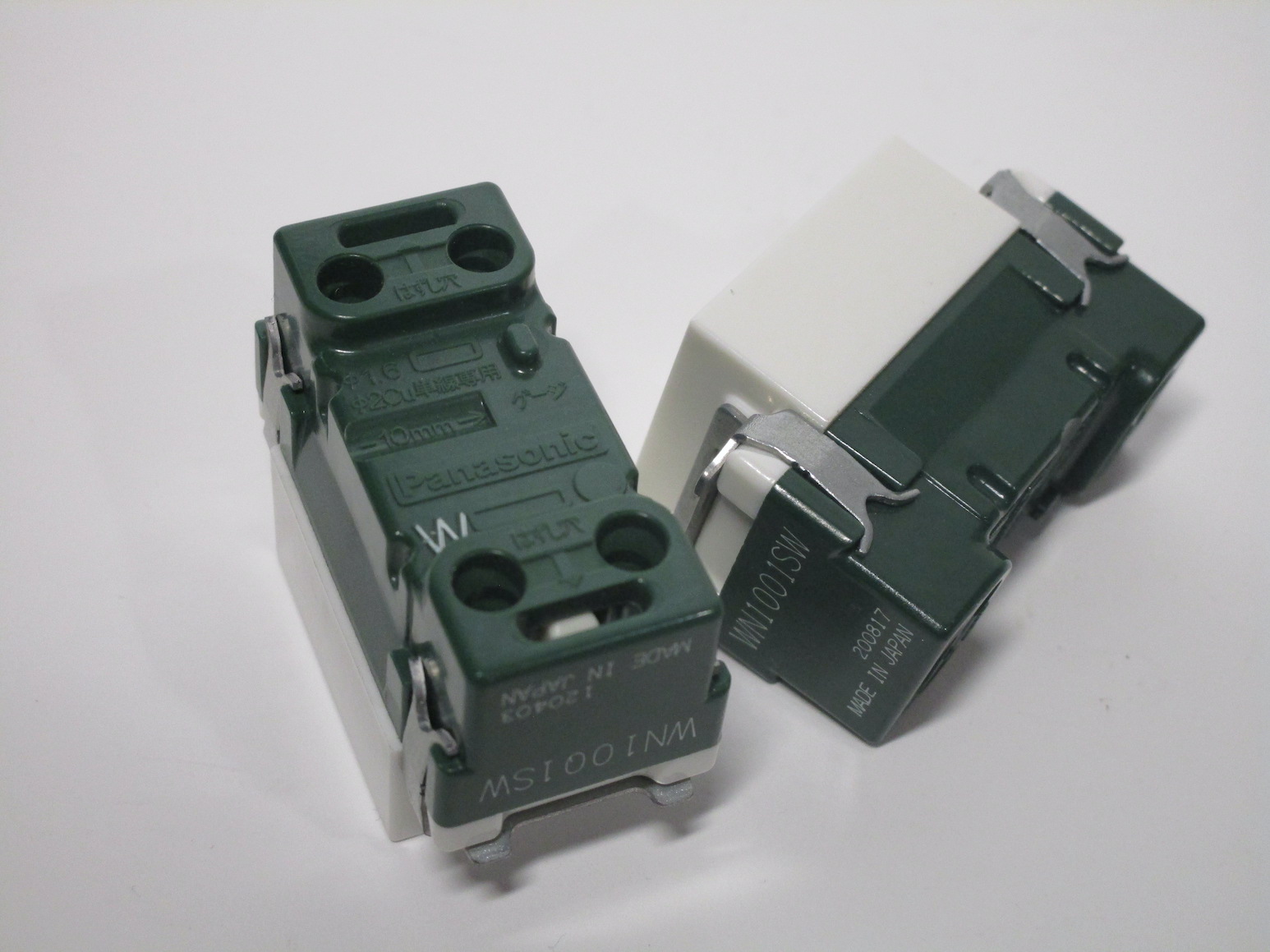
Regardless of whether they're modular or single-block items, the construction of Japanese electrical fittings is similar: they feature an outer mounting frame made of metal while the "core" is made of plastic. The rear area of the "core", where the wire terminals are located, is coloured dark green.
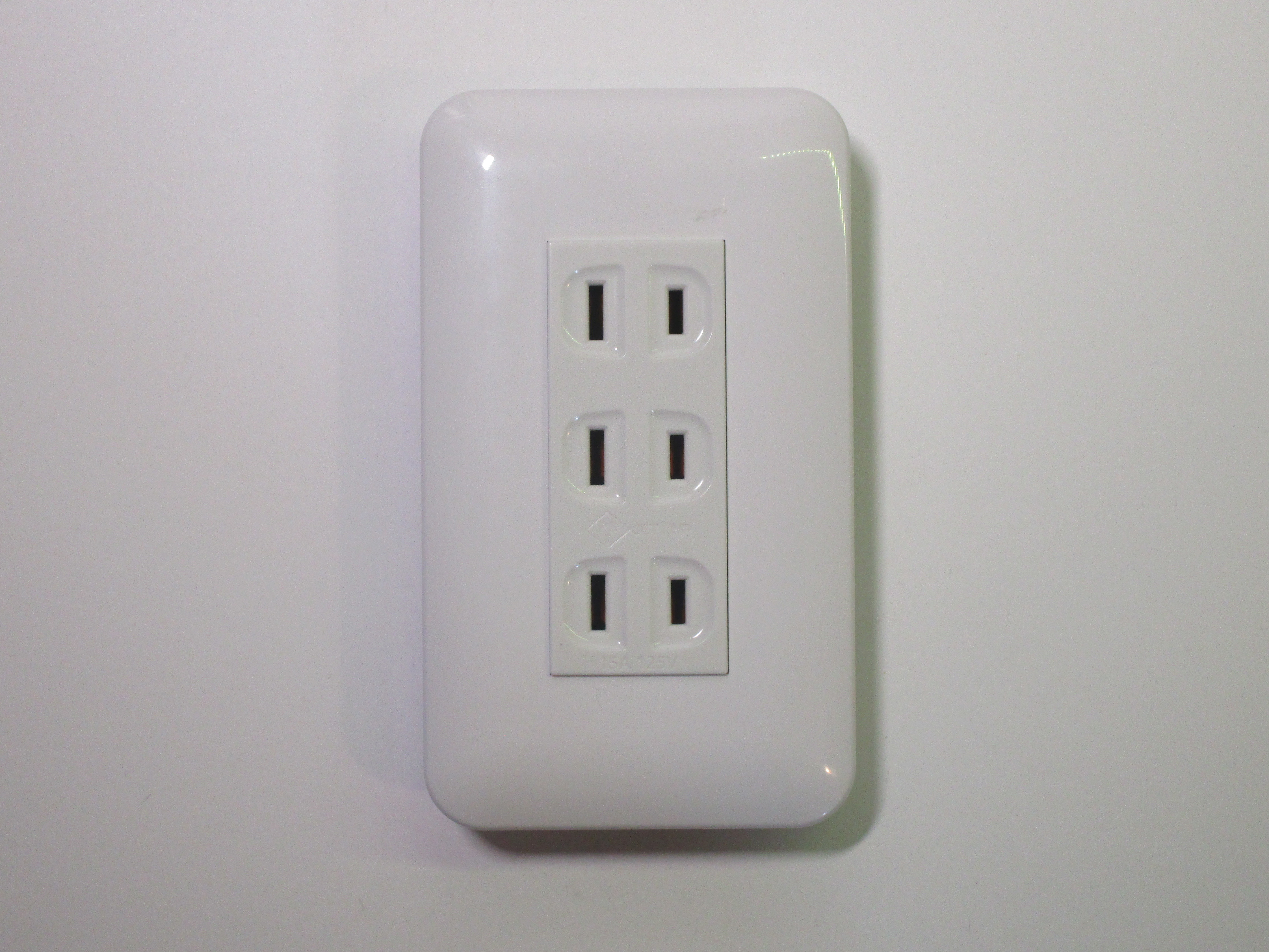
Cover plates are usually made of plastic and come in two pieces: one part screws into the fixture itself while the second piece clips into it, allowing the screws to be hidden. They can have spaces for one, two or three modules - non-modular items use the latter. Note that, while the three-module faceplate may seem similar to the American "Decora" type, since their cutouts are both rectangular, they are in fact different: the Japanese ones are taller and thinner.
The only difference between these three sizes is the outer piece. Even on one- and two-module faceplates the inner piece is the same, meaning that if the front cover is removed there's a large gap in the non-populated module spaces.
Wire terminals are entirely screwless with push-in connectors. The wire is stripped, then pushed in, which forms a secure connection. To remove it, a small recessed plastic piece can be pushed with a screwdriver. The device has text indicating the length of wire to strip (usually 10 or 12mm) and the supported wire sizes (1.6-2.0mm2 for 15A outlets and switches).
Non-modular power sockets
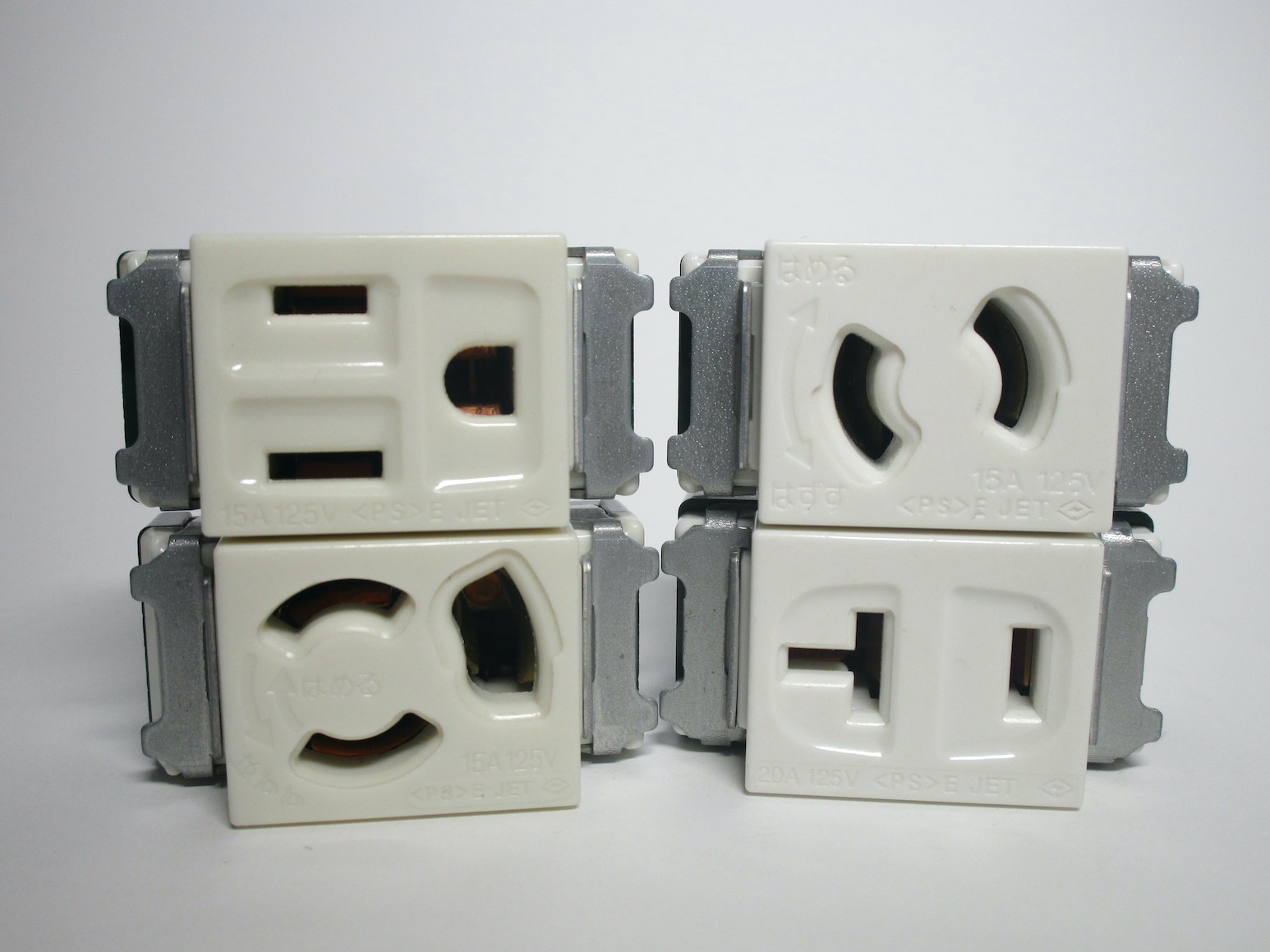
Outlets in Japan tend to be non-modular and feature two or three non-earthed outlets in the same receptacle. Earthed sockets are also available but are rare, as most circuits are unearthed, though everything is protected by an RCD.
While ordinary outlets run at 100V, special sockets exist for 200V appliances such as air conditioners. Aside from the different pin configuration, they're built the same as conventional ones.
Light switches
Rating: 15A 300V
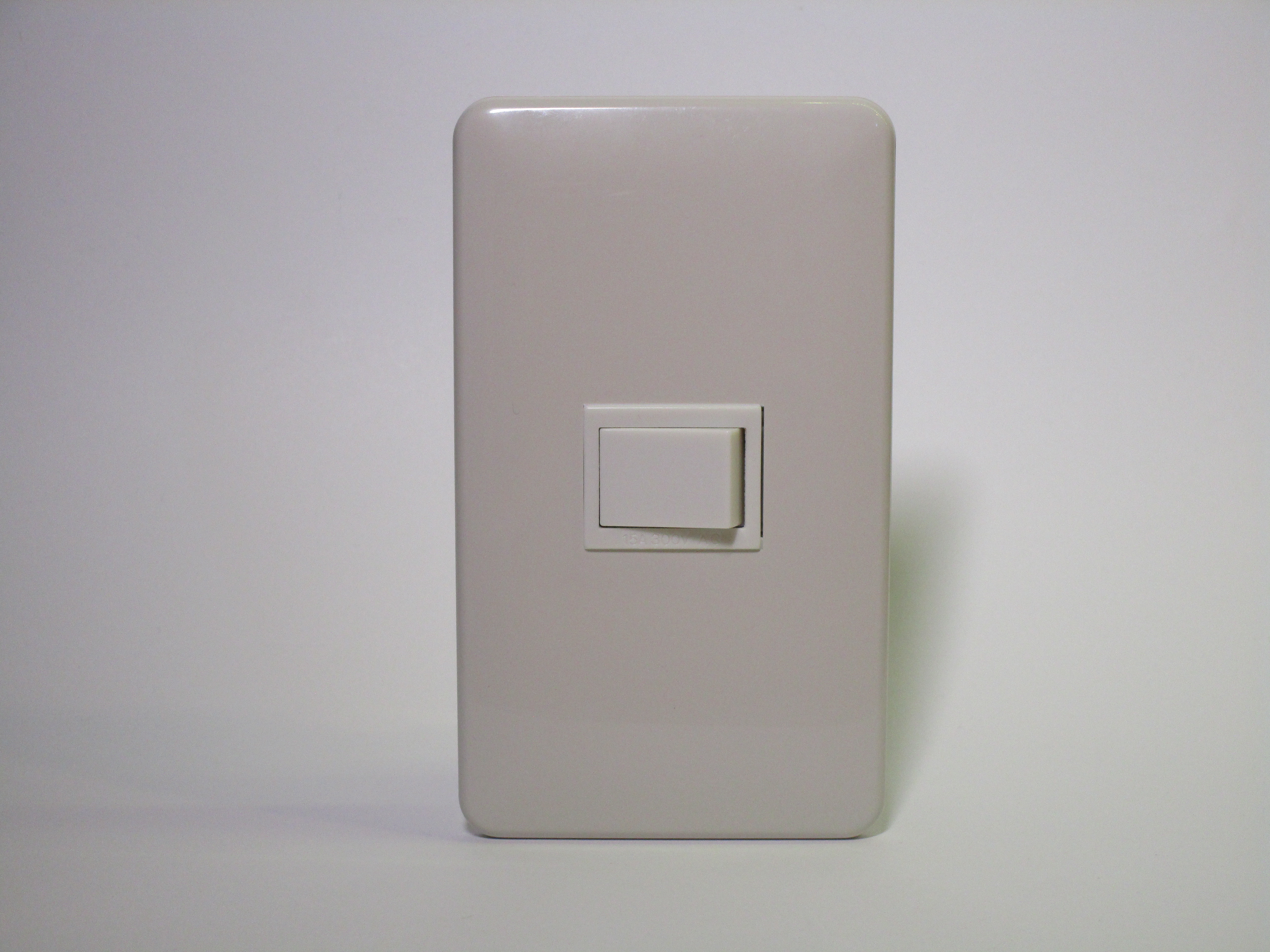
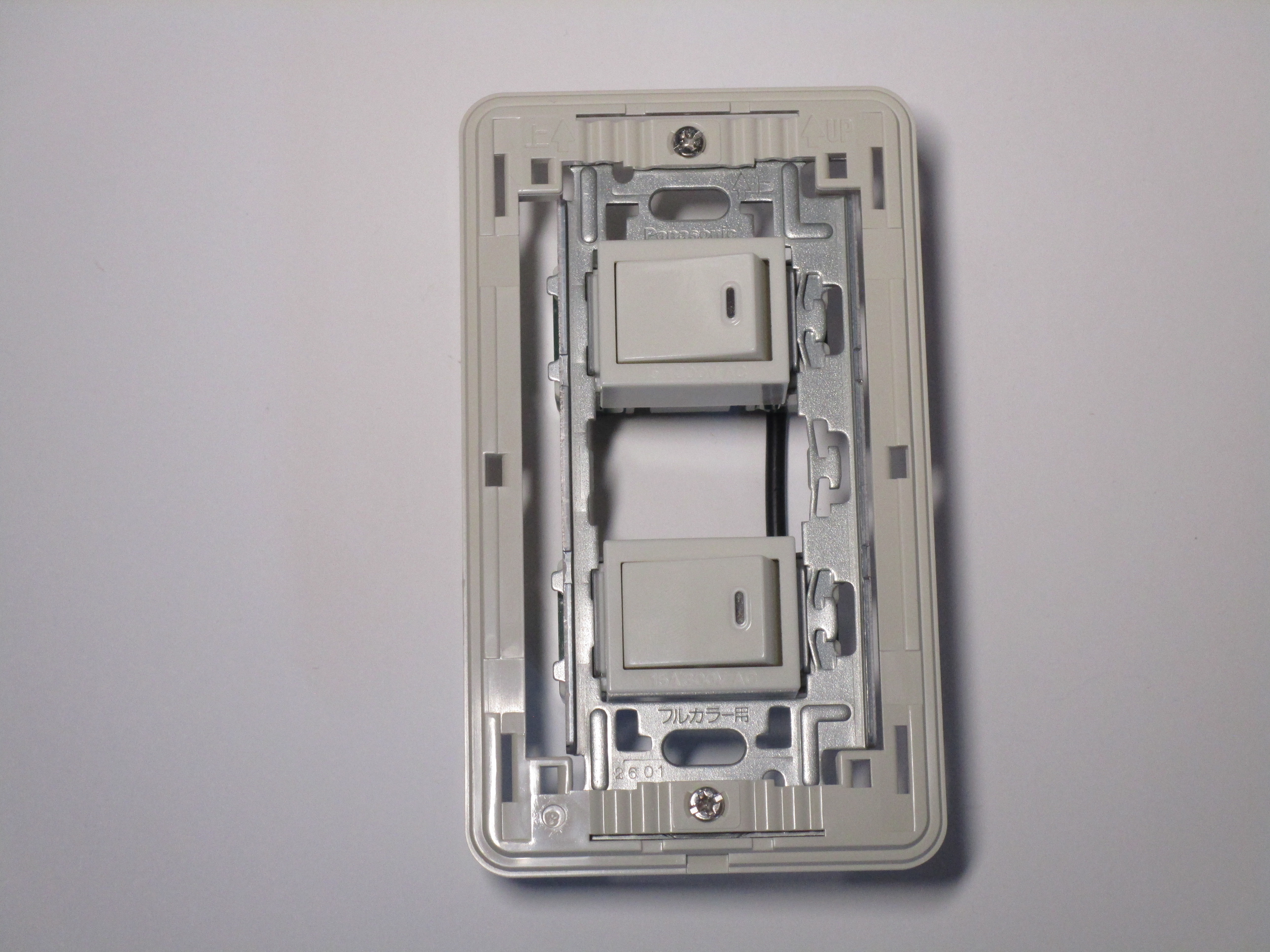
Light switches are mostly modular. The classic ones shown here are quite small as they're limited by the size of a single module and also by the plastic contour around the switch itself, which reduces its size further. This contour also makes them look vaguely similar to switches used on appliances.
One way and two way (BrE) switches are available. The former have a black vertical line indicating when the switch is in the on position, which is absent from the latter as the light may be on in either position. Additionally, on two way switches only the common terminal has two wire connections.
Modular items
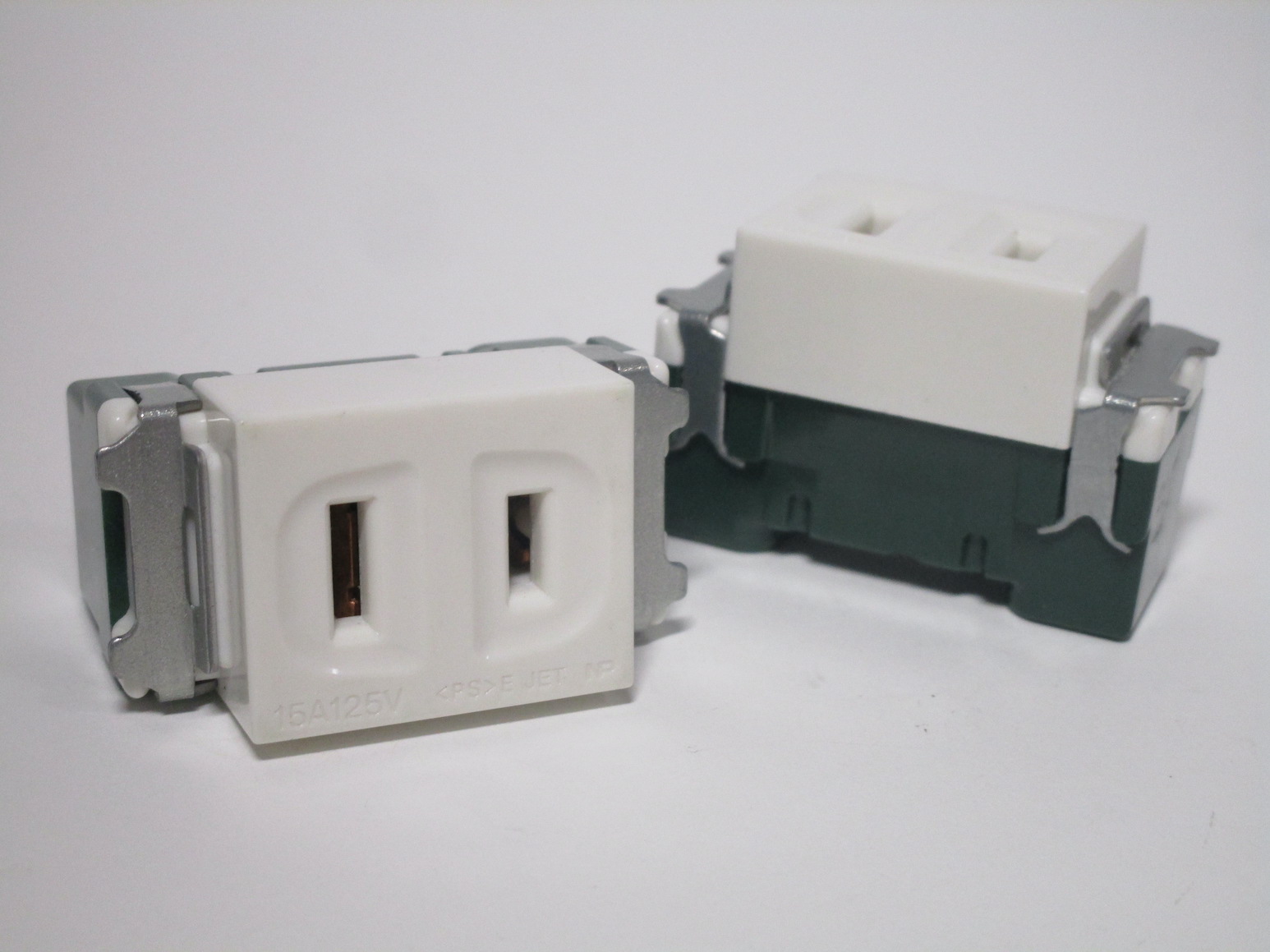
Modules are available for all sorts of functions: light switches, outlets, phone jacks, antenna connectors, etc. This allows for great flexibility, as it's possible to choose exactly the positioning of each item and thus the overall layout of the fitting.
These modules are held on a frame, typically made of metal, which can hold up to three at once. Naturally, it's possible to install a larger wall box to fit multiple frames and thus more devices. Each module is held on the frame with a small metal tab which has to be bent to install or remove it.
Newer and older module types
The specific module standard seen here, while extremely common, isn't the only one in use in Japan. There seems to have been an evolution over the years, as old homes may have smaller modules, while new installations often have a larger size which allows for considerably larger light switches than the ones seen earlier.
A diagram (note: Twitter link) found online shows, roughly, how electrical fixtures in Japan have evolved over the years. Their design may have started out much closer to the ones in use in the US, and then diverged.