North American breaker panels
Circuit breaker panels in North America (specifically Canada, the USA and Mexico, which have similar electrical standards) have important design differences compared to other countries which have largely adopted the German DIN rail system. This page aims to explain how these panels work and are constructed.
To properly understand these electrical panels, some general knowledge of American electrical supplies is necessary: ordinary appliances run at 120V 60Hz using 15A NEMA plugs, however a higher voltage of 240V (or 208V) is available for high-power devices such as electric stoves, dryers and air conditioners, connected to dedicated circuits.
To provide residential buildings with both of these voltages, three-wire power distribution is used.
The most common is the 120/240V split-phase system,
typical of low-density housing, which works by having two line or "hot" wires and a neutral. The two line
wires have a potential of 240V between each other, while either of them have a 120V potential to the neutral.
Conventional 120V socket and lighting circuits are fed from a single "leg", alternating between the two to
keep the load balanced, while appliances that require 240V are given both of these "legs".
The 208V system is mostly found in apartment blocks and is derived by supplying each apartment with two phases
from a 120/208V three-phase transformer. While there are important differences on the distribution side,
within the singular apartment it works the same way, just with a lower line to line voltage.
General overview
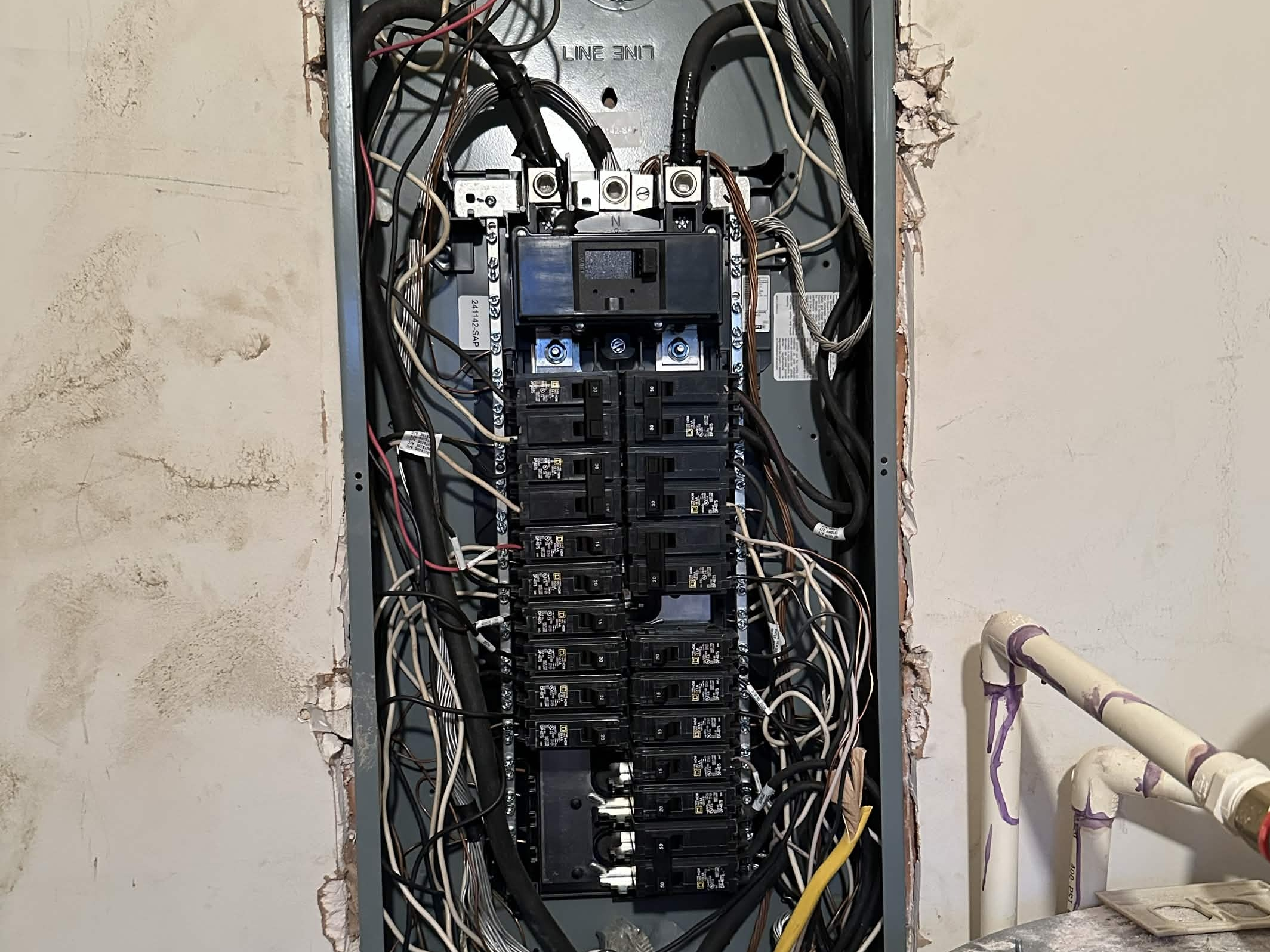
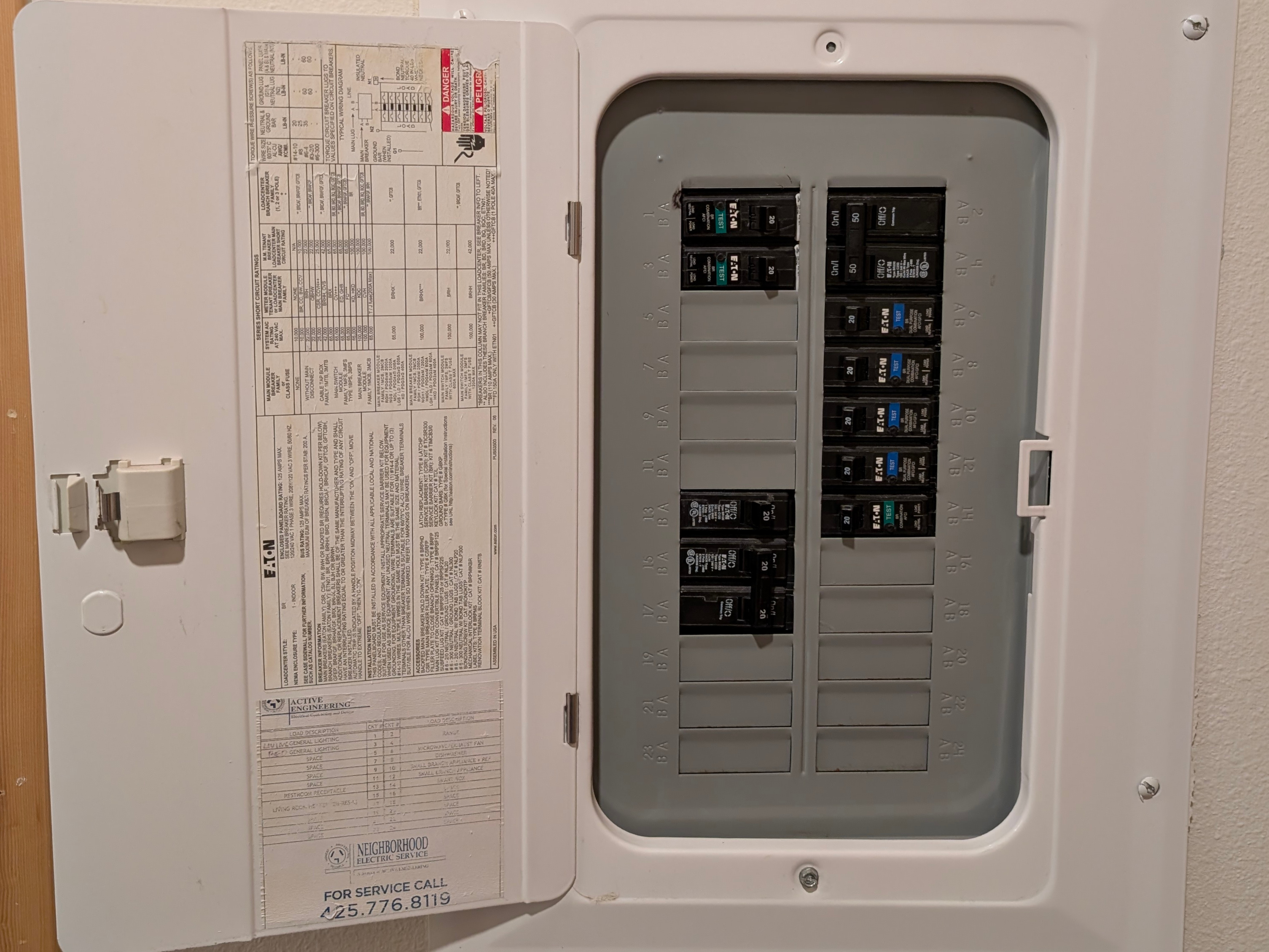
One of the main distinguishing features of American breaker panels is their size: they're housed in a tall metal enclosure mounted vertically and painted light grey, as is often the case with American electrical switchgear, or white in more modern electrical installations. The reason for this relatively large size is evident after taking a look at the high number of breakers, which are placed horizontally and laid out in two columns. A high-amperage main breaker controls power to the entire panel and is typically located on top.
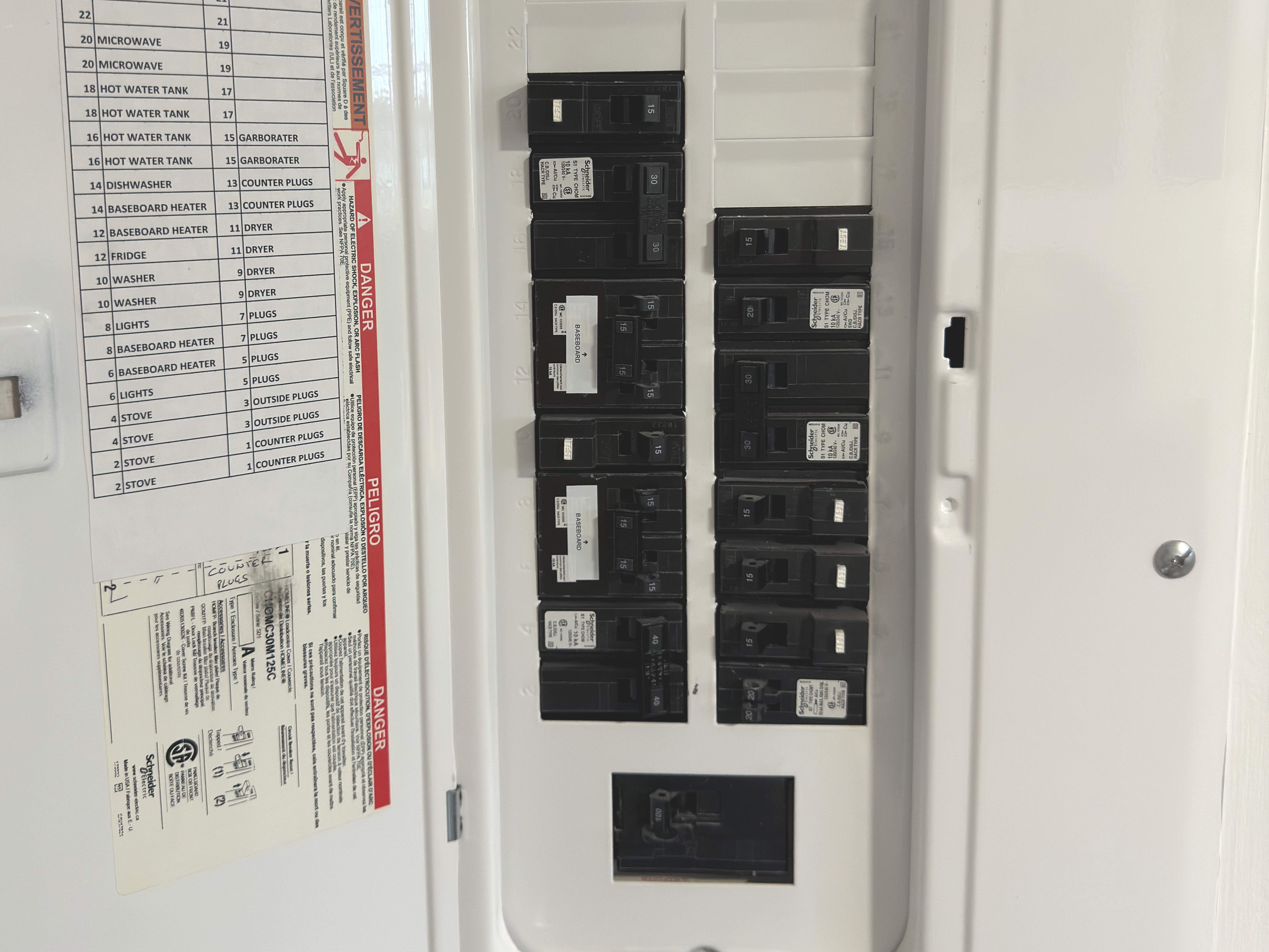
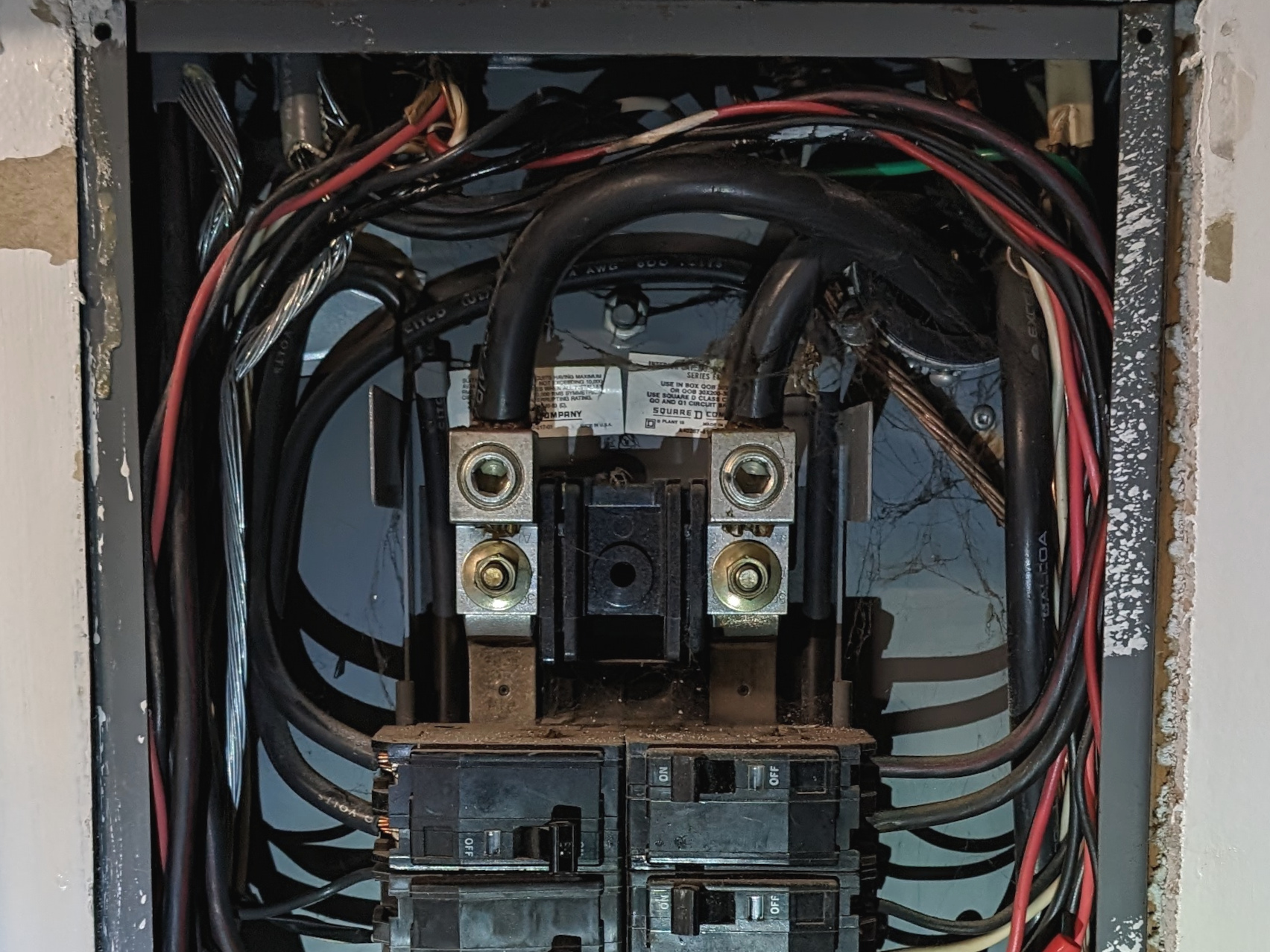
Taking a look inside we can see the metal busbar, which functions as the core of these panelboards. It is
fed from the main breaker and distributes both live legs to the circuits, through metal fingers which
alternate between phases.
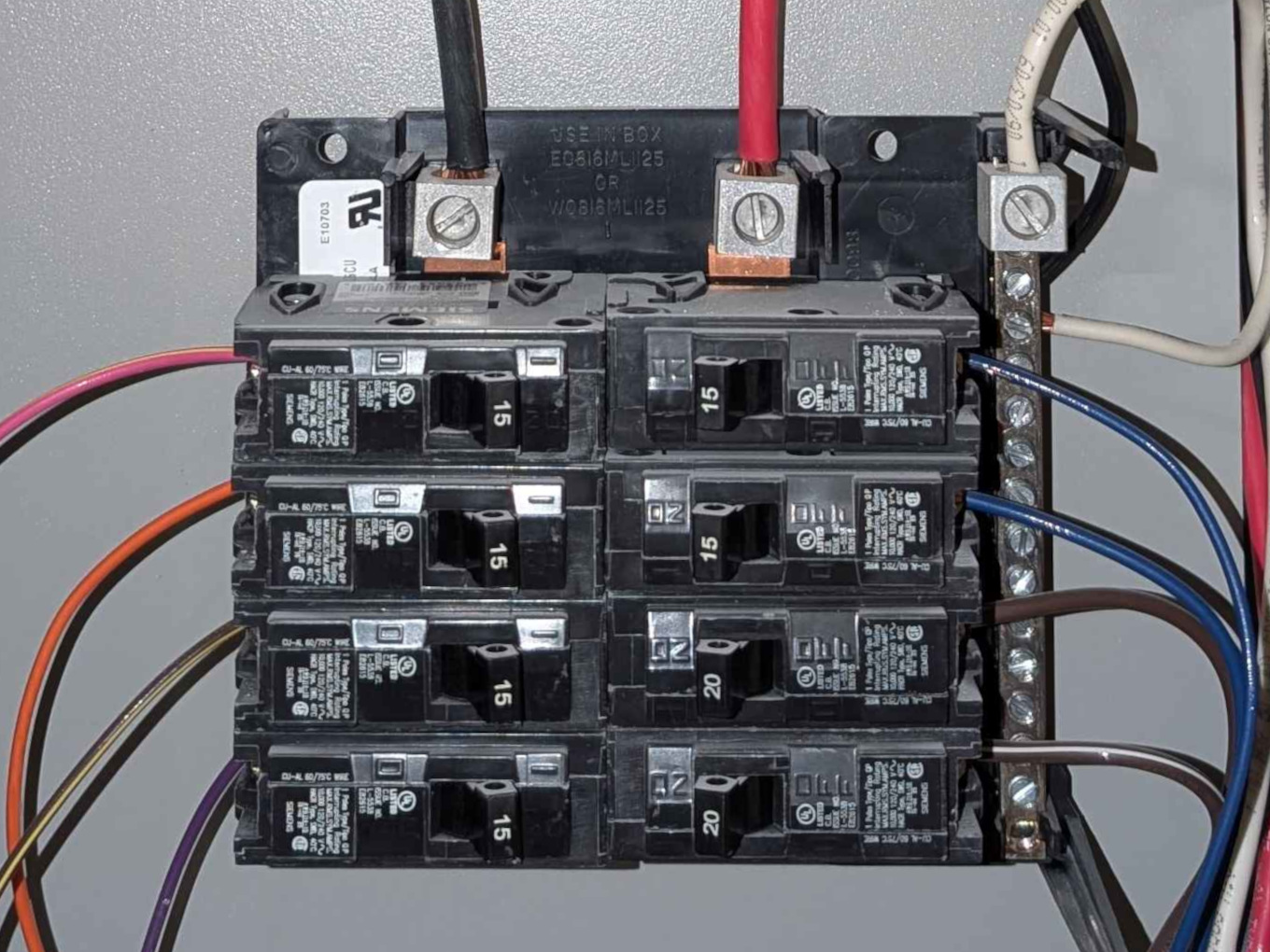
Breakers plug into the busbar and connect to one of these fingers, in the case of 120V circuits, or two for
240V ones using a wider breaker. This alternating pattern (A, B, A, B) also helps balance the overall load
by distributing 120V circuits between phases.
In residential settings breakers connect to the busbar toollessly with a plug-in connection, where the breaker is held by a plastic lip on one side and the metal finger of the busbar on the other, which interfaces with a matching contact. This design makes installing and swapping breakers extremely easy, so much so that it's not uncommon to see it done with the power still on.
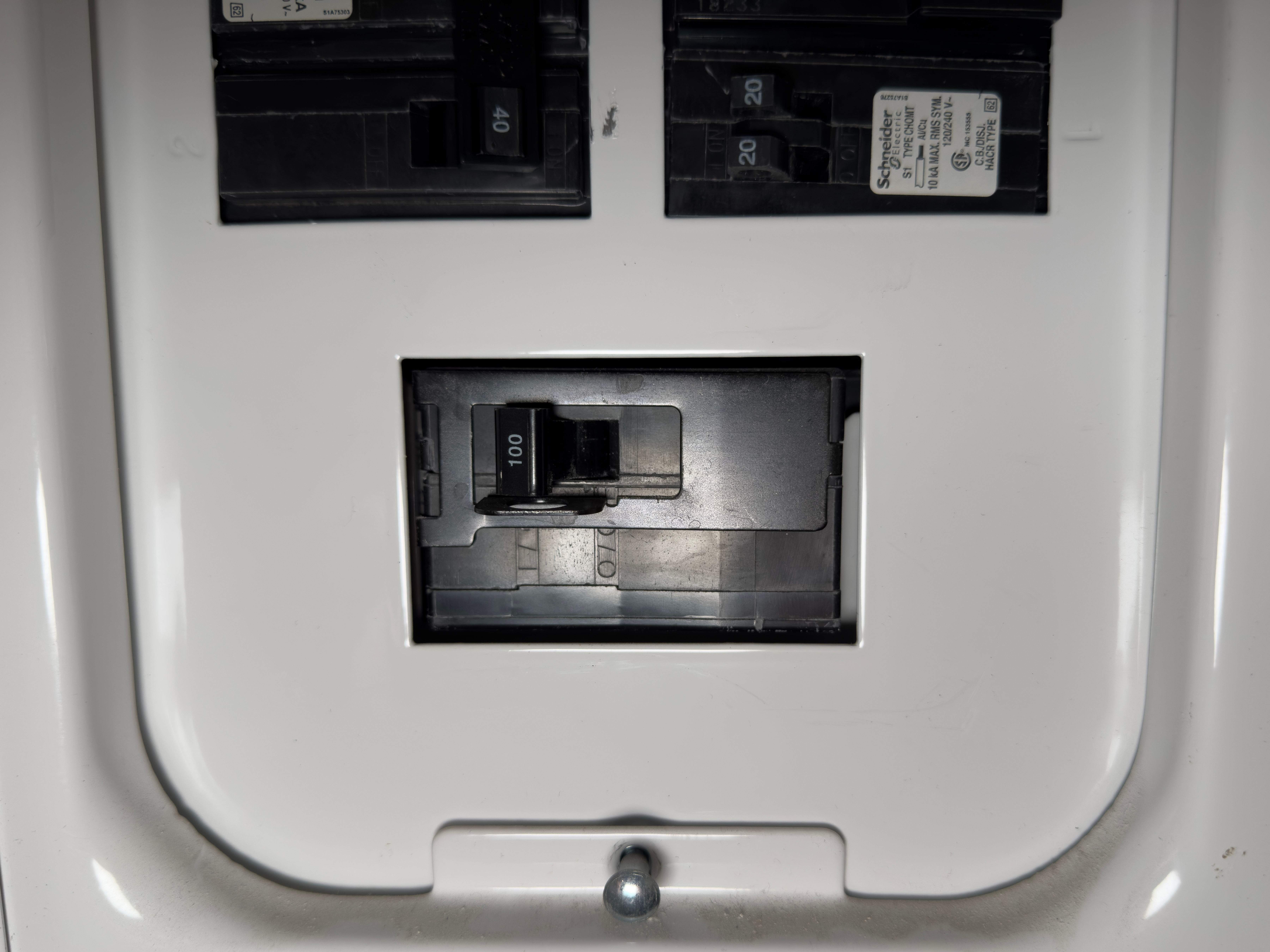
The main breaker is usually larger and separate from the others. In a typical household installation it serves the double duty of being the main means of disconnection of the building and protecting the distribution wires from overloads. Therefore it's sized according to the available supply, typically 200A or 100A in older properties.
Breakers
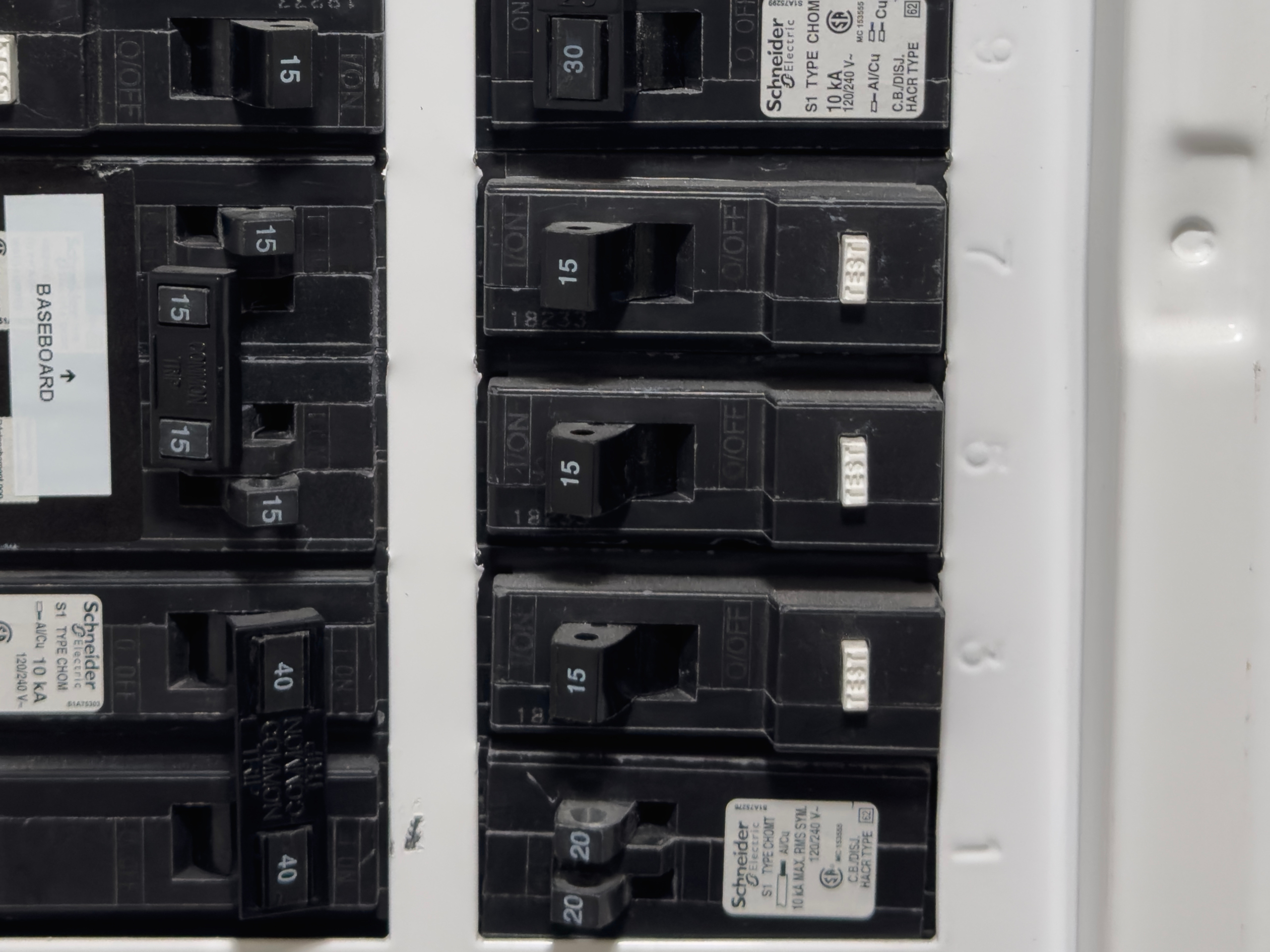
As mentioned, American breakers connect toollessly to the busbar. The load side connections are made through screw terminals, which accept copper and often also aluminium wires. The trip mechanism works using a bimetallic strip that bends when heated and is thus purely thermal, unlike DIN rail breakers which are thermal-magnetic.
Most circuits have no GFCI/RCD protection; where this is present, mainly "wet" rooms such as bathrooms, it's as part of the outlet rather than inside the panel. GFCI breakers - equivalent to RCBOs in other countries - are available, if rare. Given that GFCI protection is becoming mandatory in more instances, though, they may become more common over time. Note that due to the single-busbar panel designs it's not possible to have a "pure" GFCI protecting multiple circuits.
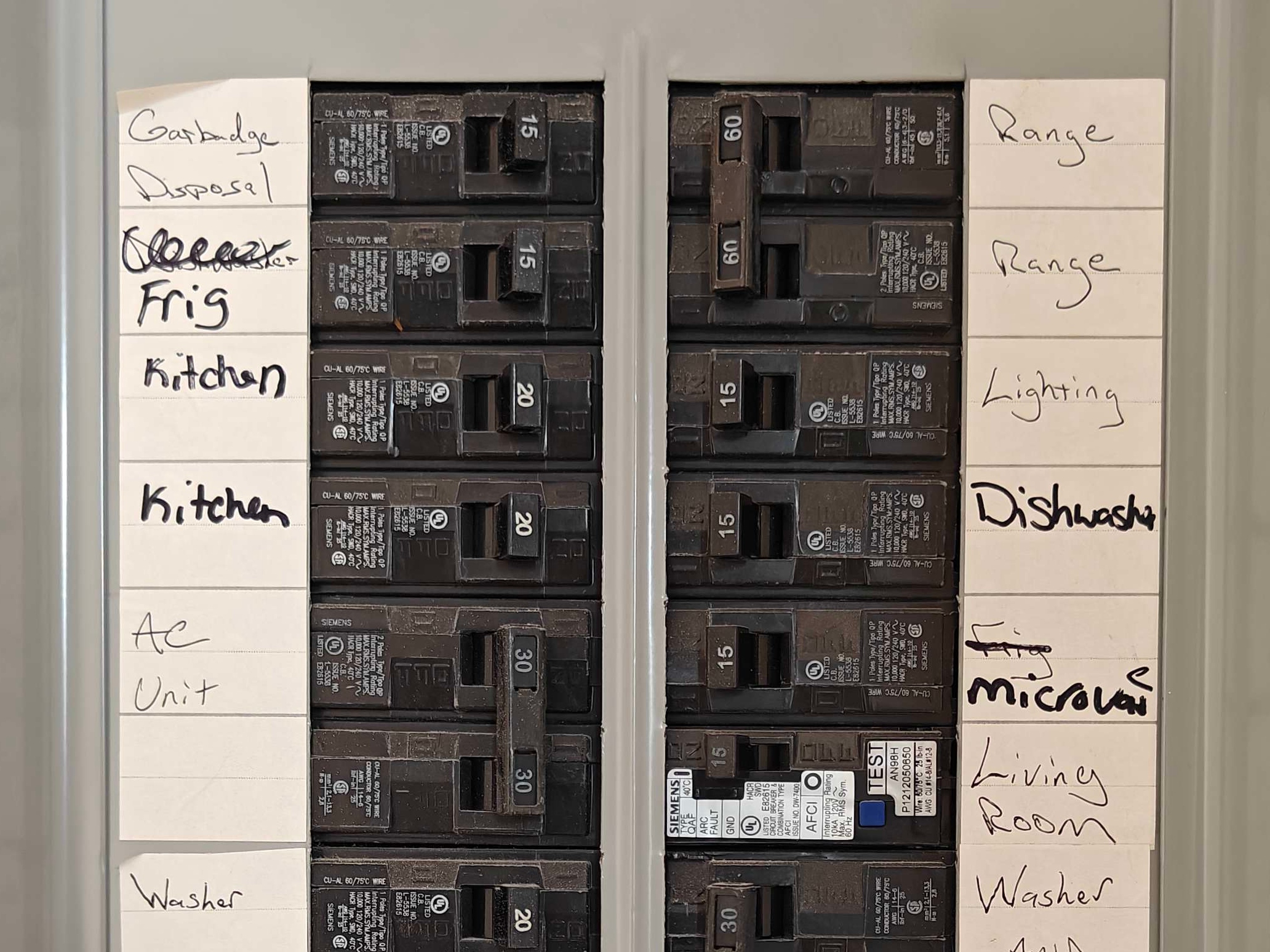
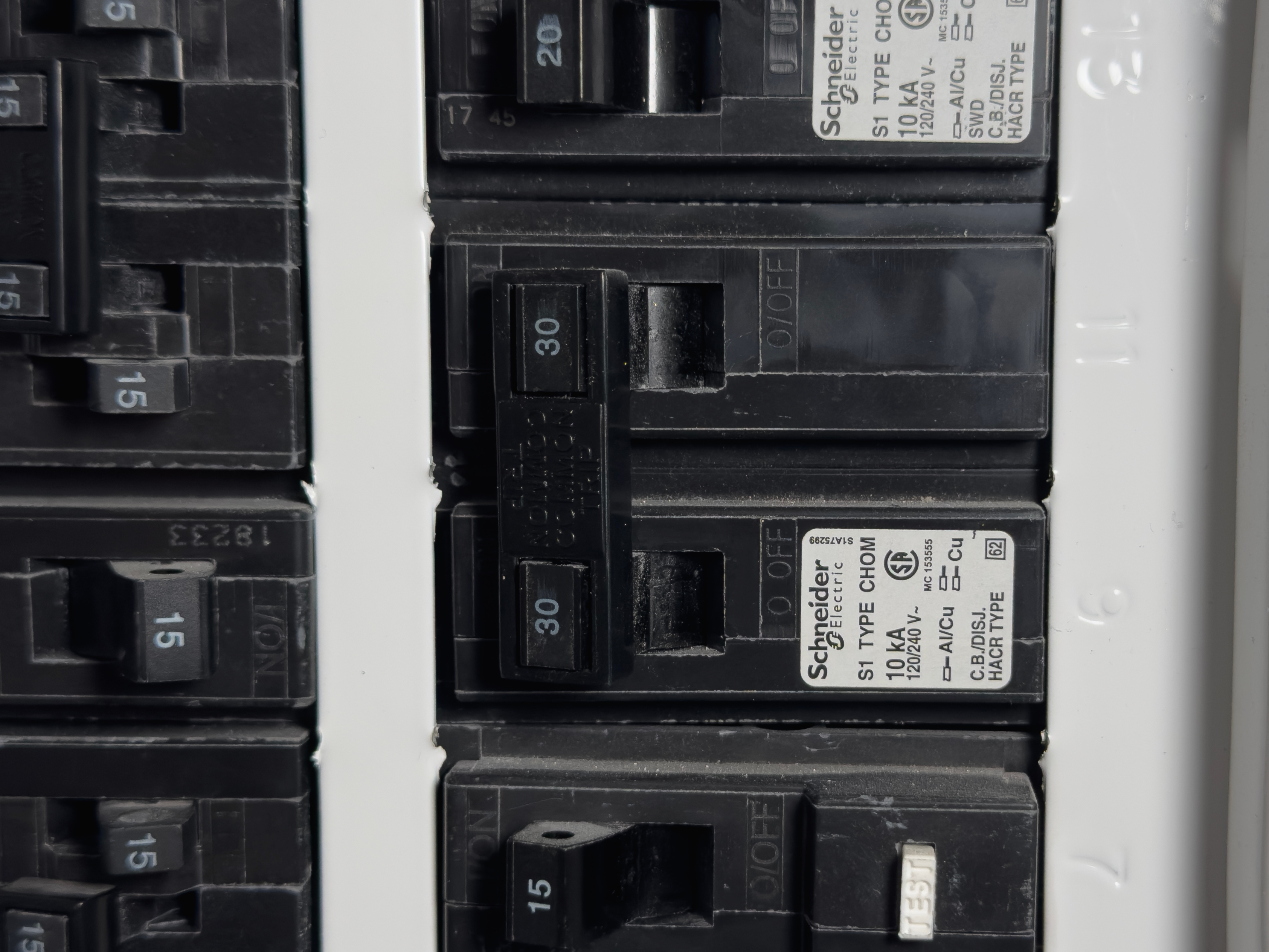
Double-pole breakers occupy two spaces and allow for connection of 240V circuits. They can also be used for
kitchen outlets by giving each half of a duplex receptacle its own phase, which divides the load between the
two and thus reduces the chance of a breaker tripping while saving costs by only needing to add one wire
rather than a separate circuit.
Tandem breakers, instead, have two breaker mechanisms in the space of one and can be useful if the panel is
full. These are not available with GFCI or AFCI protection, though double-pole versions do exist.
Arc Fault Circuit Interrupters (AFCIs) are another type of breaker which is often required nowadays, more so than GFCIs; these special breakers use electronics to detect the presence of an arc in the circuit wiring to protect against fires, which is especially important in wooden homes. Combined AFCI and GFCI breakers also exist.
Terminal bars and earthing
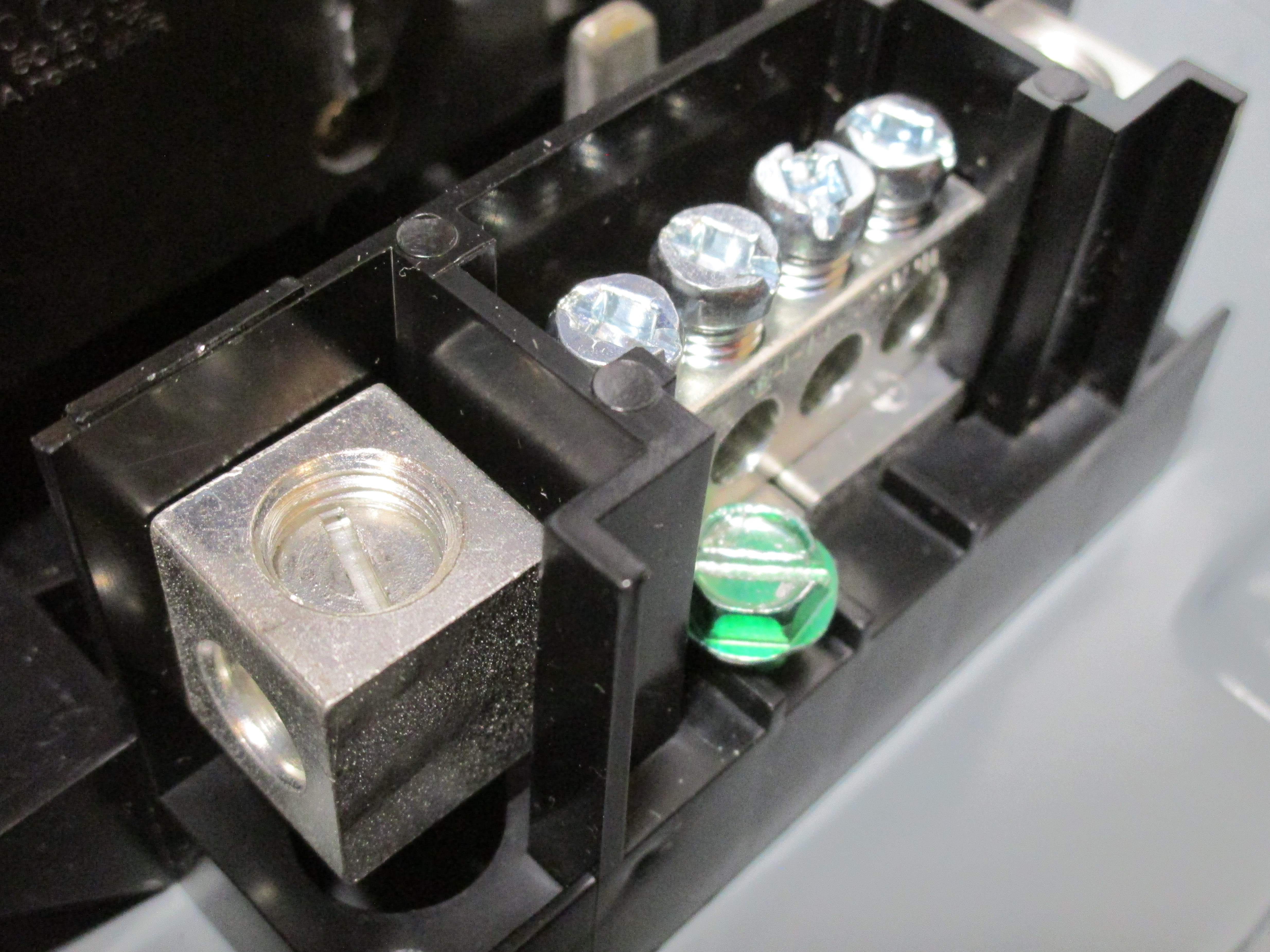
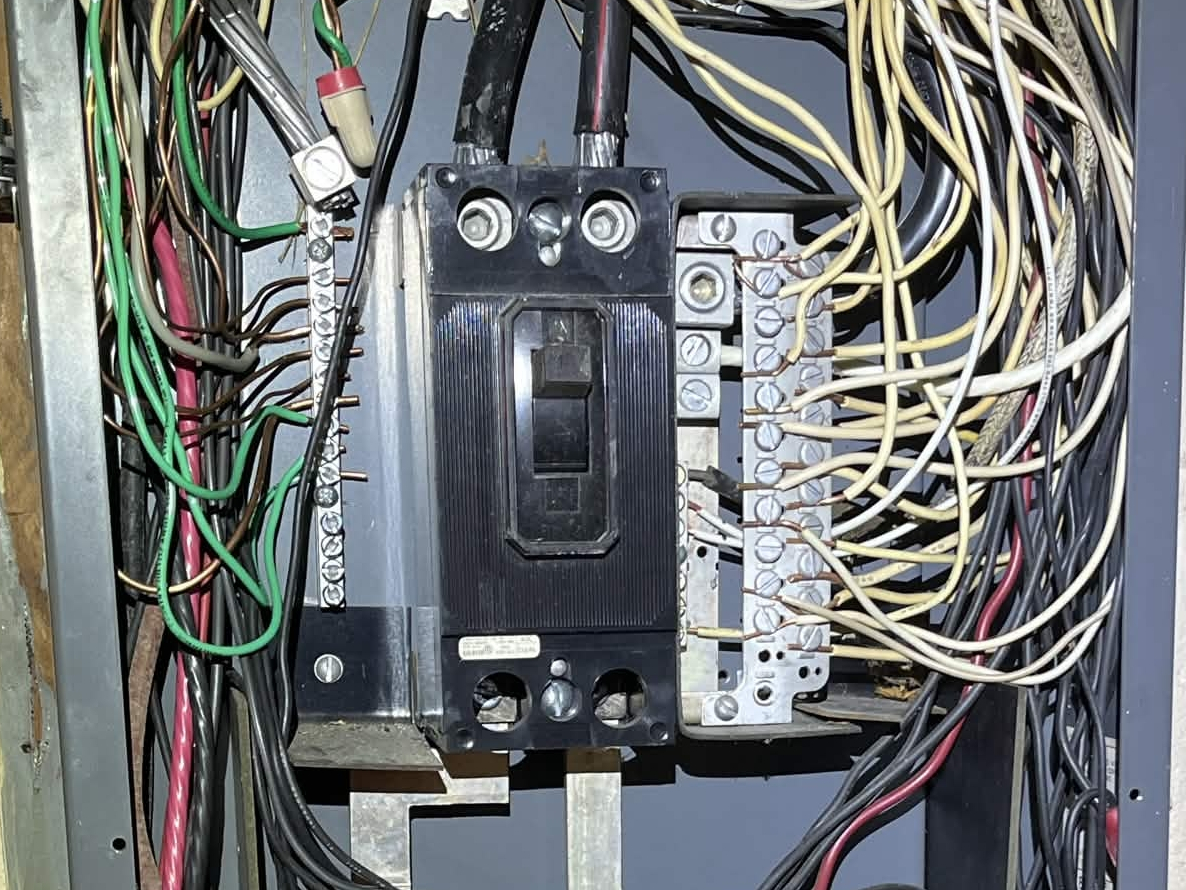
North American electrical installations follow what in European terminology would be called a TN-C-S earthing system, meaning the incoming neutral also has the purpose of being the earth or ground conductor. Electrical code mandates that the neutral and ground must be connected together once and only once, at the first point of disconnection, using a special green "bonding screw". Additionally, the neutral is terminated directly to the neutral bar and is never switched.
Breaker panels are generally fitted with neutral and earth/ground terminal bars for circuit wiring to connect to. It's not uncommon, however, for these two to be mixed up, with neutral and ground wires on the same terminal block, as the main panel is often also the only one in the house and thus where the bonding screw is installed, though this normally avoided in new installations.
GFCI and AFCI breakers require a neutral connection, mostly through a lead coming out of the breaker which is then wired to the neutral bar. However, higher-end panels offer "plug-on neutral" connections, effectively providing a separate busbar for the neutral, which avoids cable clutter inside the panel.
Main breakers and subpanels
The main breaker controls power to the entire electrical installation, allowing it to be isolated if needed, and protects the incoming supply wires from being overloaded since there aren't separate fuses or breakers owned by the power company aside from the ones at the transformer. Therefore it's sized according to the available electrical supply: usually 200A in modern installations and 100A or 150A in older ones, though larger properties may receive supplies as large as 400A.
Aside from "main breaker" panels there are also "main lug" ones, which contain a busbar but no breaker or switch for isolating power. These may be used as subpanels, protected from overloads by a breaker upstream. For such a scenario there are also main breaker panels with feed-through terminals at the end of the busbar.
Recent versions of the National Electrical Code have eliminated the so-called "six-hand rule", which allowed up to six means of disconnection for an installation. This was occasionally done with large supplies in order to avoid the high cost of a suitable breaker, by dividing the load between two smaller panels: for example two panels each with a 200A breaker connected to a 400A supply. The 2020 edition of the NEC has removed this provision, mandating a single means of disconnect on the outside of the building in order to make it easier for emergency services to turn off power.
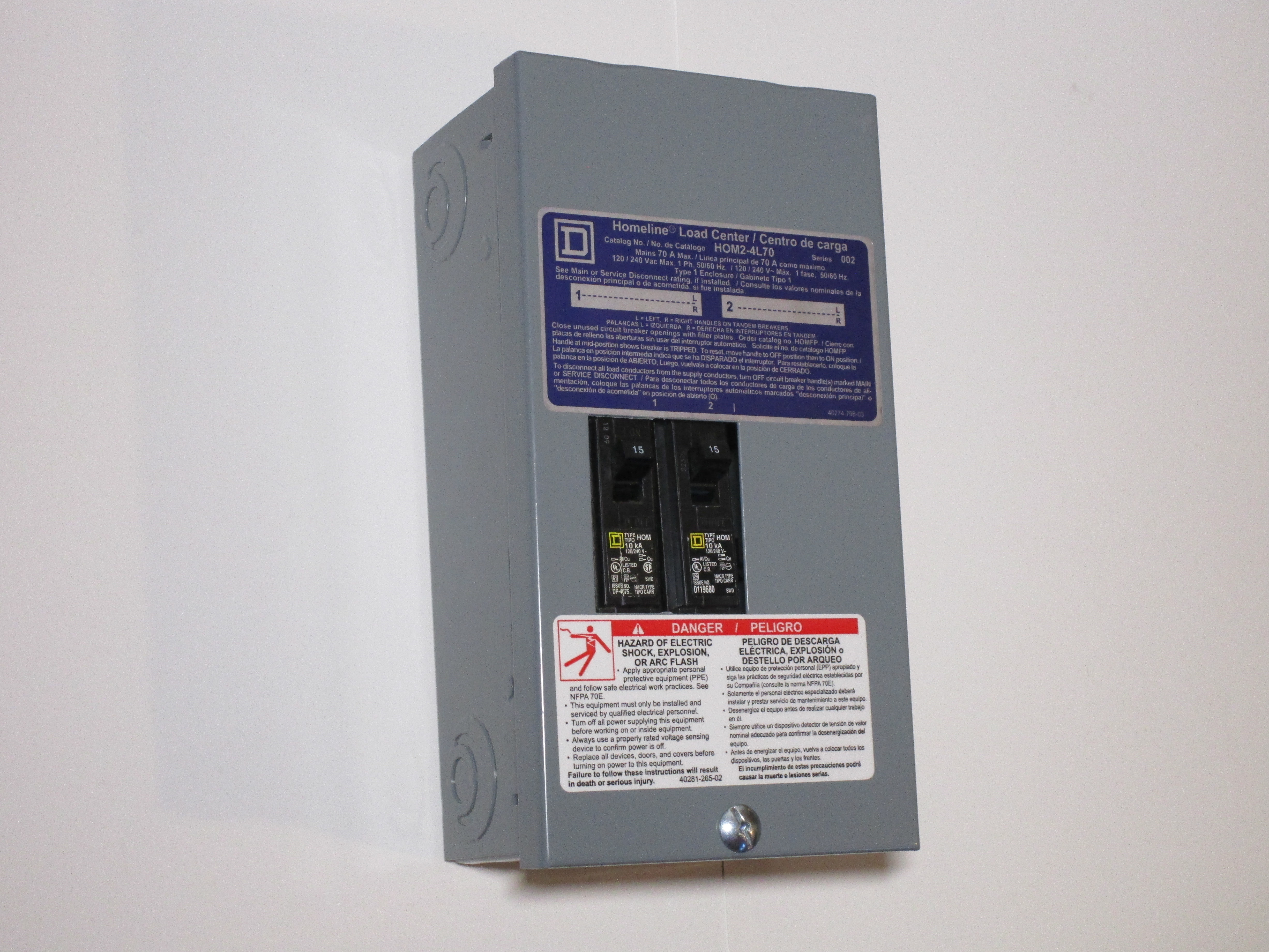
Square D Homeline 2-space panel
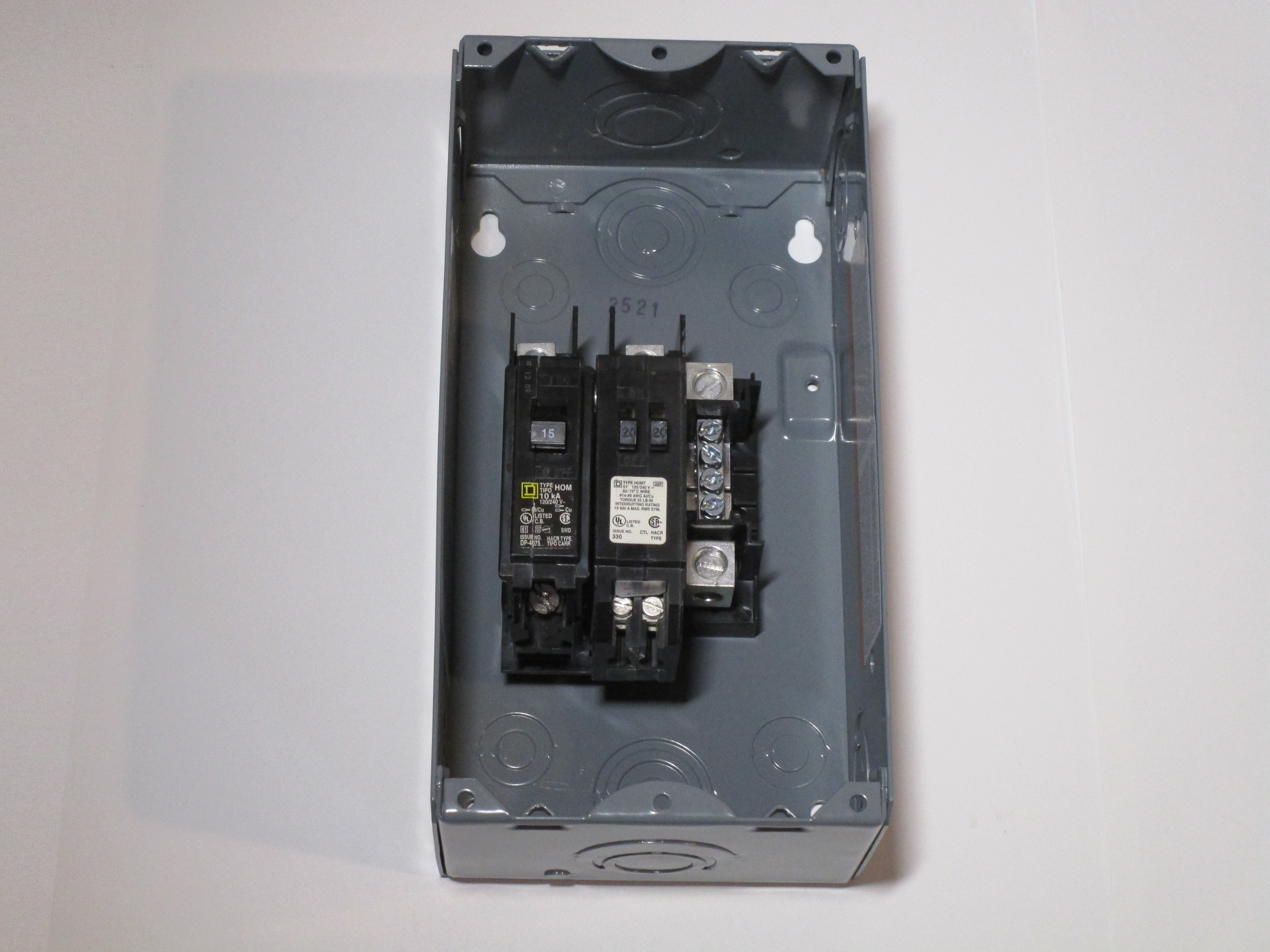
Model: HOM24L70SCP, Rating: 70AThis tiny breaker box, or "Load Center" as Square D calls it, is a 2-space "main lug" model part of their budget-oriented Homeline series. Given the small number of available spaces, it's primarily meant for relatively niche uses such as garages, garden sheds or RVs/caravans.
The enclosure is made entirely out of metal coated with light grey paint. The front has holes for both available spaces where breakers can be installed, one of which is covered up from the factory. Above, a label allows the user to write down the function of each circuit, and also indicates how to reset a breaker if it has tripped.
It's worth noting that that the panel is sold as 2 spaces/4 circuits: this is because, thanks to tandem breakers, it's possible for a single breaker to feed two circuits, though their use is generally discouraged outside of retrofits. Small panels with 4 and 7 spaces are also available at minimal extra cost.
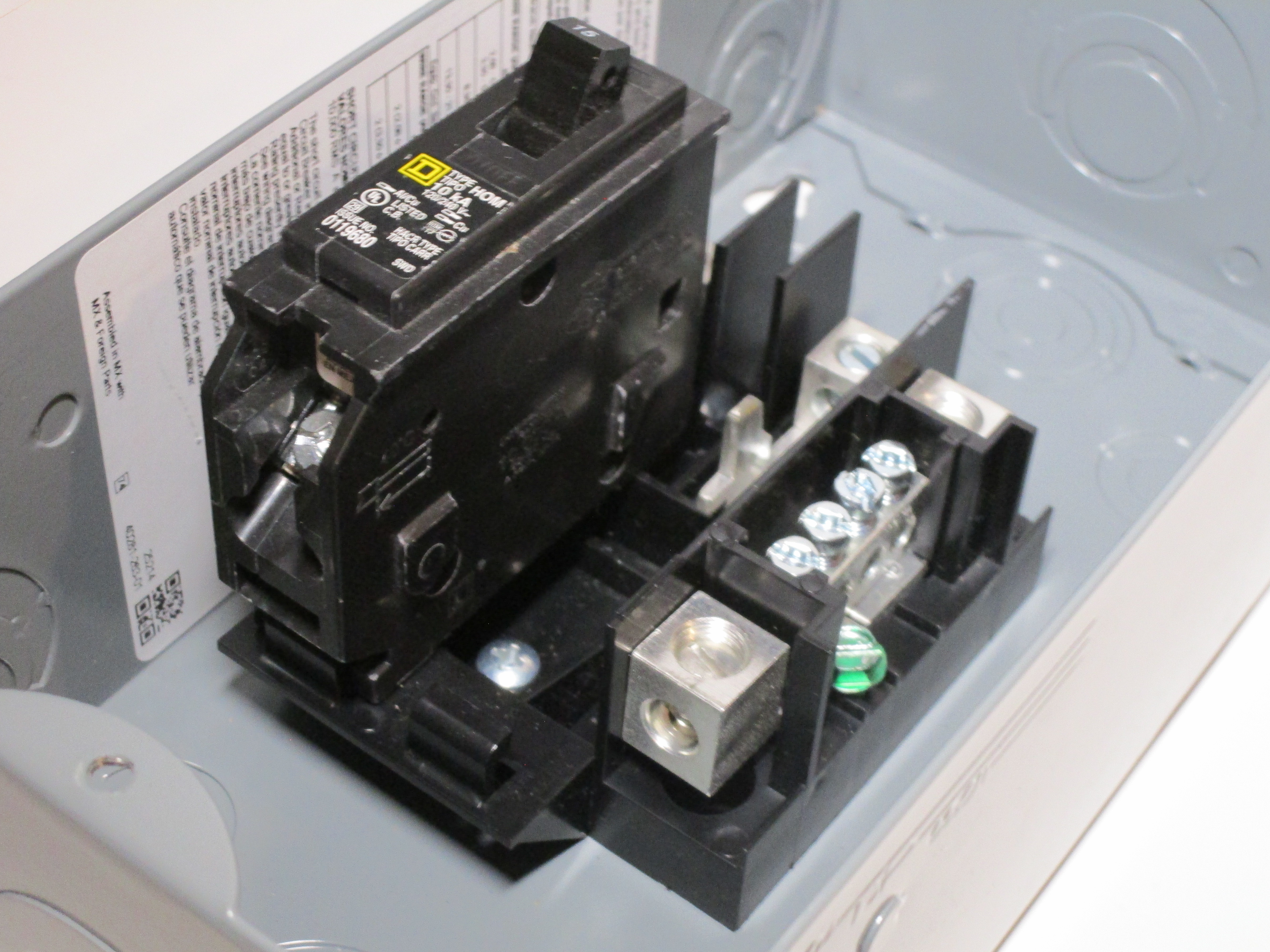
The front cover is removable with a single screw. Inside, the two line terminals can be seen for both "hot" conductors, connected to a tiny busbar with only one metal "finger" per phase. A terminal bar for the neutral is also present, with four screws and two main lugs. A separate ground bar is not provided, but can be purchased as an additional item.
The panel comes with a small plastic bag containing a green bonding screw, which must be installed if used as the first means of disconnection of the installation. While unlikely in a household context (the 70A max load makes it unsuitable as an external main disconnect), it could be a possibility in certain situations.